Chalk Sound National Park: A Complete Guide
Chalk Sound is Providenciales' shallow, turquoise lagoon dotted with limestone cays, and one of the few sights on the island that costs nothing and needs no tour booking.
Use the section recommendations to match an outing to your trip, then compare dates and trip details at the end.
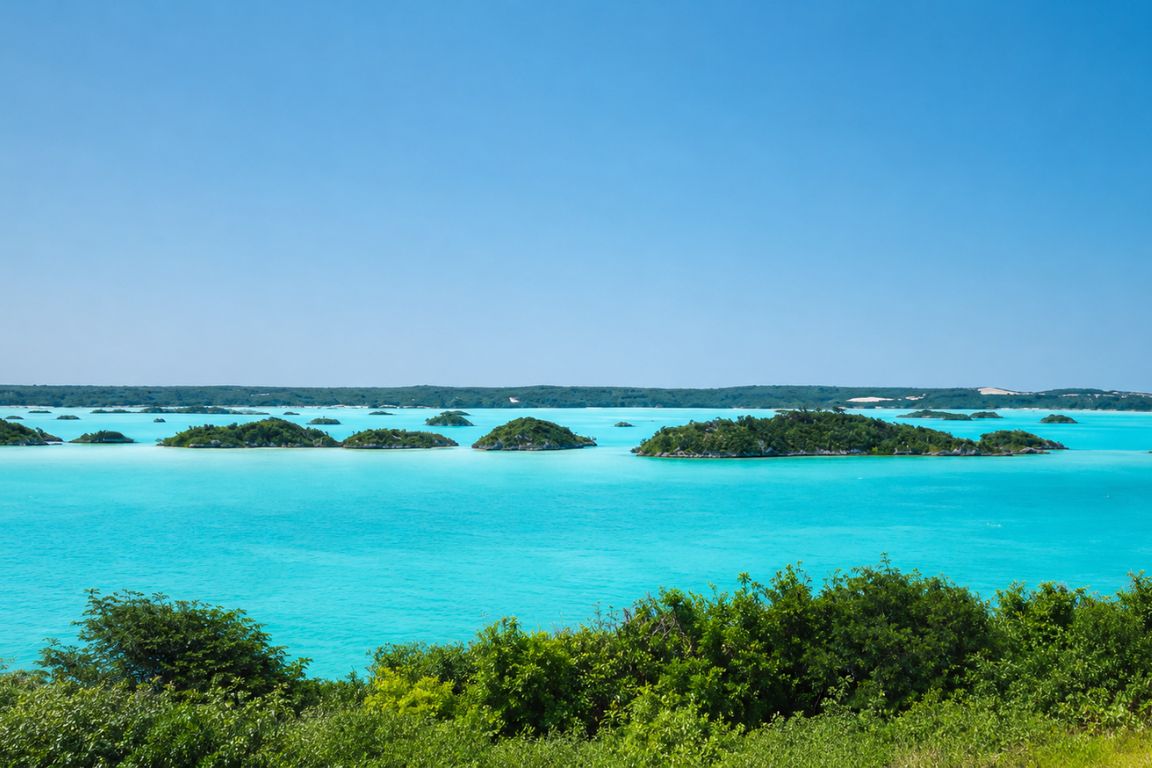
Every driver on Providenciales ends up on Chalk Sound Drive eventually, usually before they meant to. The road runs along the edge of a lagoon so shallow and so evenly turquoise that first-time visitors slow down to check whether the color is real. It is real, and it does not need a filter, a drone, or a particular time of year to look that way. Chalk Sound National Park sits on the southwestern tip of Providenciales, roughly a twenty-minute drive from the airport and the Grace Bay hotel strip, and it is one of the few genuinely famous sights on the island that costs nothing to see and needs no reservation.
Pair the free Chalk Sound drive with a guided Providenciales activity when you want local context, paddling, snorkeling, or an easier island overview.
Your Turks And Caicos Plan
- Use a rental car or taxi when Chalk Sound itself is the priority.
- Combine Chalk Sound Drive with Sapodilla Bay or Taylor Bay for a real swim.
- Add a guided island, kayak, or sailing outing for a broader Providenciales day.
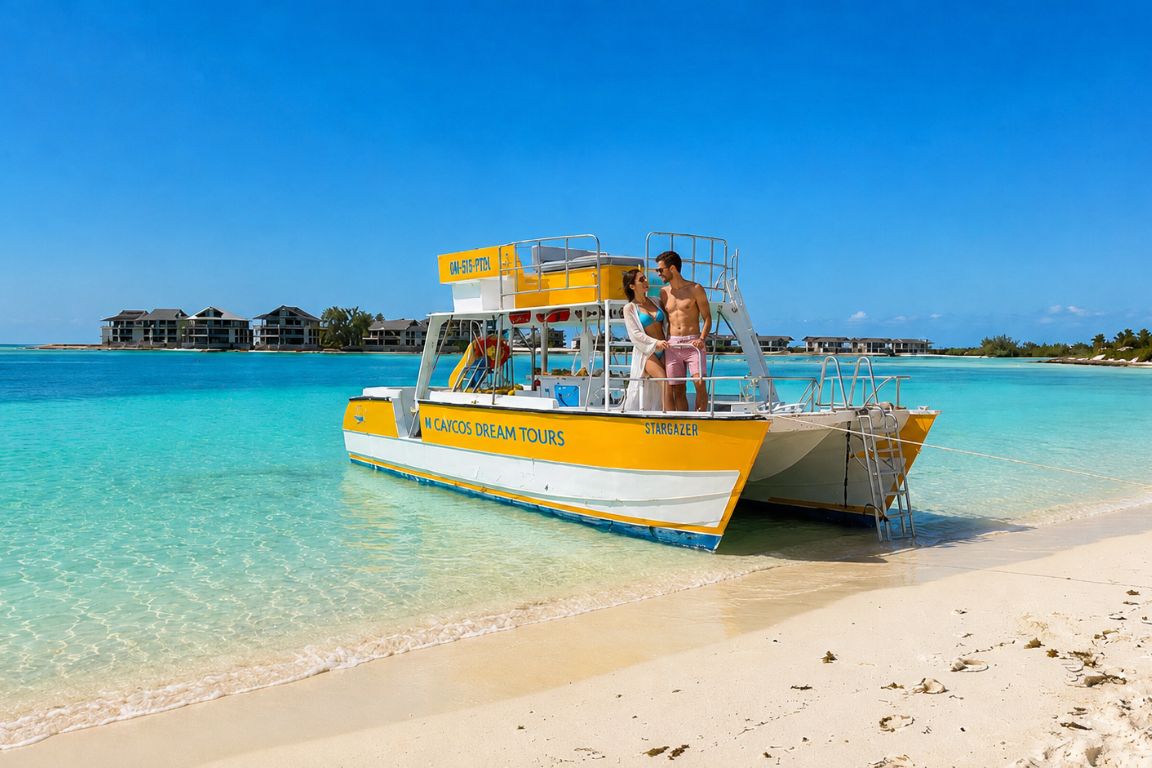
It is also, and this matters before you plan around it, not a tour stop. No guided excursion on this site, or on the wider island, is built specifically around Chalk Sound. It is a place people drive to, park near, photograph, and sometimes paddle across, not a destination anyone boats you into on a scheduled itinerary. The lagoon runs roughly parallel to a stretch of luxury villas, so part of what makes it feel different from Grace Bay is that you're looking at somebody's actual front yard rather than a resort-managed beach. With that out of the way, here is what is actually there and how to see it properly.
Where Chalk Sound Is And How To Get There
Chalk Sound sits on the south-southwest coast of Providenciales, separated from the open sea by a narrow strip of land and traced along its northern edge by Chalk Sound Drive, a road running roughly three miles. Most visitors reach it by rental car, since Providenciales has no public transit built around sightseeing routes, and the drive from Grace Bay or the airport takes about twenty minutes. One commonly cited route for a clear view of the water is to follow Chalk Sound Drive and turn onto Oleander Circle, which leads down to the shoreline itself rather than just the elevated road view. On the sound's southern side, Las Brisas restaurant at Neptune Villas is often mentioned as the easiest single access point, since it sits directly on the water and welcomes visitors who come for a meal with a view rather than just a drive-by look.
| Detail | What to know |
|---|---|
| Location | Southwestern coast of Providenciales |
| Distance from Grace Bay / airport | Roughly 20 minutes by car |
| How to get there | Rental car or taxi; no public transit route is built around it |
| Best road for views | Chalk Sound Drive, turning onto Oleander Circle for shoreline access |
| Entrance fee | None; it's a public road and shoreline, not a gated attraction |
| Protected status | Chalk Sound National Park, under TCI's Department of Environment and Coastal Resources |
| Approx. length of the sound | About 3 miles (5 km) |
Turks and Caicos first established its national parks system under the National Parks Ordinance of 1975, the legal framework that still governs Chalk Sound and most of the country's other protected natural areas today. That ordinance is the reason the lagoon has stayed as undeveloped and clear as it has despite sitting in one of the most desirable residential pockets on the island: the protections predate most of the villa construction now visible along its edges, not the other way around.
Why The Water Looks Like That
The color comes from the same underlying cause as the turquoise water at Grace Bay: shallow, pale limestone sand and seafloor reflecting sunlight back up through very little water depth. Most of Chalk Sound rarely exceeds five feet, and in a lot of places it is far shallower than that, so almost no light gets absorbed before it bounces back toward the surface. The result is a color so saturated it reads as artificial in photographs even though nothing about it is enhanced. What separates the sound from Grace Bay's open shoreline is that Chalk Sound is almost entirely enclosed, a lagoon cut off from ocean swell by the strip of land carrying the drive itself, so the water inside sits nearly still on all but the windiest days. That stillness is part of why the color looks so uniform from a moving car: there is no chop breaking up the reflection the way open water constantly does.
Scattered across the lagoon are hundreds of small limestone cays, some barely large enough to stand on, covered in scrubby coastal vegetation. Rock iguanas live on a number of them, the same species found on Little Water Cay off Providenciales' north shore, and turtles are occasionally spotted moving through the shallows between the islets. Wading birds work the shallow flats at the lagoon's edges, and the calm water attracts small fish in numbers dense enough to see from the shoreline without getting in at all. The park's protected status limits motorized boat traffic across the sound, which is a meaningful part of why the water stays as clear as it does: without regular boat wakes and prop wash stirring up the fine sediment on the bottom, the lagoon keeps the glass-like stillness that makes it photograph so well.
A Bit Of History
Chalk Sound's recorded modern history starts with an Irish settler named George Silly, who introduced sea sponge farming in the lagoon around the turn of the twentieth century and also ran a lobster and turtle cannery nearby. For decades after that, the sound sat at the edge of a genuinely quiet island; Providenciales had little in the way of tourism infrastructure until Club Med opened its resort at Grace Bay in the 1980s, the development generally credited with starting the island's run as an international destination. Chalk Sound itself stayed mostly residential and undeveloped relative to Grace Bay through that boom, which is part of why it still reads today as a quieter, more local corner of the island rather than a resort strip. Silly Creek, a residential inlet on the sound's edge that still carries George Silly's name, is one of the clearest surviving traces of that early settlement history, now surrounded by the villas the area is known for today.
The Villas Around Chalk Sound
The peninsula and shoreline around the sound have become one of the more sought-after residential addresses on Providenciales, and the reason is visible from the road: waterfront lots here back directly onto that turquoise water, and homes are commonly built with floor-to-ceiling glass and open living spaces specifically to keep the lagoon in view from nearly every room. Because the whole area sits inside a national park, development is more constrained than it would be elsewhere on the island, which keeps the shoreline from filling in with the density seen around Grace Bay. The result is a strip of visibly expensive, architecturally distinct private homes and vacation villas lining a public road that anyone can drive for free, which is part of what makes the contrast between the view and the access so unusual.
| Period | What was happening |
|---|---|
| Early 1900s | George Silly introduces sea sponge farming in the lagoon; runs a lobster and turtle cannery nearby |
| Mid-1900s to 1970s | Providenciales remains largely undeveloped and quiet, Chalk Sound included |
| 1980s | Club Med opens at Grace Bay, starting the island's tourism boom; Chalk Sound stays largely residential |
| Today | Protected national park status limits development; the shoreline is lined with private villas and vacation rentals |
Can You Swim, Kayak, Or Paddleboard There?
This is the question people ask after seeing photos and expecting a swimming beach. The honest answer is mixed. The bottom in much of the sound is rocky and thick with seagrass rather than sandy, and the water is shallow enough in most spots that swimming laps or floating around is less comfortable than it looks from the road. Visitor reviews split on this: some describe wading in comfortably near shallower, sandier patches, while others come away saying it's better looked at than swum in. Neither is wrong; it depends heavily on exactly where you get in.
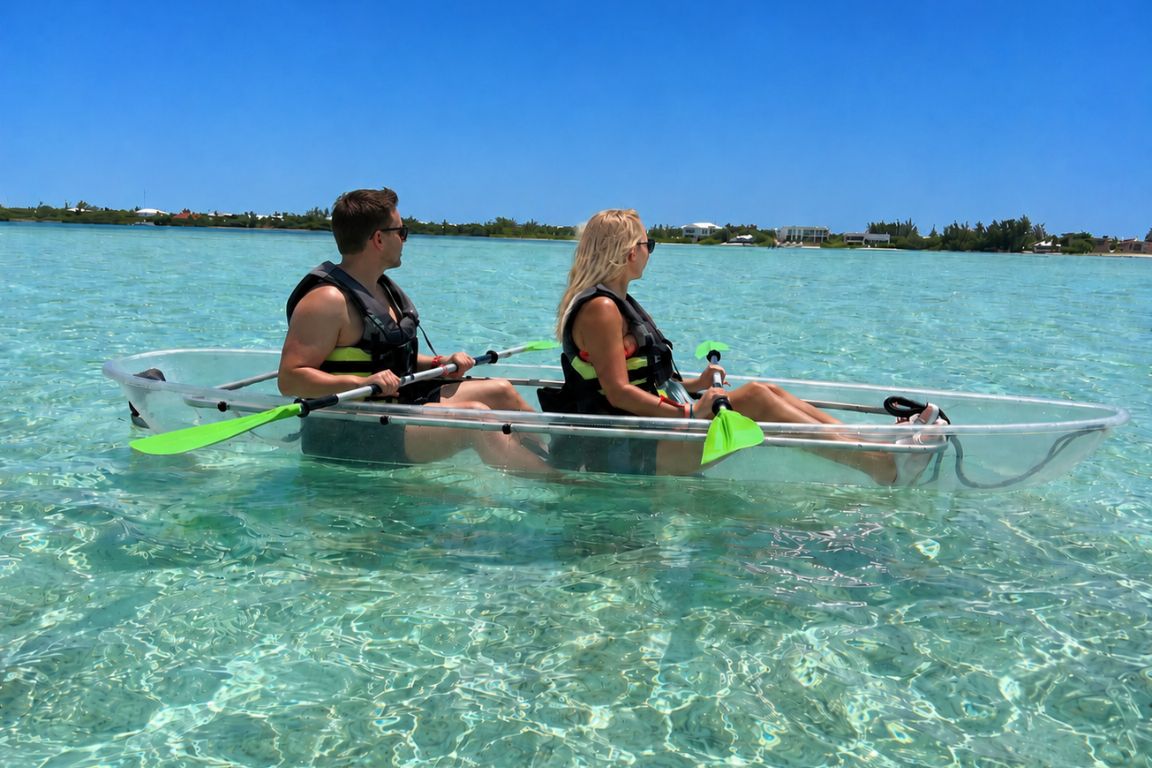
What the sound is genuinely good for is kayaking and stand-up paddleboarding, on calm days when the wind isn't pushing chop across the open water. Gliding between the small cays at a paddle's pace gives a much closer look at the iguanas, the birdlife, and the limestone formations than a car window ever will, and the shallow depth that makes swimming underwhelming is exactly what makes paddling here safe and easy for people who have never done it before.
Best Time Of Day To Visit
Chalk Sound faces roughly west, so the light across the water changes meaningfully through the day. Midday sun sits high and flattens the color contrast between the water and the pale limestone shoreline, which is when the postcard-perfect photos people expect tend to look strangely dull in person. Late afternoon, as the sun drops lower and the angle sharpens, is when the turquoise deepens and the small cays throw longer shadows across the surface. It isn't a sunrise location; the light comes from the wrong direction for that.
| Time of day | Light quality | Crowds |
|---|---|---|
| Early morning | Soft, flat light; pleasant but less saturated color | Quietest time to visit |
| Midday | Harsh overhead sun, washed-out contrast | Moderate, mostly passing traffic |
| Late afternoon | Best color and depth of turquoise, longer shadows | Busiest window for photographers |
| Sunset | Warm light on the western horizon, though the sound itself photographs better a little earlier | A handful of regulars, especially near Las Brisas |
Nearby: Sapodilla Bay And Taylor Bay
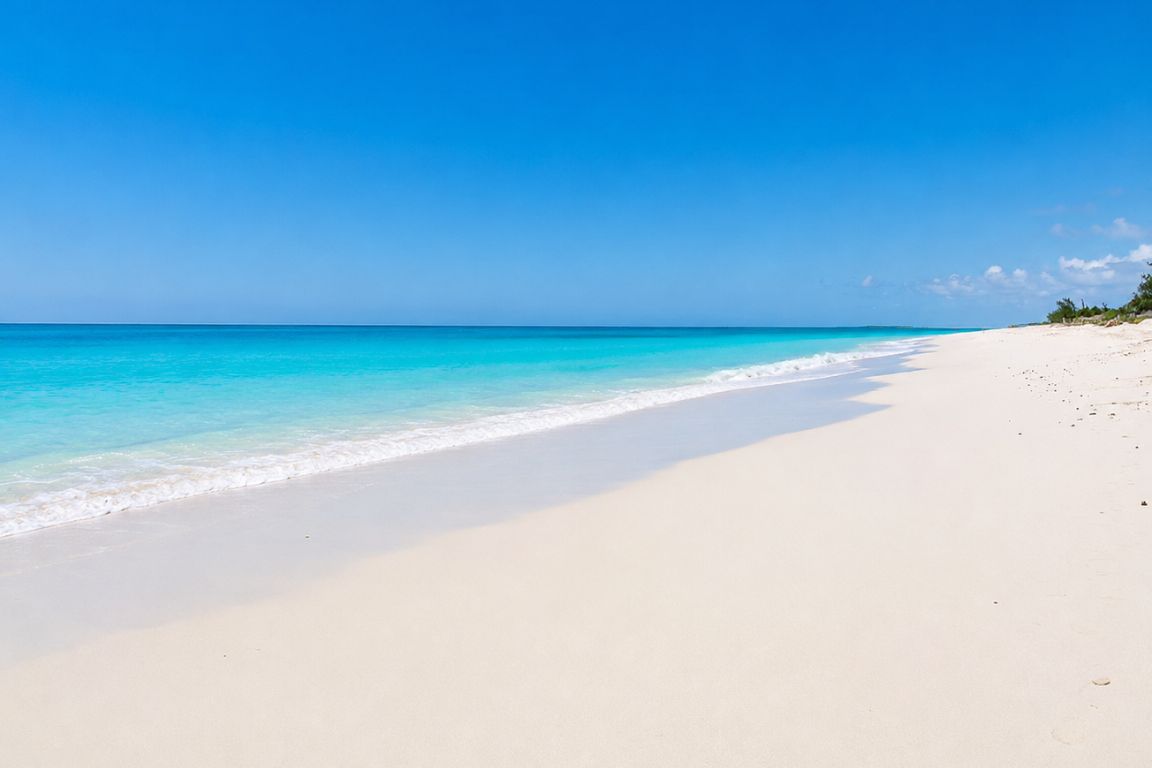
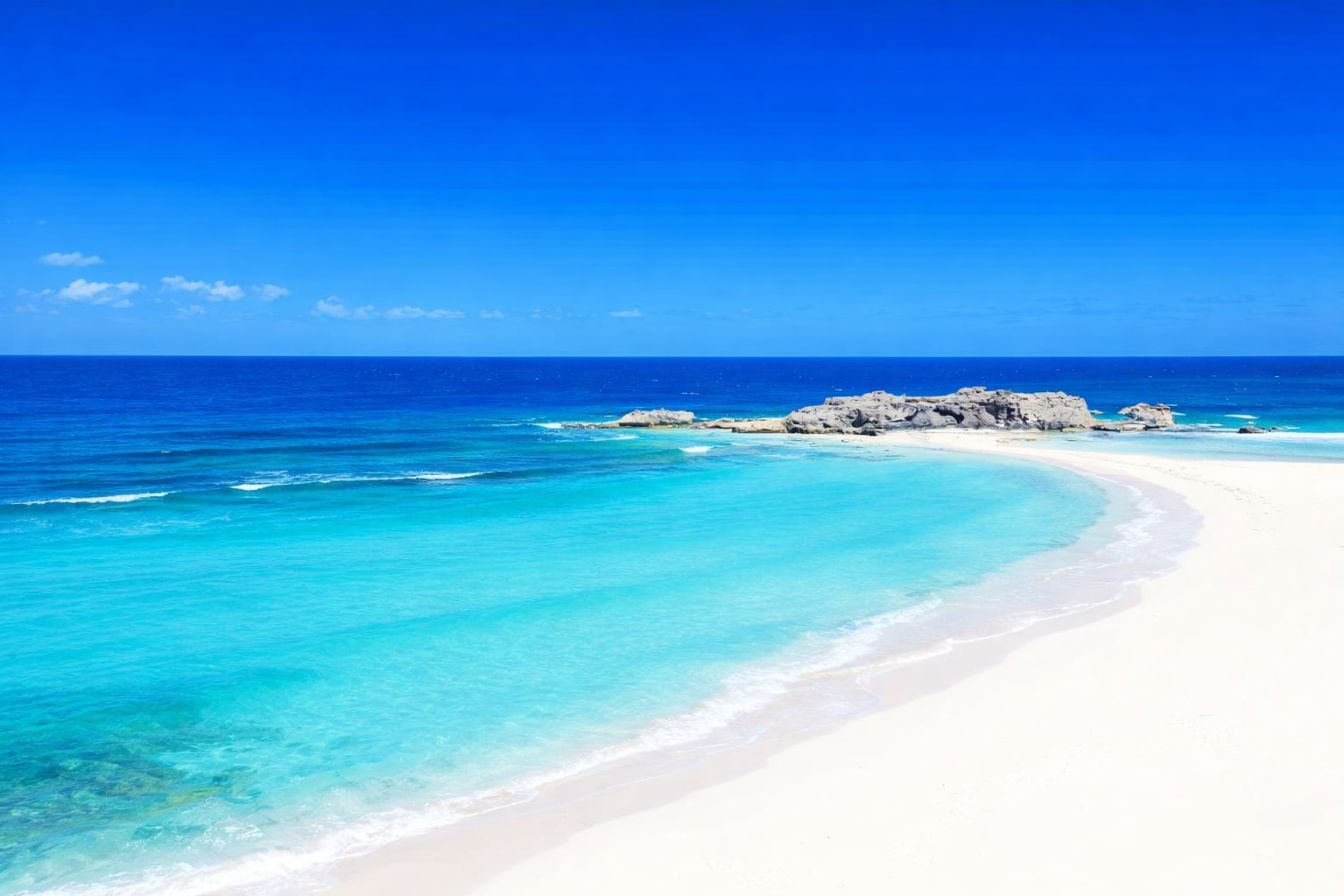
Two real swimming beaches sit within a few minutes of Chalk Sound, and most people visiting one see all three in a single loop. Sapodilla Bay is a sheltered, roughly 900-foot stretch of beach with calm, shallow, genuinely swimmable water, popular for its protection from wind and swell. A short walk or drive up from the beach, Sapodilla Hill carries a set of rock carvings left by sailors and ship crews between the mid-1700s and mid-1800s: names, dates, and small ship drawings cut into the limestone while they waited at what was once an active harbor serving the plantations at Cheshire Hall. It is a genuinely old, protected historical site, catalogued in part by the Turks and Caicos Museum, and it sits close enough to Chalk Sound to add to the same afternoon.
Taylor Bay, a two to five minute drive further along, is smaller, roughly 600 feet of beach, and quieter than Sapodilla Bay on most days. Its water is shallow and calm enough that it's frequently recommended for young children and less confident swimmers. Between the two beaches and Chalk Sound itself, this southwestern corner of Providenciales works well as a single half-day loop: drive the sound for the view and maybe a paddle, then finish at Sapodilla or Taylor Bay for an actual swim.
| Chalk Sound | Sapodilla Bay | Taylor Bay | |
|---|---|---|---|
| Water depth | Mostly under 5 feet | Shallow, calm, swimmable | Shallow, calm, swimmable |
| Best for | Photos, driving the shoreline, paddling | Actual swimming, historic rock carvings nearby | Quiet swimming, families with young kids |
| Typical crowd level | Light to moderate, mostly drive-by visitors | Moderate | Light, generally the quietest of the three |
| Distance from Chalk Sound | - | A few minutes' drive | 2-5 minutes past Sapodilla Bay |
What's Next Door: Frenchman's Creek And Pigeon Pond
Chalk Sound sits beside the largest single stretch of protected land on Providenciales: the Frenchman's Creek and Pigeon Pond Nature Reserve, a roughly two-by-four-mile expanse of mangrove wetland, salt flats, ocean cliffs, and limestone caves along the island's west coast. Pigeon Pond, a shallow landlocked salt pond inside the reserve, is one of the few places on Providenciales where Caribbean flamingos are occasionally spotted. The reserve is genuinely remote and largely undeveloped, which is part of its appeal for kayaking through the mangrove channels, but it is not a casual walk-in the way Chalk Sound's roadside views are; visitors are generally advised to go with a local water sports operator who knows the terrain rather than paddling in alone.
Photography And Drone Rules
Chalk Sound is one of the most photographed spots on Providenciales, and for handheld cameras and phones there are no special restrictions beyond common sense and respect for the private villas lining much of the shore. Drones are a different matter: TCI requires Fly Safe authorization to operate a drone near Chalk Sound, along with Taylor Bay and Sapodilla Bay, and altitude restrictions apply in the area. If aerial photography is part of the plan, sort out the paperwork before the trip rather than assuming a drone can simply be launched from the roadside.
Practical Tips For Visiting
A rental car is genuinely the most practical way to see Chalk Sound properly, since the point is driving, or paddling, its edge rather than arriving at a single fixed spot. If you would rather not self-drive, a private, broadly scoped island tour is the closer fit than a beach- or reef-specific excursion. The catalog's Private Love Buggy Island Tour, for example, covers a large share of Providenciales in an open-air buggy, including scenic roads past luxury villa neighborhoods and a stop at the historic Cheshire Hall Plantation ruins; it isn't confirmed to stop at Chalk Sound itself, so treat it as a way to see a comparable slice of Provo's scenic side roads with a guide rather than a guaranteed Chalk Sound visit. If Chalk Sound specifically is the priority, renting a car for a few hours remains the most direct route to it.
A practical loop for a rental car looks something like this: start at the Chalk Sound Drive overlooks in the late morning or early afternoon, turn down Oleander Circle for a closer shoreline look, continue toward Las Brisas for a drink or lunch on the water, then finish at Sapodilla Bay or Taylor Bay while the light is still good for a swim. Working in the Sapodilla Hill rock carvings on the way adds maybe twenty minutes and turns the outing from a single photo stop into a half-day loop that covers scenery, a swim, and a genuine piece of the island's history without any of it requiring a booking. Most visitors who do this loop once end up driving back through at least once more before they leave, usually at a different time of day than the first pass, because the light changes the place enough that it doesn't feel entirely repetitive.
Bring water and sun protection regardless of how you get there; there is little shade along most of the drive. If you plan to paddle, check wind conditions first, since the open stretches of the sound pick up chop quickly once the breeze builds past a light morning calm.
- Sunscreen and a hat: there is almost no shade along Chalk Sound Drive or the shoreline access points.
- Water shoes: useful if you plan to wade in near the rockier, seagrass-covered sections.
- A camera with a polarizing filter: it cuts glare off the surface and deepens the color in photos, especially at midday.
- Swimwear and a towel: for a stop at Sapodilla Bay or Taylor Bay afterward if actual swimming is on the plan.
- Cash or a card: Las Brisas and other spots near the water are the easiest place to sit down for a drink or a meal with a view.