Flights To Turks And Caicos (2026)
Providenciales International Airport handles nearly every flight into Turks and Caicos, and the nonstop map from the US mainland is wider than most first-time visitors expect.
Use the section recommendations to match an outing to your trip, then compare dates and trip details at the end.
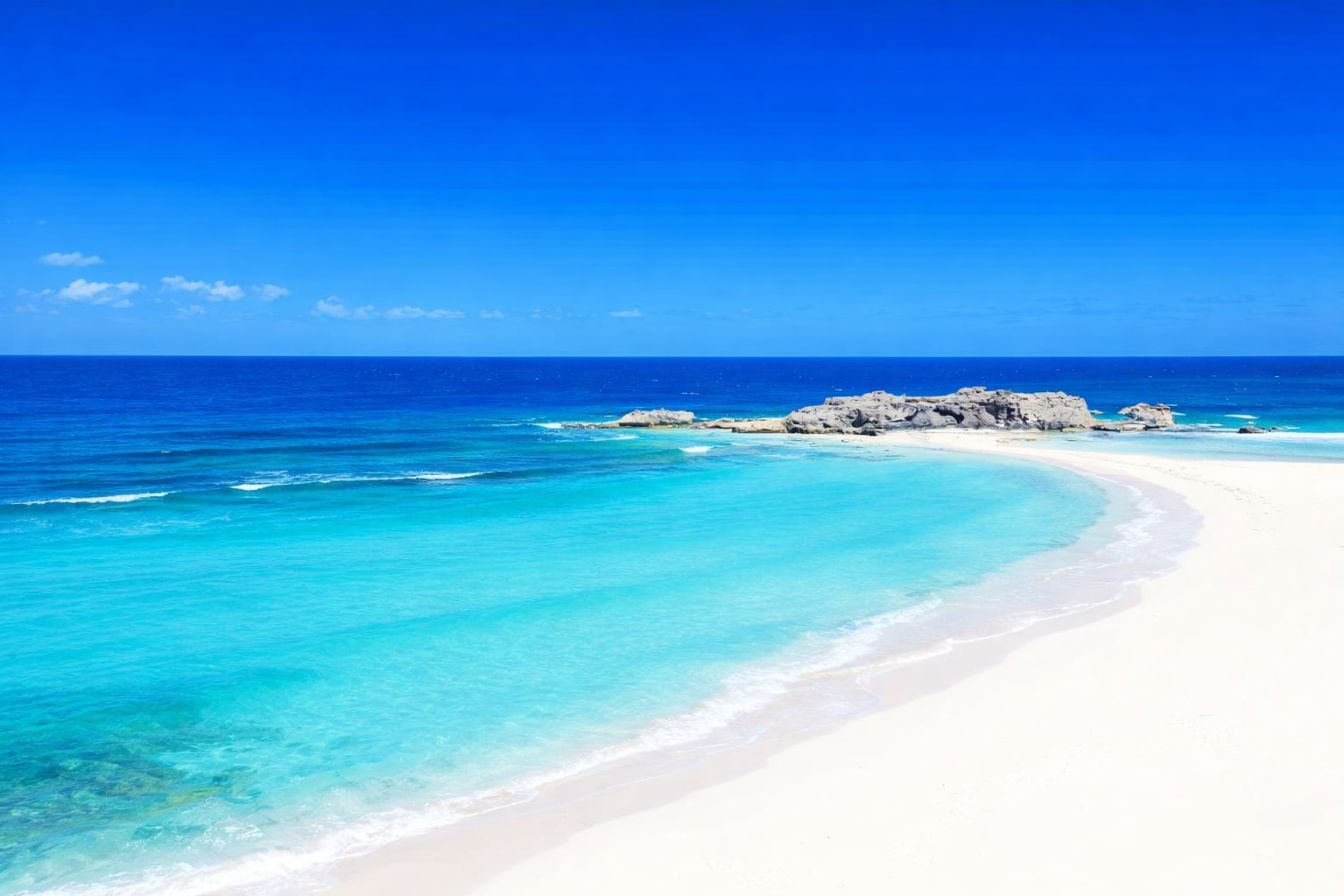
Type "flights to Turks and Caicos" into Google and the results aren't a wall of connecting itineraries through San Juan or Charlotte. Real nonstop service reaches Providenciales from more than a dozen US cities now, which is more than most travelers assume for an island chain with a permanent population under 50,000. That matters for trip planning in a very practical way: the flight itself is rarely the hard part of getting here anymore. Picking the right departure city, booking at the right time, and knowing what to do with the hours after you land is where the real decisions sit.
Confirm PLS as your arrival airport, then compare a private round-trip transfer for your group before arranging activities around check-in.
Your Turks And Caicos Plan
- Confirm the ticket reads PLS, not GDT, unless you already have a separate inter-island plan.
- Judge day one from the scheduled PLS landing time, not the total door-to-door window.
- Compare the full round-trip airport transport cost for your group, and confirm flight details, luggage and any child seats before booking.
This guide covers the two airports in the territory, which US cities currently connect nonstop and on which airlines, how far ahead to book for a fair price, and what a realistic arrival day looks like if you want to fit in a tour before the sun goes down.
Nonstop flight time to Providenciales, by city
Scheduled nonstop flight times, current 2026 schedules. Actual times vary by aircraft and routing.
Which Airport Are You Actually Flying Into?
Almost every visitor arrives at Providenciales International Airport, code PLS, on the north side of the island a short drive from the Grace Bay resort strip. It's the main port of entry for the territory and the only airport in Turks and Caicos with regular scheduled service from the US mainland, Canada and the UK. A second airport, JAGS McCartney International (code GDT), sits on Grand Turk, the historic capital island about 90 miles southeast of Provo. GDT is classified as an international airport but in practice it mostly handles domestic hops between the islands on small carriers like interCaribbean and Caicos Express, plus the occasional cruise-related charter. It is not a realistic entry point for a first-time visitor flying from the US.
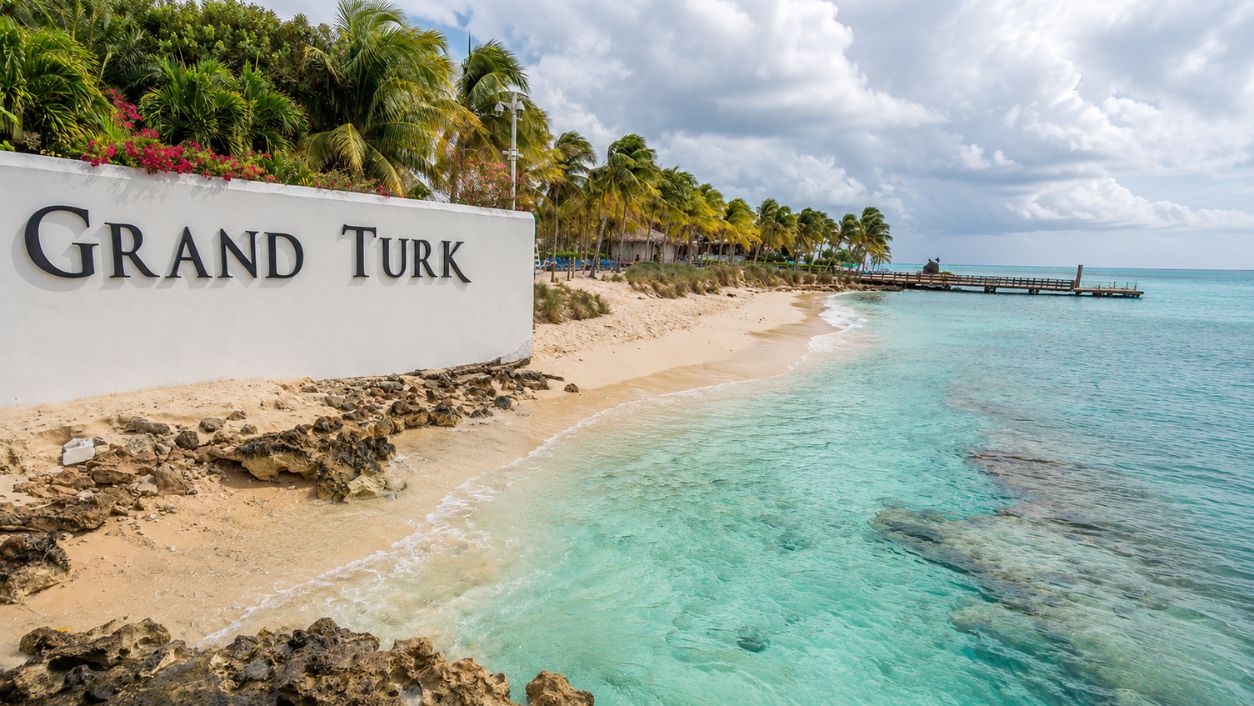
If your itinerary includes Grand Turk, the plantation ruins on Middle Caicos, or a whale-watching trip during humpback season, you'll still land at PLS first and connect onward by a short inter-island flight or, less commonly, a ferry from North Caicos. Nobody books a US-to-Grand-Turk itinerary directly except cruise passengers, whose ship does the flying for them.
PLS itself is small by design: one terminal, one runway, and a layout compact enough that you're rarely more than a few minutes' walk from your gate to bag claim. Departing travelers pass a small cluster of duty-free shops selling spirits, cigars and jewelry, useful for a last-minute gift, though there's nothing resembling a mainland hub's shopping concourse. One detail worth knowing before you fly home: there is no US Customs and Border Protection preclearance facility here, unlike Nassau in the Bahamas. That means you clear immigration and customs again on the US side after you land, rather than before you board, so build a slightly longer connection window into your return itinerary if you're routing through a US gateway city on the way home.
| Airport | Code | Location | What it actually handles |
|---|---|---|---|
| Providenciales International | PLS | Providenciales, 10-15 min from Grace Bay | Nearly all scheduled flights from the US, Canada and UK; the airport you will use |
| JAGS McCartney International | GDT | Grand Turk, near Cockburn Town | Inter-island hops, cruise-related traffic; not a first-arrival airport for US travelers |
Which US Cities Fly Nonstop To Providenciales
The nonstop network out of PLS has grown steadily and now covers a wide band of the eastern half of the US, plus a scattering of routes further west. According to the territory's own tourism board, roughly sixteen North American cities connect directly, spanning the Northeast corridor, the Southeast, the Midwest and a handful of others. Miami is the shortest hop at under two hours and the route with the most daily frequency. New York, Boston and Chicago sit further out, in the three-and-a-half to four-and-a-half hour range, but all still qualify as a single nonstop flight rather than a connection.
Not every route runs year-round. Several of the newer or lower-demand connections, including Baltimore and a handful of Midwest cities, operate seasonally, generally scaling up for the December through April high season and pausing or thinning out in the slower summer and early-fall months. If your home airport shows a route that looks too good to be true for a random Tuesday in September, check the specific date rather than assuming the schedule holds all year.
| Departure city | Flight time | Airline(s) | Schedule |
|---|---|---|---|
| Miami (MIA) | ~1h 45m | American | Year-round, multiple daily |
| Fort Lauderdale (FLL) | ~2h | Southwest, JetBlue | Year-round |
| Atlanta (ATL) | ~2h 50m | Delta | Year-round, daily |
| Charlotte (CLT) | ~3h 15m | American | Year-round, daily |
| New York (JFK) | ~3h 30m | American, Delta, JetBlue | Year-round |
| Newark (EWR) | ~3h 30m | United, BermudAir | Year-round / seasonal by carrier |
| Philadelphia (PHL) | ~3h 20m | American | Seasonal, peak months |
| Washington DC (IAD) | ~3h 30m | United | Year-round |
| Boston (BOS) | ~4h | American, Delta, JetBlue | Seasonal, peak months |
| Houston (IAH) | ~4h 15m | United | Year-round, daily |
| Chicago (ORD) | ~4h 30m | American, United | Seasonal, peak months |
| Dallas-Fort Worth (DFW) | ~4h 30m | American | Seasonal, peak months |
| Orlando (MCO) | ~2h 30m | Southwest | Seasonal |
| Baltimore (BWI) | ~3h 15m | Southwest | Seasonal, roughly Nov-Apr |
| Denver (DEN) | ~5h+ | New nonstop route confirmed for Dec 2026 | Seasonal, launching winter 2026 |
Denver is worth a specific note. Denver International Airport lists a new nonstop connection to Providenciales beginning December 19, 2026, which would be the first direct link between the Rockies and the island. If you're in Colorado and this route matters to your plans, confirm it's still on the schedule before booking around it. Brand-new routes launch and occasionally get pushed or dropped before their first flight, and this one hadn't operated yet as of this writing.
Los Angeles and most of the West Coast still have no nonstop option. The realistic routing from LAX goes through Miami with American, Houston or Washington Dulles with United, or Orlando with Southwest, and the fastest of those connections runs around 9 hours gate to gate. If you're flying from California, Seattle or Phoenix, budget a full travel day each way rather than expecting a short island hop.
Which Airlines Actually Fly Which Route
Five US carriers plus a scattering of smaller regional operators serve Providenciales, and each one tends to own a specific corner of the map rather than competing head-on everywhere. American Airlines has the broadest footprint, flying from Miami, Charlotte, New York, Philadelphia, Boston, Chicago and Dallas. Delta leans on its Atlanta hub along with New York and Boston. JetBlue flies from New York and Boston, both cities where it goes wheel to wheel with American and Delta on the same route, which is generally good news for fares. United works the Washington DC and Houston corridor. Southwest, a comparatively recent entrant to the island, covers Fort Lauderdale, Orlando and the seasonal Baltimore route.
Knowing which airline owns which route matters for two practical reasons. First, if you have status or a companion pass with a specific carrier, that can steer which departure city makes sense even if it isn't your closest airport. Second, on routes flown by only one airline, like Houston on United or Charlotte on American, there's less competitive pressure on price, so booking early carries more weight than it does on a contested route like JFK.
| Airline | US cities served |
|---|---|
| American Airlines | Miami, Charlotte, New York (JFK), Philadelphia, Boston, Chicago, Dallas-Fort Worth |
| Delta Air Lines | Atlanta, New York (JFK), Boston, Minneapolis (seasonal), Detroit (seasonal) |
| JetBlue Airways | New York (JFK), Boston |
| United Airlines | Washington DC (Dulles/IAD), Houston, Newark |
| Southwest Airlines | Fort Lauderdale, Orlando, Baltimore (seasonal) |
Frontier has also been expanding its Caribbean network aggressively into 2026, adding routes across several US hubs, and Denver's planned Providenciales service is expected to be part of that push. If budget-carrier pricing matters more to you than schedule flexibility, it's worth checking whether a Frontier route has opened from a city near you before defaulting to a legacy carrier.
Flying From Canada Or The UK
Canadian travelers have it easier than most of the western US: Toronto, Montreal and Ottawa all connect nonstop to Providenciales, split across Air Canada, WestJet and Porter depending on the season, with Toronto typically running around 4 hours in the air. That's a shorter total travel time than a New Yorker gets on the equivalent nonstop, largely because of how the routing works out geographically.
From the UK, there is no nonstop option at all. The only scheduled routing runs on British Airways via Nassau in the Bahamas, with roughly a one-hour layover before the short onward hop to Providenciales. It's a long day of travel from London, but it's a single-airline itinerary rather than a self-connect across two separate carriers, which simplifies bag handling and rebooking if the first leg runs late.
When To Book For The Best Fare
Airfare to this island swings hard with the calendar, more than most Caribbean destinations, because demand concentrates so heavily in the December-to-April dry season. Booking timing needs to track that seasonality rather than following a single universal rule like "book six weeks out," which works for a random domestic route but underperforms here in peak months.
For travel during the December through April window, aim for 4 to 6 months of lead time. Fare classes on the popular routes, especially JFK and Miami, sell through in tiers, and the cheapest seats on a Christmas or February date can disappear well before the flight itself is close. For shoulder months like May or November, when demand eases but the weather is still good, 6 to 10 weeks ahead is usually plenty of runway. For the September and October window, which carries the highest hurricane risk of the year, fares run lowest of all and last-minute booking is a genuinely reasonable strategy, provided you're comfortable with the storm-season trade-off and ideally carry flexible or refundable tickets.
| Travel window | Suggested booking lead time | Why |
|---|---|---|
| Late December - early January | 6+ months | Highest demand of the year; fares climb early and keep climbing |
| January - April (peak season) | 4-6 months | Strong demand, especially around February school breaks and spring break |
| May | 6-10 weeks | Shoulder season; good weather, softer demand than winter |
| June - August | 2-3 months | Summer travel bump, but generally cheaper than winter |
| September - October | 2-6 weeks | Lowest fares of the year; hurricane season risk is the trade-off |
| November | 6-10 weeks | Near-peak conditions at a real discount before the December rush |
One more pattern worth knowing: several fare-tracking services put the statistical sweet spot for this specific route around 38 days out on average across the whole calendar, though that number gets pulled around heavily by the peak-season outliers above. Treat it as a rough middle-of-the-road benchmark, not a rule that beats the season-specific guidance in the table. A fare alert set the day you settle on travel dates costs nothing and catches the occasional price drop that even careful advance booking misses, particularly on the routes with three-airline competition like JFK.
It's also worth building the true cost into your comparison rather than shopping on base fare alone. Round-trip tickets to PLS carry roughly $85 in local security and airport development fees baked into the ticket price, on top of the usual US departure taxes, so two itineraries that look close on the search-engine headline number can land noticeably differently once every fee is added in.
What Happens When You Land: Customs And Your First Hour
US, Canadian, UK and EU citizens don't need a visa to enter Turks and Caicos, but immigration does check for a valid passport and proof of onward travel, meaning a return or continuing ticket. Airlines increasingly verify this at check-in before you even board, so it rarely becomes an issue at the gate on arrival, but it's worth having a printed or digital copy of your return flight ready if asked. Stays are generally permitted up to 90 days for visa-exempt nationalities. One small comfort: the US dollar is the official currency of Turks and Caicos, so there's no currency exchange line to deal with after immigration and no mental math converting prices for the rest of the trip.
PLS is a single-terminal, walk-across-the-tarmac kind of airport, small enough that bag claim rarely takes long once the belt starts moving. The immigration queue is the part that varies most by day and time. Saturday afternoons in peak season, when several wide-body arrivals from the Northeast tend to cluster within an hour of each other, can produce lines of an hour or more. Weekday arrivals, especially Tuesday and Wednesday, are typically far shorter. If your dates are flexible, a midweek arrival buys you a noticeably calmer first half hour on the ground.
Complimentary hotel shuttles are the exception rather than the rule here; most visitors either arrange a paid transfer through their resort, hail a taxi from the clearly marked stand just outside arrivals, or pick up a rental car on-site. Fares run per person rather than per vehicle in Turks and Caicos, which surprises travelers used to a flat taxi rate, so a family of four should expect a noticeably higher transfer cost than a couple making the same trip.
Should You Book A Tour For Arrival Day?
Whether it makes sense to book something on the day you land comes down almost entirely to what time your flight touches down and how far your accommodation sits from the airport. Most of the Northeast morning departures, the 6:00 to 7:00 AM wave out of Boston and New York, land at PLS by mid-morning, which genuinely does leave a workable afternoon once you clear immigration, collect bags and reach your hotel. A flight that lands after 3 or 4 PM is a different story: by the time you're checked in and unpacked, there usually isn't enough daylight left to justify booking a half-day tour and rushing to make it.
A useful rule of thumb: treat anything landing before 1 PM as a candidate for an easy afternoon activity, and anything landing later as a travel day, full stop. A short, low-effort outing, like a two-hour sunset sail, tends to be a better arrival-day fit than a full-day excursion regardless of when you land, since it doesn't demand you show up sharp and organized on almost no sleep.
Travelers connecting through a second airport before reaching PLS, which is common from the West Coast and increasingly common for anyone chasing the cheapest fare rather than the shortest routing, should weight this even more conservatively. A 6 AM departure with a two-hour layover in Miami can still put you on the ground in Providenciales by early afternoon, but a red-eye or an itinerary with a long connection easily eats the entire day. Check your actual scheduled arrival time at PLS, not just your total departure-to-arrival window, before deciding whether day one includes a tour or just a nap.
| Arrival time at PLS | Realistic plan |
|---|---|
| Before 11 AM | Check in, then a half-day tour booked for the same afternoon is workable |
| 11 AM - 2 PM | Check in, settle, and a short 2-3 hour activity later that afternoon is realistic |
| 2 PM - 5 PM | Check in and unwind; save the first booked activity for the next morning |
| After 5 PM | Dinner and rest; treat day one as arrival only |
If you do want tours locked in before you land rather than sorted out from the beach chair on day two, booking through a GetYourGuide or Viator listing ahead of time secures a specific time slot and usually carries free cancellation up to 24 hours out, which matters if your flight runs late or immigration takes longer than planned.
Getting From The Airport To Grace Bay
The drive from PLS to the Grace Bay hotel strip takes about 10 to 15 minutes under normal traffic, which is one of the shortest airport-to-resort transfers anywhere in the Caribbean. Three practical options cover almost everyone: a taxi from the official stand outside arrivals, a pre-arranged resort transfer, or picking up a rental car directly at the airport.
Taxis are metered per person under the government-regulated fare structure, not per vehicle, so a couple pays a different total than a family of five taking the same ride. Renting a car at the airport avoids that per-person math entirely and gives you the flexibility to reach spots like Chalk Sound or the Blue Hills restaurants without arranging a separate ride each time, which is worth factoring in if your stay includes destinations off the main Grace Bay strip.
Several rental agencies operate directly out of or within a few minutes of PLS, including Avis and Sixt at counters inside the arrivals hall, plus a handful of locally based operators like Grace Bay Car Rentals that run their own airport pickup. One adjustment for first-time visitors: driving here is British-style, on the left side of the road with overtaking on the right, which takes most people one short drive to get comfortable with even if they've never driven on the left before.
| Option | Typical time | Best for |
|---|---|---|
| Taxi (shared stand, per person fare) | 10-15 min | Couples or solo travelers staying centrally in Grace Bay |
| Pre-booked resort transfer | 10-15 min | Travelers who want a fixed price arranged before departure |
| Rental car pickup at PLS | 10-15 min plus rental paperwork | Groups, families, or anyone planning to explore beyond Grace Bay |
However you get there, arriving with a plan for those first two hours, rather than figuring it out at the curb, is what separates a smooth start to the trip from a frustrating one. If you're staying at one of the island's all-inclusive resorts, your property will usually coordinate transfers directly as part of the package, which removes one more decision from a day that already involves enough of them.
Written by Baran Ellis
British tour guide since 2012, founder of Turks and Caicos Tours. Baran has guided more than 16,800 travelers through Providenciales and Grand Turk since 2012, and has watched the nonstop flight map to this island grow every one of those years.