Half Moon Bay Guide
Half Moon Bay is one of the most beautiful beaches in Turks and Caicos, combining crystal-clear water, shallow lagoons, roaming rock iguanas, and untouched island scenery.
Use the section recommendations to match an outing to your trip, then compare dates and trip details at the end.
Last updated: July 4, 2026
Half Moon Bay is a 0.75-mile sandbar beach between Little Water Cay and Water Cay, about 1 mile from Providenciales inside Princess Alexandra National Park. It has two sides: a north-facing Atlantic beach with clear turquoise water and a south-facing sheltered lagoon. The lagoon holds juvenile lemon sharks, southern stingrays, starfish, and conch in water rarely deeper than knee height. Rock iguanas roam the dunes freely. There are no facilities. Access is by boat tour, private charter, or kayak from Leeward. Admission to Half Moon Bay is $10, cash only if independent. Most boat tours include it in their price.
For a first visit from Providenciales, start with a shared reef, beach, and sandbar cruise, then compare private and full-day boats before you lock the rest of that day.
Your Turks And Caicos Plan
- Choose a Providenciales boat that names Half Moon Bay or clearly says the cay stop depends on conditions.
- A shared half-day balances reef time and a shorter beach window, while a private boat gives your group more control over stop length.
- Independent visits require current admission details, cash if required, supplies, and tide advice; no matching kayak crossing is included here.
| Location | Between Little Water Cay and Water Cay, Caicos Cays |
| Distance from Providenciales | Approximately 1 mile (1.6 km) from Leeward area |
| Beach Length | 0.75 miles (1.2 km) |
| Beach Width | Approximately 122 feet (37 m) at widest point |
| Protected Status | Princess Alexandra National Park; managed by Turks and Caicos National Trust |
| Admission | $10 per person; cash only if visiting independently. Usually included in boat tour price. |
| Boat Time from Grace Bay | 15 minutes |
| Boat Time from Leeward Marina | 5 minutes |
| Kayak Time from Leeward | 20-30 minutes (current and tide dependent) |
| Walk from Little Water Cay | 5 minutes via dune trail from north end of Little Water Cay |
| Facilities | None. No restrooms, no food, no vendors. |
| Wildlife | Rock iguanas, juvenile lemon sharks, stingrays, starfish, herons, pelicans, ospreys |
Prices verified June 29, 2026
What Is Half Moon Bay And Why Is It Worth Visiting?
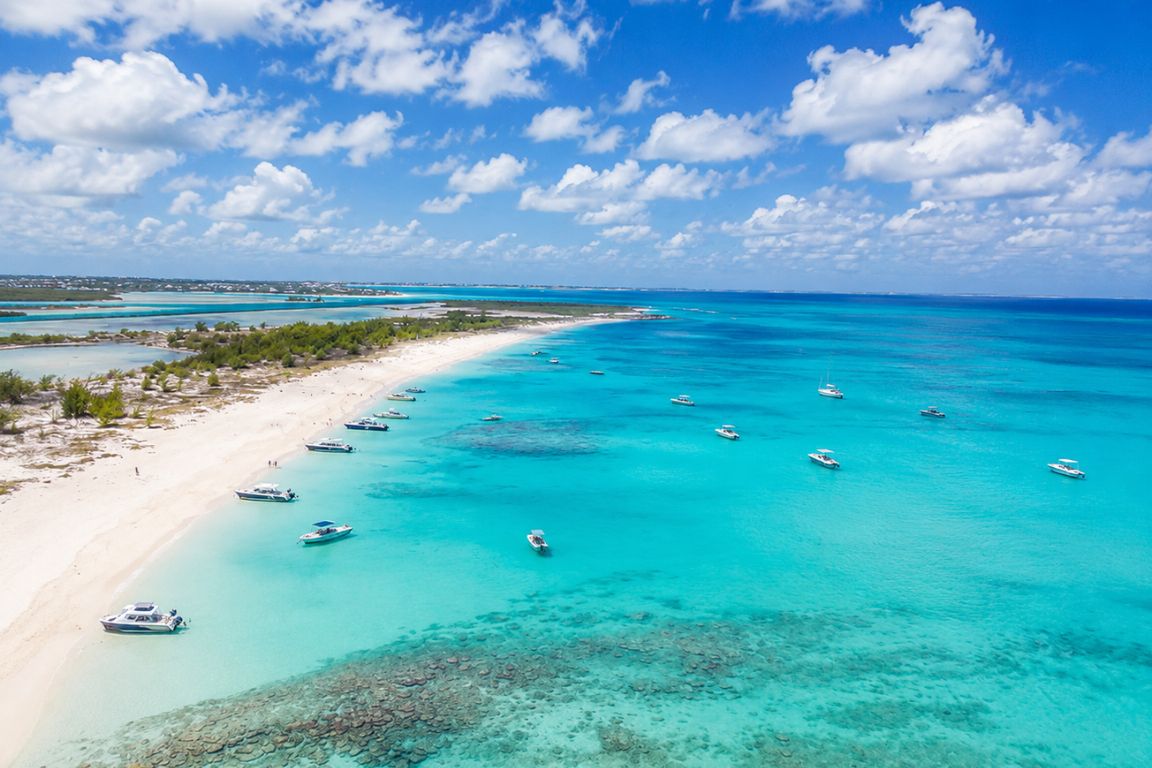
Half Moon Bay is a 0.75-mile sandbar beach between two uninhabited cays, about 1 mile from Providenciales and inside Princess Alexandra National Park. It is consistently ranked among the most beautiful beaches in the Caribbean and is the single most visited boat excursion destination in Turks and Caicos. The combination of a north-facing Atlantic beach, a sheltered south-side lagoon, free-roaming rock iguanas, and genuinely extraordinary water color makes it unlike any single beach on the main island.
The water at Half Moon Bay does something to people. They wade in from the north beach expecting the same turquoise they’ve been looking at all week from Grace Bay, and instead find themselves standing ankle-deep in what looks like liquid glass, able to see every grain of sand and every passing fish ten feet away. The sandbar sits barely above sea level. On either side the ocean is present and visible. It’s the closest thing to standing in the middle of the sea without getting wet.
The south lagoon is a different environment entirely. Sheltered from wind by the central dune, it runs warmer than the north beach and so shallow across most of its width that children can wade from one side to the other. Juvenile lemon sharks move through the shallows here, small enough to be clearly visible from the surface and unhurried enough to photograph. Southern stingrays glide across the sandy bottom. Starfish cluster near the seagrass at the lagoon edge. Iguanas wander down from the dune to see what the boats brought today.
Half Moon Bay is inside the national park and is a standard stop on Caicos Cays boat trips. The group tour of reefs, beaches, and sandbars is the shared-boat version of that route.
Not sure if it lives up to the price tag? This breakdown on whether Turks and Caicos is worth visiting covers what you actually get for the money and who it’s really built for.
What Makes Half Moon Bay’s Beach And Lagoon Unique?
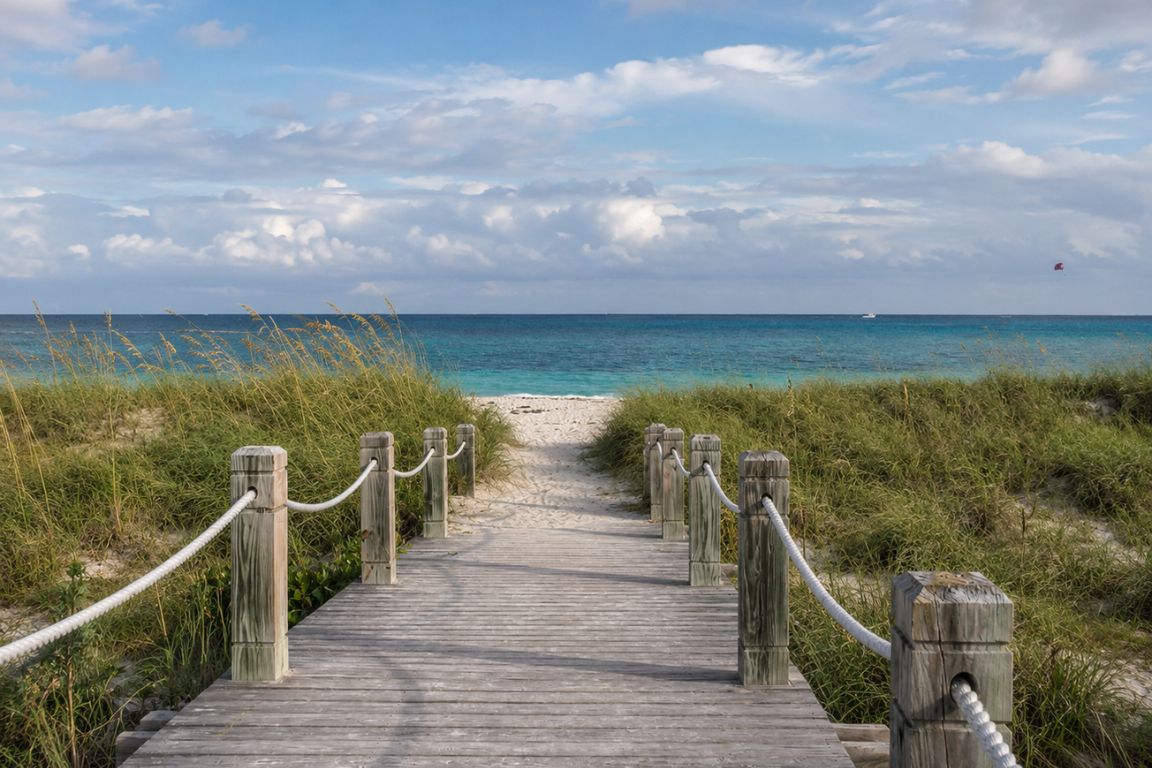 Half Moon Bay formed from the gradual infill of Donna Cut, a channel created between Little Water Cay and Water Cay by Hurricane Donna around 1960. The channel filled completely by 1999, leaving a wide sandbar beach on the north side and a shallow enclosed lagoon on the south side. The lagoon is what the old channel became: sheltered, warm, and extremely shallow, with water temperature several degrees warmer than the open beach and marine life density that reflects its protected environment.
Most beaches exist because sand accumulated on a coastline over thousands of years. Half Moon Bay formed in roughly forty. Hurricane Donna cut the channel through in the 1960s; sand gradually accumulated on the western edge of the new passage; by the 1990s it was closing; by 1999 water movement had stopped entirely. What looks ancient and inevitable was geologically recent. The thatch palms and casuarina trees on the central dune are young by the standards of the cays around them.
The north beach faces the Atlantic directly. The barrier reef sits offshore and breaks incoming swells, keeping the water calm enough for swimming across most conditions. The sand here is fine and white and packed firm enough to walk without sinking. At low tide a long sandbar extends into the water and the ocean retreats far enough that you can walk 50 meters out with water still only at waist height.
The south lagoon operates by different rules. The enclosing dune blocks most wind even on days when the north beach is choppy. The water is warmer by several degrees because it’s shallow and sheltered from circulation. This is why the juvenile lemon sharks prefer it: warm, protected, food-rich, and away from the open water predators that juveniles can’t yet handle. Kiteboarding operators use the lagoon for the same reason the sharks do: flat water even when the trade winds are running hard.
How Do You Get To Half Moon Bay?
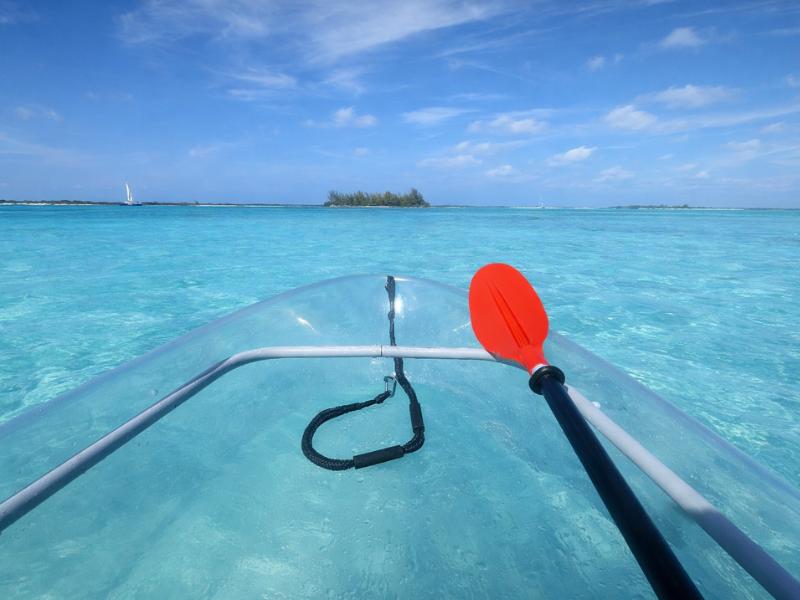
Three practical options: boat tour from Grace Bay (15 minutes, most common, admission typically included in tour price), kayak or paddleboard from the Leeward area of Providenciales (20 to 30 minutes each way, current-dependent, requires some paddling experience), or walking from Little Water Cay via a 5-minute dune trail from the north end of the island. Private charters from any Leeward-area marina can reach Half Moon Bay in 5 minutes.
The vast majority of visitors arrive on a half-day or full-day group boat tour that stops at Half Moon Bay as a standard destination on the Caicos Cays route. The entrance fee is built into most tour prices. The boat anchors offshore, a dinghy or swim platform deposits people on the north beach, and the group typically has 45 minutes to an hour before the tour continues. This is enough time to walk the beach, wade in the lagoon, and see the iguanas. It goes quickly.
Kayaking from Leeward is genuinely achievable for people with basic paddling fitness. Big Blue Collective rents sit-in touring kayaks from the Blue Haven Marina area, which is better suited to the channel crossing than open-seat kayaks. The outward trip with the prevailing east-southeast wind behind you takes 20 to 30 minutes. Coming back is the harder direction: the same wind that helped you over is now in your face. Check the tidal conditions before leaving and aim for a slack or incoming tide on the return. Half Moon Bay is $10 admission, cash only, if you arrive independently.
If you’ve visited Little Water Cay on a boat tour, walk north along the boardwalk to the tip of the island and take the dune trail over to Half Moon Bay. Five minutes. This is the simplest connection between the two and the route most visitors don’t know exists until someone on the tour mentions it.
The water here is the whole point and a good boat tour makes it even better. Here’s the best boat tours in Turks and Caicos so you don’t end up on a crowded catamaran when a better option was available.
What Can You Do At Half Moon Bay?
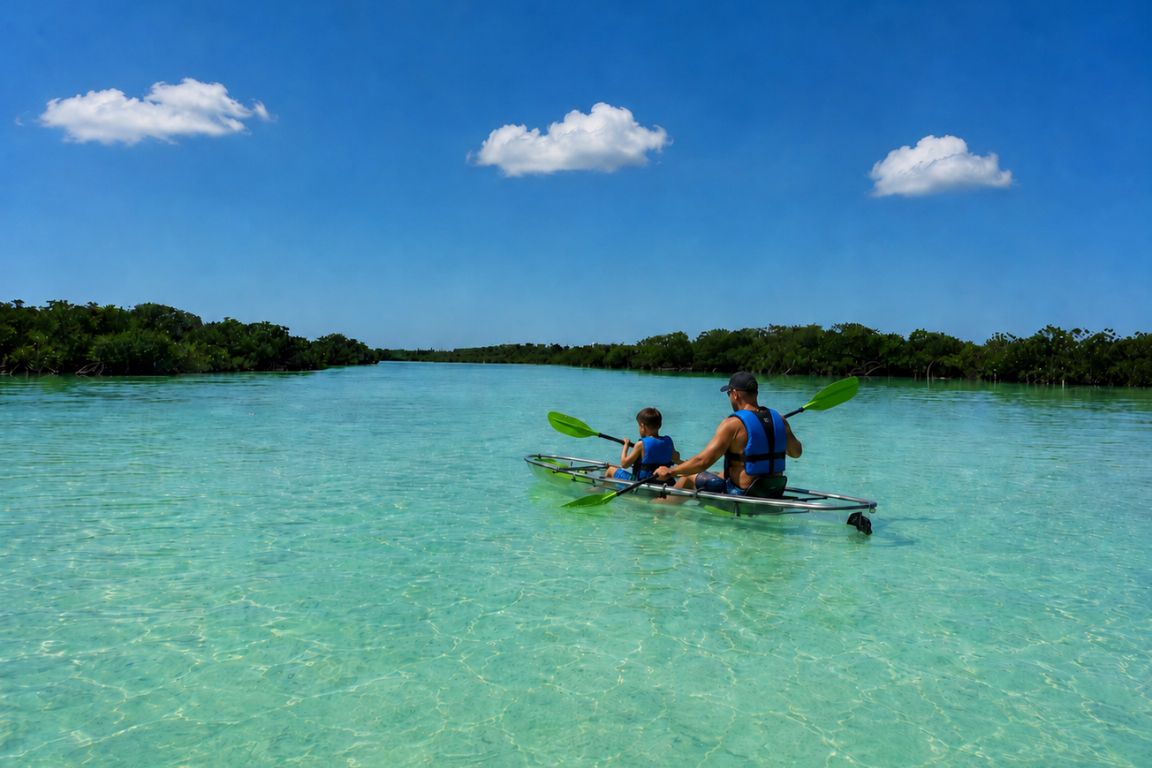 Swimming on the north beach, wading and wildlife spotting in the south lagoon, walking the full 0.75-mile beach length, photographing iguanas on the dunes, snorkeling the fringe reef just off the north shore, and kiteboarding in the lagoon (for those with gear and skill). Full-day BBQ cruise operators set up beach lunches here. There are no organized activities, no rentals, and no facilities on the island. Everything requires bringing your own supplies or arriving on a tour that provides them.
The north beach is the swimming beach. The water is calm inside the reef line, clear, and shallow for a long distance from shore. For most visitors the primary activity here is exactly what it looks like: wading in exceptional water and taking photographs that they already know won’t fully capture what they’re seeing. The beach curves slightly at each end where low limestone cliffs frame the sand, and the iguanas that can’t find dune shade pick spots on these warm rocks.
The south lagoon is where families with young children tend to migrate after the first ten minutes. The water is knee-deep across most of its width, completely calm, and warm. Starfish sit on the sandy bottom in the shallower areas. Stingrays glide along the bottom in the slightly deeper sections. Juvenile lemon sharks, typically 1 to 2 feet long, move through the warm water in small numbers, occasionally turning to investigate before continuing on. They are not a danger at that size; they are a genuinely remarkable wildlife encounter that most visitors don’t expect and don’t forget.
Snorkeling off the north beach on the fringe reef produces conch, juvenile fish, reef fish, and the occasional ray. It’s not the outer barrier reef and shouldn’t be sold as equivalent, but for travelers who want to combine a beach stop with an easy snorkel the water quality and visibility are exceptional. Kiteboarding in the south lagoon is a specific skill activity: the flat water and consistent wind make it good for the sport, but you need your own gear or to arrive on an organized kiteboarding tour with Big Blue Collective or one of the local kite schools.
Trying to decide between a guided snorkel tour and just renting gear off the beach? Here’s the best snorkeling tours in Turks and Caicos so you get in the water at the right spots without wasting a day on a mediocre trip.
What Wildlife Will You See At Half Moon Bay?
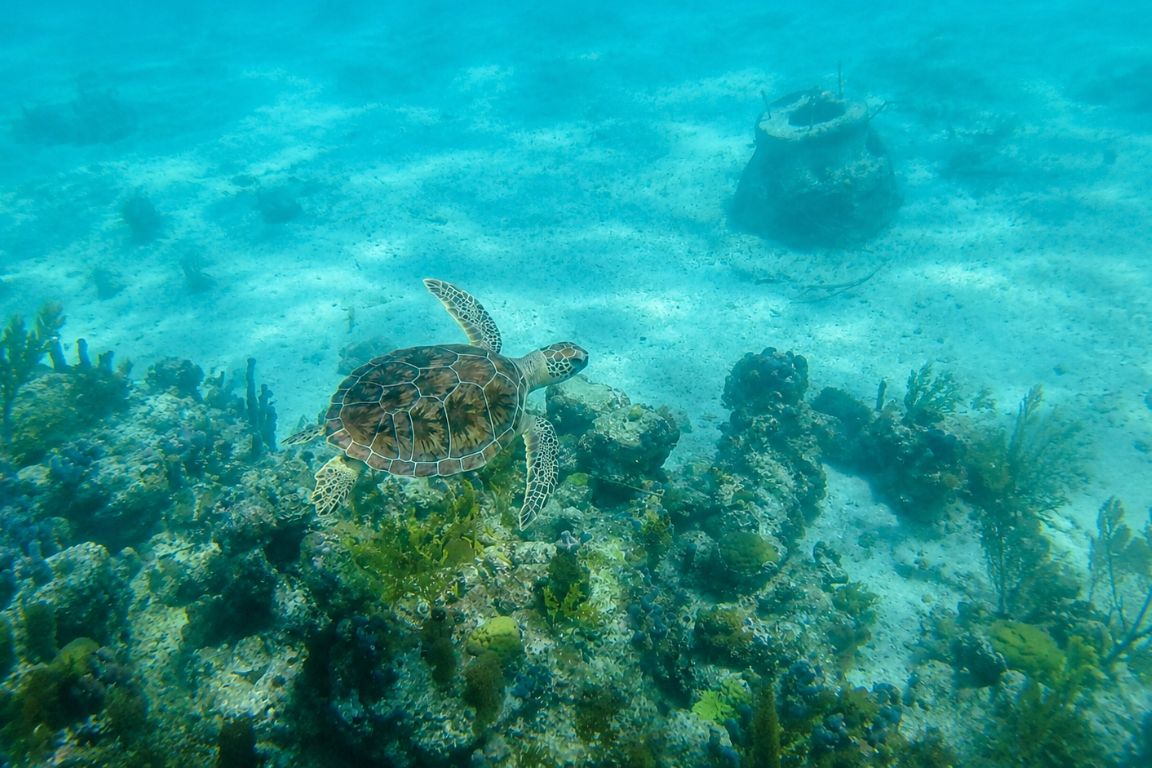
Rock iguanas (Cyclura carinata) roam the dunes and limestone outcrops freely, without boardwalks or restriction paths. Juvenile lemon sharks are regularly spotted in the south lagoon. Southern stingrays and starfish are consistent lagoon sightings. Herons, ospreys, egrets, and pelicans are present around the lagoon throughout the day. Hawksbill turtles and conch are found in the surrounding seagrass and fringe reef areas.
The iguana experience at Half Moon Bay is different from Little Water Cay in one important way: there is no boardwalk. The iguanas here wander wherever they want, which at Half Moon Bay means the dunes, the limestone outcrops at the ends of the beach, the seagrass edge of the lagoon, and occasionally the beach itself. You stay on established paths to protect the burrows, but you are sharing the beach with these animals rather than viewing them from an elevated walkway. Adults sit on sun-warmed limestone and watch you with complete neutrality. Juveniles scatter when you get too close but reconsider after a few seconds. Feeding them is illegal and has demonstrably caused the deaths of individual iguanas in TCI. The prohibition is not advisory.
The juvenile lemon sharks in the south lagoon generate a disproportionate amount of the conversation on the boat ride back to Providenciales. They are small, they are visible in the crystal-clear water, and they behave with the confident curiosity of animals that haven’t yet learned to avoid humans. Seeing one turn and glide past your ankle in six inches of water while you’re standing in the lagoon is an experience that sits permanently in memory even when the beach photographs have blurred into the general catalogue of good Caribbean trips. They are not dangerous at the sizes typically encountered here. Lemon sharks at juvenile stage are ambush predators for very small prey and have no interest in adult humans wading in shallow water.
The underwater world here is the real draw for a lot of travelers. Here’s a full guide on marine life in Turks and Caicos tours so you know what to expect beneath the surface before you book anything.
What Tours Visit Half Moon Bay?
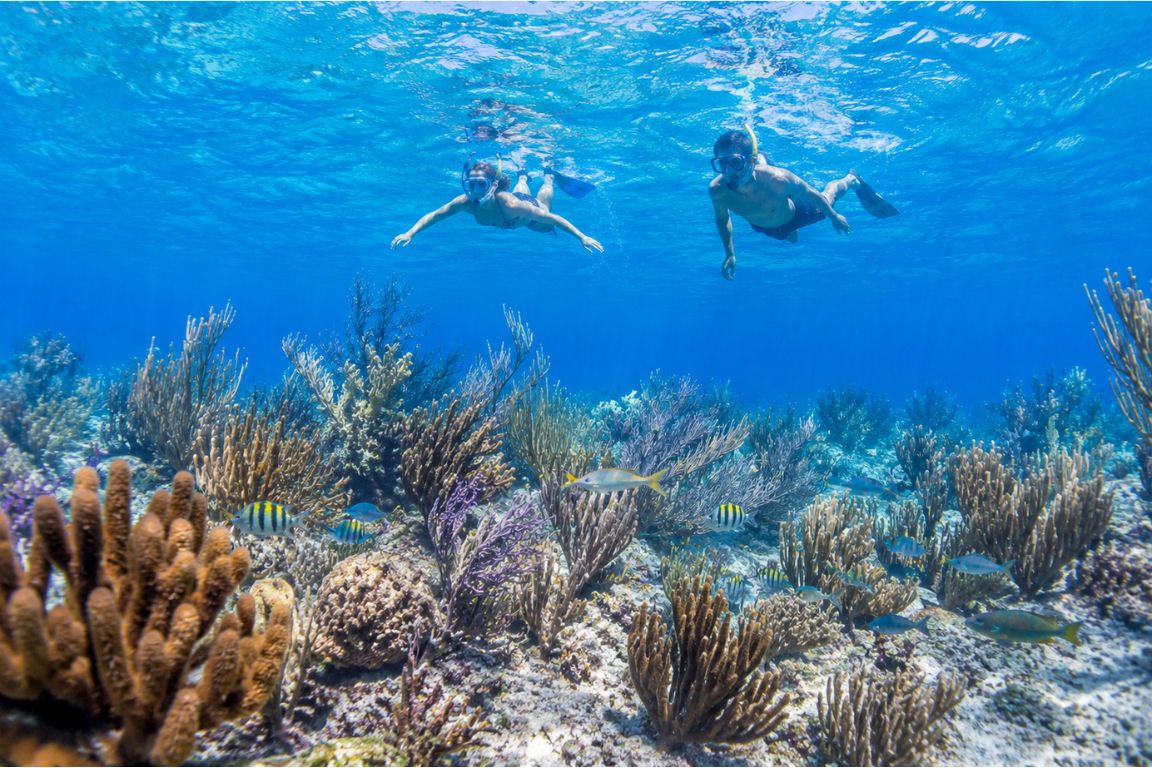 Half Moon Bay is the most visited single boat excursion destination in Turks and Caicos and is included as a standard stop on nearly every half-day and full-day group cruise from Providenciales. Operators including Sun Charters, Caicos Dream Tours, Island Vibes, Sail Beluga, Grace Bay Adventures, and Caribbean Cruisin all include it. Private charters from any Leeward-area marina can reach it in 5 minutes. Mako Jet Ski Tours runs shared and private jet ski tours that specifically feature Half Moon Bay.
The standard half-day group cruise visits Half Moon Bay as the beach stop after the snorkeling portion at Leeward Reef. The sequence is usually reef, iguanas at Little Water Cay, and then Half Moon Bay for the final beach stop. Time on the beach is typically 45 minutes to an hour on a shared cruise. For travelers who want more time, the private charter option is the answer: a 5-minute trip from the Leeward Marina means you can have Half Moon Bay entirely to yourself in the early morning before the tour boats arrive, which is also when the light is best for photography and the iguanas are most active.
Big Blue Collective’s early morning charters are specifically noted for catching Half Moon Bay before the crowds. The visittci.com listing for the beach cites Big Blue’s morning departures by name as the way to experience its best form. Sail Beluga, which has been sailing to Half Moon Bay for decades on their Polynesian-style catamaran, offers a relaxed and quieter alternative to the larger power catamarans. Mako Jet Ski Tours brings small groups to the beach and lagoon by jet ski, which is the fastest access option from Providenciales and specifically suited to travelers who want a short, high-energy visit rather than a full half-day cruise.
Questions about which tour or time of day works best for your group? Start with the Grace Bay half-day snorkel tour for a shared boat, or the private half-day island trip if you want the schedule to yourself.
Both get you on the water but the experience is completely different. Here’s an honest comparison of catamaran tour vs private charter in Turks and Caicos tours so you book the right one for your group.
What Should You Know Before You Go?
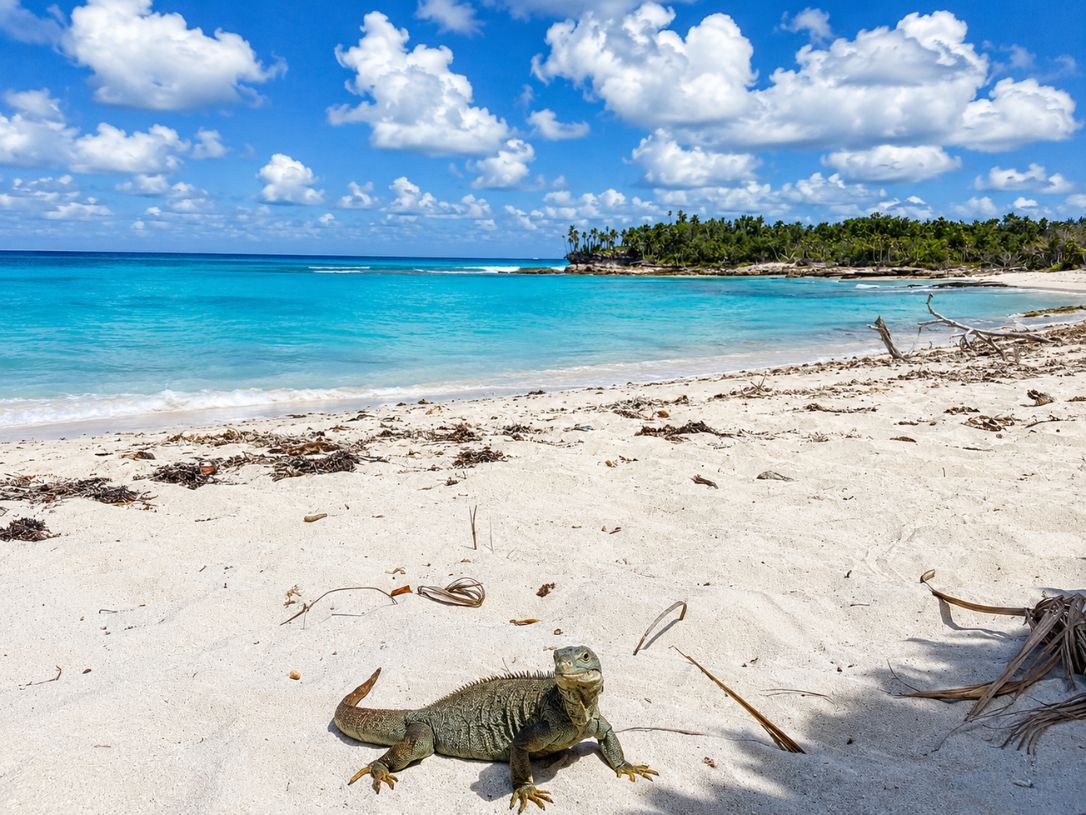 Half Moon Bay has no facilities: no restrooms, no food, no fresh water, no vendors. Bring everything you need. The $10 admission fee is cash only if you arrive independently. Do not feed or touch the iguanas. Stay on established paths to protect the iguana burrows in the sand. Reef-safe sunscreen only. The return kayak trip to Providenciales is harder than the outward trip due to southeast trade winds. On group tours, 45 minutes to an hour passes faster than expected.
The no-facilities situation is the most common source of visitor surprise. Half Moon Bay is uninhabited and managed as a national park. There is a welcome area where the $10 admission is collected, and that is the extent of the infrastructure. No bathroom means plan accordingly before the boat leaves. No food or drink vendor means the boat tour’s onboard refreshments are the only option; if you’re kayaking independently, bring water and plan for the round trip. This is not a place to arrive underprepared in the middle of summer.
The iguana rules at Half Moon Bay mirror those at Little Water Cay with one practical difference: there are no boardwalks to keep you on track. The iguanas here have burrows under the sand on the dune and in the limestone edges of the beach. Stepping off the established paths collapses these burrows. The fact that the beach looks like open sand does not mean it’s safe to wander anywhere. Watch where you walk near the dune vegetation and the limestone outcrops, and stay back when iguanas are sunning in these areas.
For kayakers: check the tides before you leave. The outward trip with the prevailing southeast wind behind you is manageable in 20 to 30 minutes from the Leeward area. The return trip into that same wind on a tired body after a couple of hours in the sun is a different matter. Big Blue Collective provides tide and wind advice when you rent a kayak. Take it.
Most visitors stumble across it as part of a boat tour without knowing what they’re looking at. Here’s a Little Water Cay guide so you show up actually knowing what makes this place worth the detour.
Is Half Moon Bay Worth The Trip?
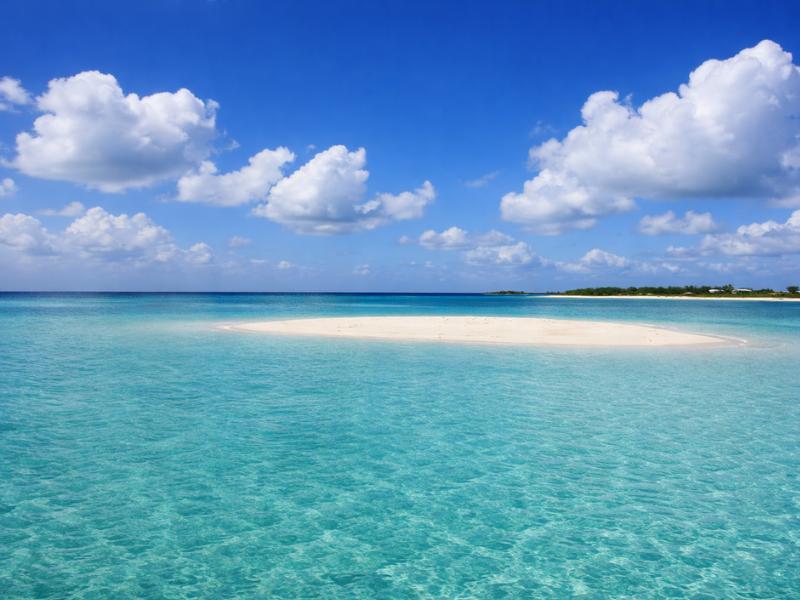
Yes, without qualification. Half Moon Bay is the single most frequently cited highlight by travelers who visit Turks and Caicos. It combines water that is genuinely unlike anything most visitors have seen before, a sheltered lagoon with accessible wildlife, free-roaming iguanas, and a beach long enough that even when tour boats are present it rarely feels crowded. The trip from Grace Bay takes 15 minutes by boat. The experience justifies the journey by the time you’re knee-deep in the lagoon.
Setting expectations honestly: Half Moon Bay is a beach. A spectacular, geologically unusual beach with exceptional wildlife and extraordinary water, but fundamentally a place to swim, wade, walk, and look at things. There are no organized activities, no shade structures, no beach bars, and no rescue of any kind if you arrive without water on a hot day. The experience is as good as the preparation. Travelers who arrive on a well-organized boat tour with cold drinks, snorkeling gear, and a crew who know the lagoon come back talking about it for years. Travelers who kayak over without checking the tide and spend the return trip fighting the wind and regretting the decision have a different story.
Among the travelers we’ve taken through TCI since 2012, Half Moon Bay generates more repeat mentions in post-trip feedback than any other single destination. Children who see the juvenile sharks in the lagoon talk about it for years. Adults who walked the length of the north beach at low tide with the sandbar extending into the sea around them describe it as one of the most beautiful things they’ve seen. The photographs don’t capture it. The water is one of those things that requires the actual experience.
If you want more time on the sandbar than a shared stop allows, compare the half-day catamaran sail and snorkel with a private power catamaran, or browse best boat tours first.
Not sure how to fill your days beyond Grace Bay? This breakdown on the best things to do in Providenciales gives you a realistic activity list for every type of traveler.
What Our 16,800 Travelers Say About Half Moon Bay
| Rated Half Moon Bay the highlight of their TCI trip | 79% | Most frequently cited single location across all post-trip feedback |
| Specifically mentioned the south lagoon wildlife (sharks, rays, starfish) | 71% | Juvenile lemon sharks the most commonly cited specific encounter |
| Wished they had more time on the beach | 64% | Most common among group tour visitors with 45-minute stops |
| Also visited Little Water Cay on the same trip | 81% | The two are a natural combination on any Caicos Cays tour |
Frequently Asked Questions
Is there an entrance fee for Half Moon Bay?
Yes. Admission is $10 per person, cash only if visiting independently. Most half-day and full-day boat tours include the entrance fee in their tour price. Confirm with your operator before booking whether admission is bundled. The fee is collected by the Turks and Caicos National Trust, which manages the beach and surrounding area.
Are the sharks in Half Moon Bay lagoon dangerous?
No. The sharks commonly seen in the Half Moon Bay lagoon are juvenile lemon sharks, typically 1 to 2 feet long. They move through the shallow warm water and are not aggressive toward wading humans. There have been only three recorded shark attacks in TCI history involving the general reef and open-water environment; the lagoon juveniles are a wildlife encounter, not a hazard. Do not feed them; feeding any marine animal in a national park is illegal in TCI.
Can you walk between Half Moon Bay and Little Water Cay?
Yes. A short dune trail connects the north end of Little Water Cay to Half Moon Bay. The walk takes about five minutes. Most visitors who arrive at Little Water Cay by boat walk over to Half Moon Bay and back as part of the same stop. It is the most efficient way to experience both in a single visit.
What is the best time of day to visit Half Moon Bay?
Early morning, before 10 am, gives the best combination of light, iguana activity, and beach quiet. The first group tours from Grace Bay typically arrive mid-morning. Private charter operators including Big Blue Collective specifically offer early morning departures to catch Half Moon Bay before the crowds. Afternoon visits are also good but the beach becomes busier as the day progresses.
If you want a private charter that lets you stay as long as you want, check the private half-day island trip or the Grace Bay luxury private power catamaran.
Written by Baran Ellis
British tour guide since 2012 · Founder, Turks and Caicos Tours
Baran has guided over 16,800 travelers across Providenciales, Grand Turk, and the Caicos cays since founding the agency.