Turks And Caicos With Kids
Turks and Caicos is one of the Caribbean’s best family destinations, with calm beaches, safe swimming, wildlife encounters, and activities for kids of every age.
Use the section recommendations to match an outing to your trip, then compare dates and trip details at the end.
Last updated: July 4, 2026
Turks and Caicos is one of the Caribbean’s most genuinely family-friendly destinations, not because of resort programming, but because the water itself is that safe. Grace Bay Beach is reef-protected, motorized boats are banned in the swimming area, and the water stays shallow for a long way out. The south coast bays, Taylor Bay and Sapodilla Bay, are even calmer for toddlers. Kids from toddlers to teens have real options here, from iguana sanctuaries to stingray encounters to the semi-submarine Undersea Explorer. The main thing families underestimate is cost: reef-safe sunscreen, groceries, and dining run expensive. Pack accordingly and the trip delivers.
Quick Facts: Turks And Caicos Family Travel At A Glance
| Best base for families | Grace Bay / Leeward, Providenciales |
| Calmest beach for toddlers | Taylor Bay (waist-deep for a quarter mile) |
| Best snorkel age (guided) | 4-6 years and up, guide-dependent |
| SNUBA (underwater breathing system) | Ages 8 and up, no certification needed |
| Horseback riding (Provo Ponies) | Ages 7 and up |
| Motorized boats in Grace Bay swim zone | Prohibited (reef protection rules) |
| UV index | Up to 12 year-round, even on cloudy days |
| Best family season | December-April (peak); May and November (value) |
| Government tourism tax + service charge | 22% added to all resort and restaurant bills |
| Humpback whale watching (kids’ favorite) | January-April, peak February |
Prices and regulations verified June 29, 2026. Sources: visittci.com, DECR, official Turks and Caicos Tourist Board.
For a first family outing from Providenciales, compare a four-hour Grace Bay sail and snorkel with a short clear-boat ride and a mangrove kayak tour.
Your Turks And Caicos Plan
- Base most family boat days on Providenciales. Grand Turk, Salt Cay, North Caicos, and Middle Caicos require separate transport.
- Match energy to the outing: a 75-minute dry clear-boat look, a mangrove kayak, or a four-hour Grace Bay snorkel sail.
- Check your actual travel date and each traveler's restrictions before arranging beaches, meals, or other parts of the trip.
Is Turks And Caicos Actually Good For Families With Kids?
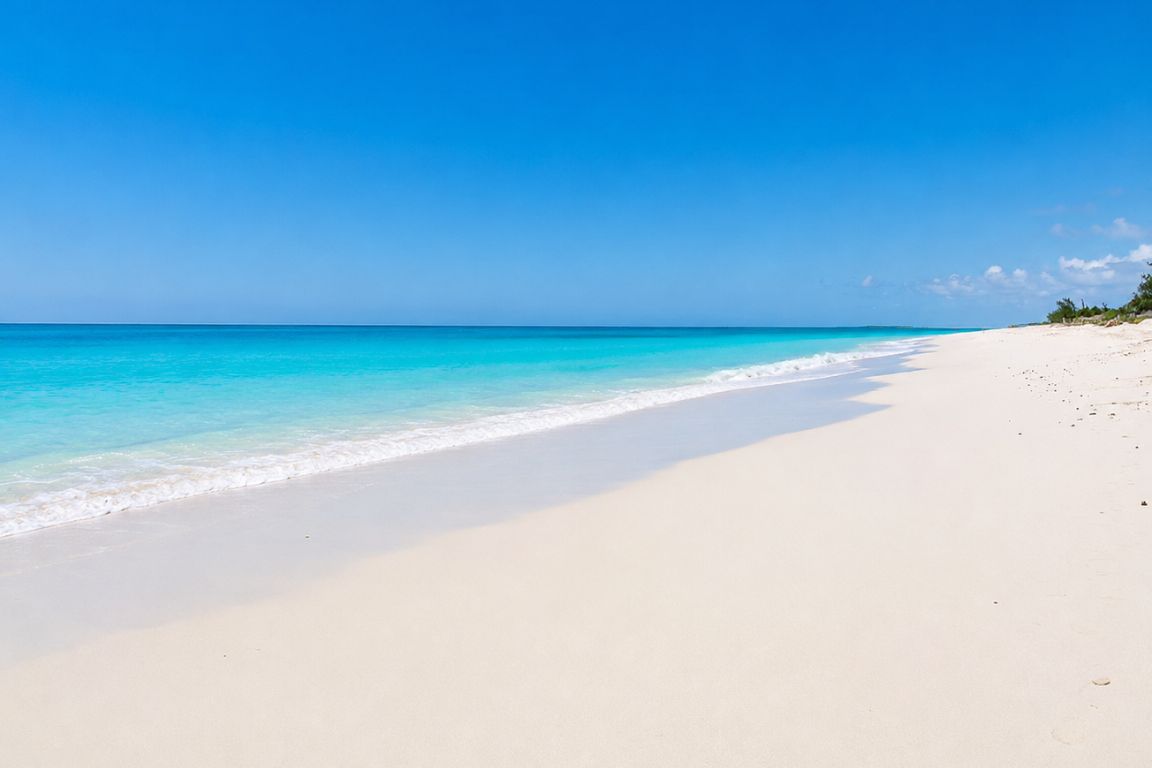 Yes, and the reason is simpler than most travel guides admit: the water is the product. Grace Bay is reef-protected, calm, shallow, and free of motorized boat traffic in the swimming zone. The beach itself is soft enough that toddlers can fall freely on it. Nothing is staged or kid-engineered about this. The conditions are genuinely what they look like in photos, and they are safe in a way that most Caribbean beaches are not. Families who come once tend to come back.
Most parents arrive half-expecting to manage the ocean the way they would at a regular beach. Chasing kids toward the water line, calling them back when waves build, watching the horizon for what’s coming. At Grace Bay that vigilance drops within a day. The barrier reef about a mile offshore absorbs the Atlantic swell. What reaches the sand is soft, warm, and almost entirely waveless. You can watch a three-year-old stand waist-deep in water that is so clear you can count the individual grains of sand around their feet.
The south-coast bays take that a step further. Taylor Bay, sheltered behind a small peninsula on the south side of Providenciales, is the beach parents describe when they say they finally relaxed on a beach vacation. The water is knee-to-waist deep for a quarter mile from shore. Toddlers can walk out until they get bored. The current is so minimal it is essentially nonexistent. Families who stay near Grace Bay use it as a day trip, and those who rent villas on the south coast often end up preferring it to anywhere else on the island.
Beyond the water, the islands are easy to navigate with children. English is the official language. Providenciales is compact enough that a rental car covers everything in 20 minutes. The crime rate in tourist areas is low. There are no dangerous terrestrial animals, no strong surf culture bringing in unpredictable ocean, no chaotic beach scene. It is a destination that seems specifically designed to reduce the things parents spend their energy managing on vacations.
It’s not the cheapest Caribbean destination by a long shot. Here’s an honest look at whether Turks and Caicos is worth visiting before you commit to the flights and the budget.
What Age Groups Does Turks And Caicos Work Best For?
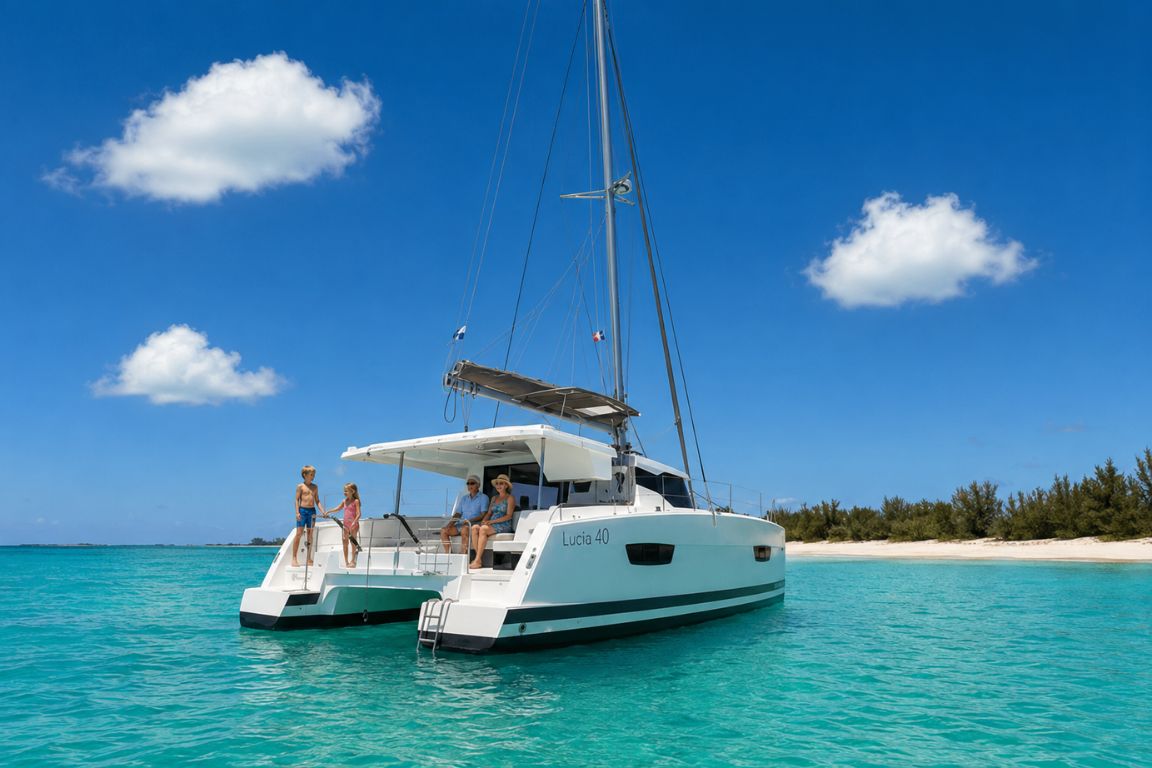 Every age group has genuine options here, but the destination delivers most powerfully for families with children roughly 3 to 14. Toddlers and very young children benefit from the extraordinarily shallow, calm beaches. Children 5 and up can start guided snorkeling in conditions that are genuinely forgiving. Older kids and teens get stingray encounters, reef sharks, iguana sanctuaries, and semi-submarine tours. The one honest caveat: Turks and Caicos does not offer the structured resort programming density of a place like Punta Cana. The island’s strength is the natural environment, not organized entertainment.
Infants and toddlers (0-3) thrive here as long as the family bases on a calm beach. Taylor Bay and Sapodilla Bay were practically made for this age group. There’s no undertow, the water warms quickly in the sun, and the sand is some of the finest in the Caribbean. Naptime logistics and early bedtimes fit comfortably into the gentle rhythm of an island where sunset happens around 7pm year-round and restaurants are close.
The 4-8 window is where the destination opens up. Guided snorkeling becomes realistic from around age four to six, depending on the child’s comfort in water and ability to follow instructions. The DECR-protected reefs around Bight Reef and Smith’s Reef are shallow enough that nervous first-timers have a good experience. The semi-submarine Undersea Explorer operated by Caicos Tours is a genuinely excellent option for kids who are curious but not yet ready for a mask and snorkel, with wraparound viewing windows that put you next to turtles, stingrays, and reef sharks without getting wet. For 8-and-up, SNUBA, the shallow-water breathing system that bridges snorkeling and scuba, lets kids go 20 feet underwater with no certification required.
Teenagers who have done Caribbean beach trips before often arrive cynical and leave surprised. French Cay in summer puts them in the water with nurse sharks. Leeward Reef offers encounters with eagle rays and reef sharks on guided charters. Little Water Cay, the iguana sanctuary accessible only by boat, lands well with teens who would normally shrug at a nature excursion. Big Blue Collective runs a dedicated kids camp in summer for ages 10 to 15, combining eco-tours, snorkeling, and West Caicos exploration over several days.
We’ve got a full Little Water Cay guide if you want to know exactly how to visit, what the rock iguana experience is really like, and whether it’s better as a standalone trip or combined with snorkeling.
Which Beach Is The Safest And Most Fun For Young Children?
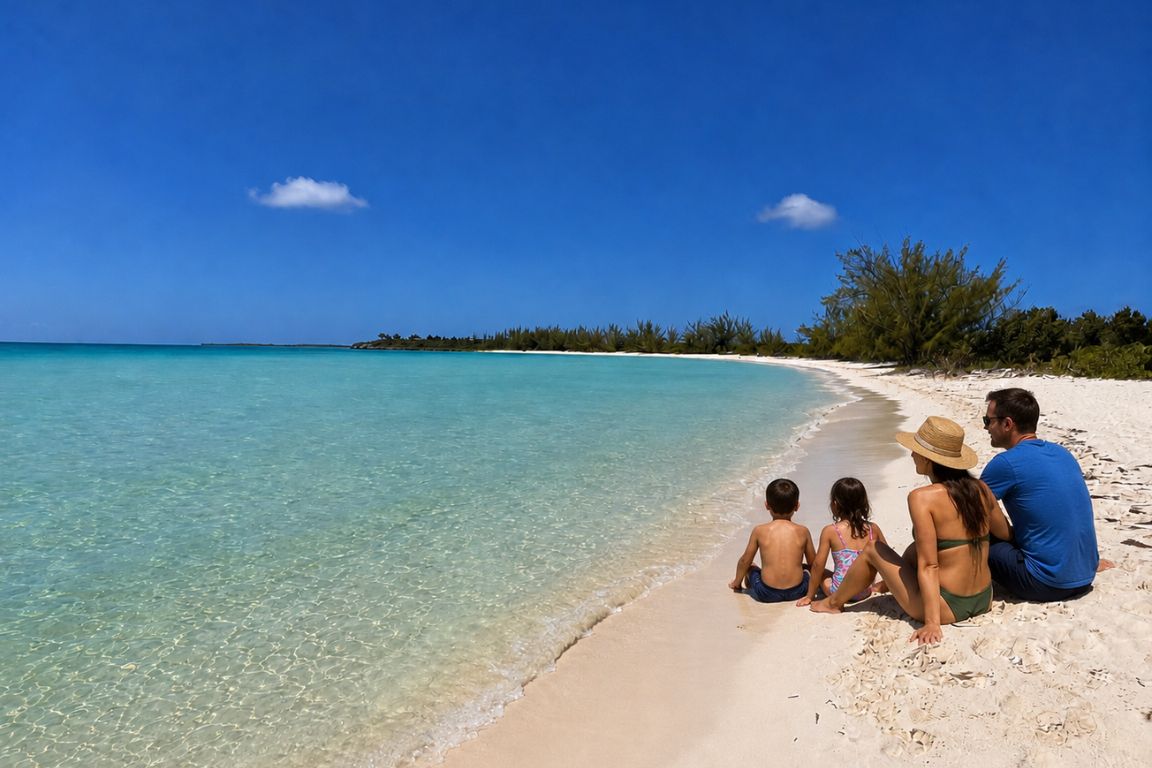 For very young children, Taylor Bay is the answer. The water stays waist-deep or less for a quarter mile from shore, there are no waves, and the sheltered position behind Ocean Point Peninsula means it stays calm even when trade winds make Grace Bay choppy. Grace Bay itself is excellent for families with slightly older children, 5 and up, because it combines the world-class beach with direct access to snorkeling and proximity to restaurants and services. Sapodilla Bay splits the difference: calmer than Grace Bay but with some amenities Taylor Bay doesn’t have.
Taylor Bay doesn’t look dramatic from the road. You park on a narrow lane, walk a short path, and suddenly you’re on a beach where the light bounces off sand so pale it’s almost silver. The water extends forever in shallow turquoise. Locals from Grace Bay bring their own young kids here on days off. That’s your reliable data point. When the people who live here choose a beach for their families, it’s worth noting where they go.
Grace Bay has one specific safety feature that deserves more attention than it gets: motorized boats are banned within the swimming zone, enforced by the Princess Alexandra National Park designation that covers the beach. On a crowded Caribbean beach with jet skis weaving near swimmers, keeping track of a five-year-old in the water requires a different kind of attention. Grace Bay removes that variable completely. The worst thing approaching your child in the water at Grace Bay is a very slow catamaran nudging up to the sand to unload a snorkel tour group.
A note on the UV index: it runs as high as 12 year-round here, including on overcast days. Children burn faster than adults in these conditions. Reef-safe sunscreen is mandatory under DECR guidelines in protected marine areas. Bring far more than you think you need. On-island prices for sunscreen are steep, sometimes two to three times what you’d pay at home.
| Taylor Bay | Toddlers, nervous swimmers | Waist-deep for 1/4 mile, almost no waves | None on beach; bring food and shade |
| Sapodilla Bay | Young families wanting amenities | Calm, shallow, sheltered south coast | Vendors, chairs, kayak rentals |
| Grace Bay (Bight Reef end) | Kids 5+ who want to snorkel | Calm, reef-protected, no motorized craft | Full resort strip, restaurants, tours nearby |
| Leeward Beach | Families in villas wanting space | Calm, similar to Grace Bay but quieter | Residential, 5-10 min drive to Grace Bay |
| Half Moon Bay (via boat) | Kids of all ages, sandbar play | Shallow lagoon, stunning; accessible by charter only | Remote, bring everything with you |
Beach conditions and access verified June 29, 2026. Source: visittci.com, TripAdvisor local knowledge, DECR protected area guidelines.
Trying to decide where to spend your limited beach time on the island? Here’s Grace Bay vs Long Bay Beach broken down so you stop second-guessing.
What Water Activities Can Kids Actually Do Here?
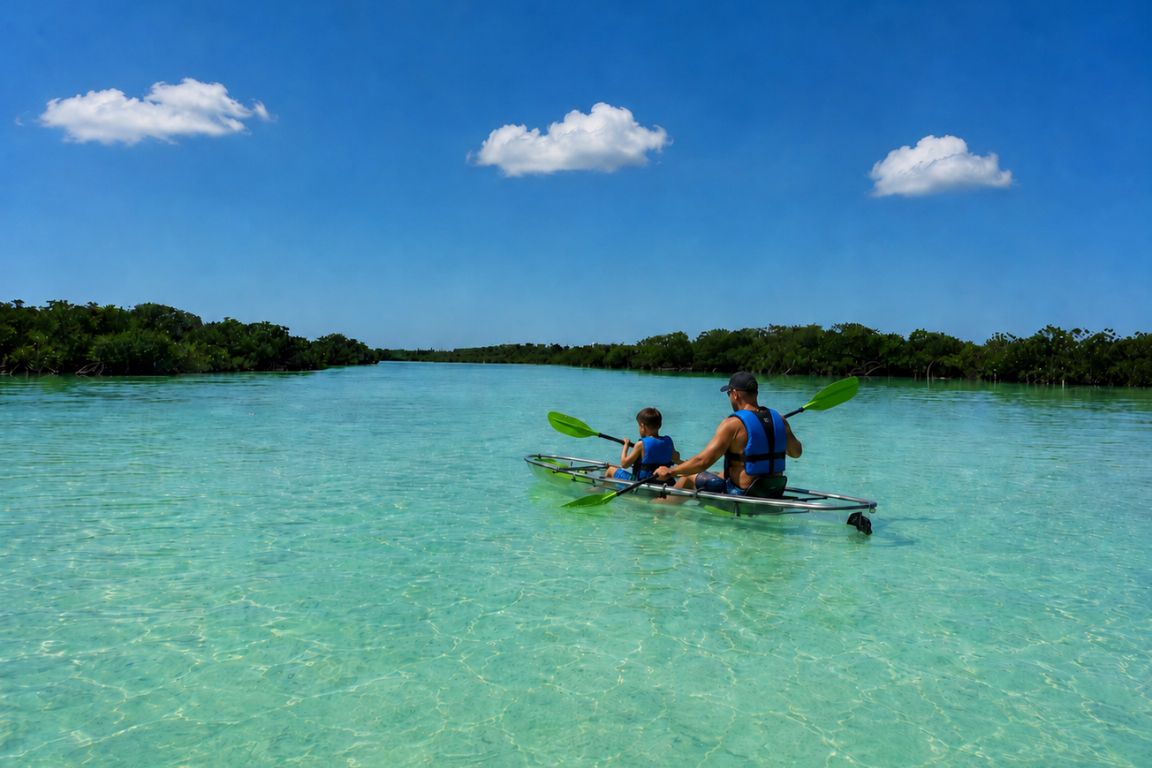 The range is genuinely wide. Guided snorkeling from age 4-6 on shallow reef sites. The Undersea Explorer semi-submarine for kids who want reef encounters without getting wet. SNUBA from age 8, giving 20 feet of underwater depth with no certification. Kayaking through mangrove cays where green turtles cruise directly beneath the boat. Stingray encounters at Gibbs Cay on Grand Turk in water shallow enough for non-swimmers. And for teens, full reef snorkel charters to French Cay and Leeward Reef with real open-water marine encounters. The reef system here supports activities across every confidence level.
The Undersea Explorer deserves specific attention because it solves a problem most families don’t know they have until they’re standing on the beach. Not every child is comfortable putting their face in the water. Not every child is ready for a snorkel the first day. The semi-submarine runs 45-minute reef tours from Turtle Cove, with large underwater viewing windows that put you level with hawksbill turtles, stingrays, nurse sharks, and eagle rays without any equipment or water entry. Caicos Tours also runs a Mermaid Adventure version of this tour where a freediver performs underwater as you watch through the windows. For ages 4 to 8 in particular, this is often the activity that converts a hesitant child into someone who wants to snorkel the next day.
Gibbs Cay on Grand Turk is the stingray encounter that families talk about for years. The water over the shallow sandy flat is about two feet deep. Southern stingrays cruise in as soon as a boat anchors, drawn by decades of familiarity with humans. Even children who can’t swim stand confidently in the water next to them. The captain free-dives for live conch on the way out, prepares fresh ceviche on the beach, and the whole experience has an intimacy that organized group tours rarely achieve. Most operators run this as a half-day excursion that combines reef snorkeling with the Gibbs Cay stingray encounter.
Kayaking through the mangrove channels of Mangrove Cay is a different pace entirely. The water is glassy and clear, the channels are sheltered, and on a good day you’ll see green turtles, stingrays, starfish, and small nurse sharks below the kayak. Big Blue Collective runs guided versions of this suited for families, and it’s a favorite among parents who want something memorable but not adrenaline-driven. Kids who are old enough to paddle reasonably steadily (roughly 7 and up) get the most out of it.
If you’d rather hand the excursion logistics to someone who’s done this with thousands of families, start with the Grace Bay snorkeling half-day or browse boat tours by duration and pace. Compare boat tours by length if you want outings that stay realistic with small children on board.
Not sure if a clear kayak tour is worth your time in Provo? Here’s what clear kayak experiences in Providenciales actually look like and why it keeps selling out.
What Should Families Know Before Booking Tours And Excursions?
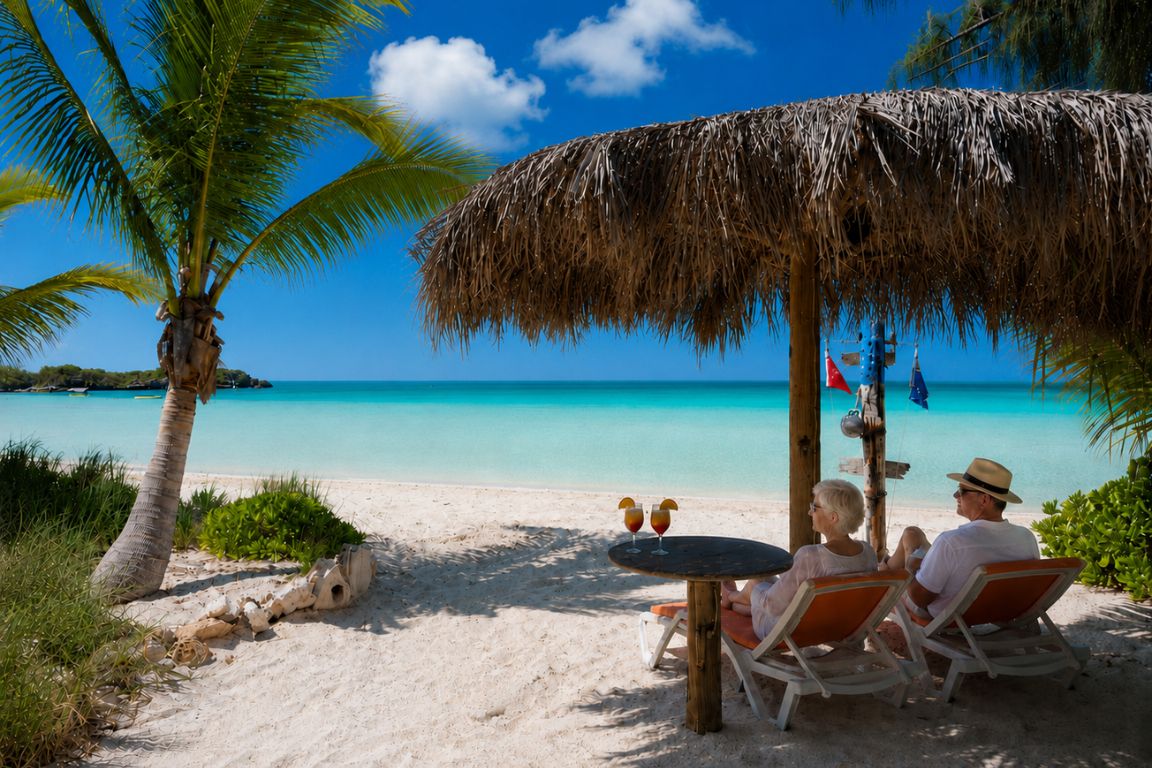 Three things. First, age minimums vary across operators and activities, and they matter practically: a child just under the minimum for snuba or a reef charter means replanning a day on short notice. Confirm ages before booking. Second, private charters almost always beat group tours for families because the guide can pace the day to your children’s energy levels, stop when someone needs a break, and avoid the assembly-line feel of a 40-person boat. Third, the best charter operators fill quickly in peak season. For a January or February trip, booking excursions before you book flights is not an overreaction.
The group tour vs. private charter question comes up for every family we work with. On a group snorkel boat, the guide is managing 20 to 40 people across different abilities. If your eight-year-old panics at the reef edge, the group doesn’t stop. On a private charter, it does. You can ask the captain to find a shallower section, take a break on a sandbar, or skip a stop entirely if someone’s had enough. The price difference is real but the experience difference is larger, especially with children under 10.
One thing that catches families off guard consistently: reef-safe sunscreen is not a preference here, it’s required under DECR marine park protection guidelines that cover the reef zones around Providenciales. Chemical sunscreens with oxybenzone and octinoxate damage coral and their use is prohibited in national park marine areas. Pack mineral-based reef-safe sunscreen from home. On-island versions cost two to three times mainland prices. For a family of four spending six days in the water, the cost difference between packing your own and buying it here is significant.
A few other practical notes families consistently wish they’d known: bring your own snorkel gear if possible, because resort rental adds $25-40 per person per day and the fit is often poor for children. Water shoes matter at Sapodilla Bay and reef-entry points where the bottom transitions from sand to reef rock. Most boat tours have no fee for children under 2, and discounted pricing typically applies for ages 2 to 12. Book directly with operators rather than through resort packages whenever possible, as the resort markup on excursions is consistent and avoidable.
Trying to plan a special day on the water for a group or a couple? Here’s why private boat charters in Turks and Caicos tours are worth considering over the standard group options.
Which Part Of The Islands Should Families Stay In?
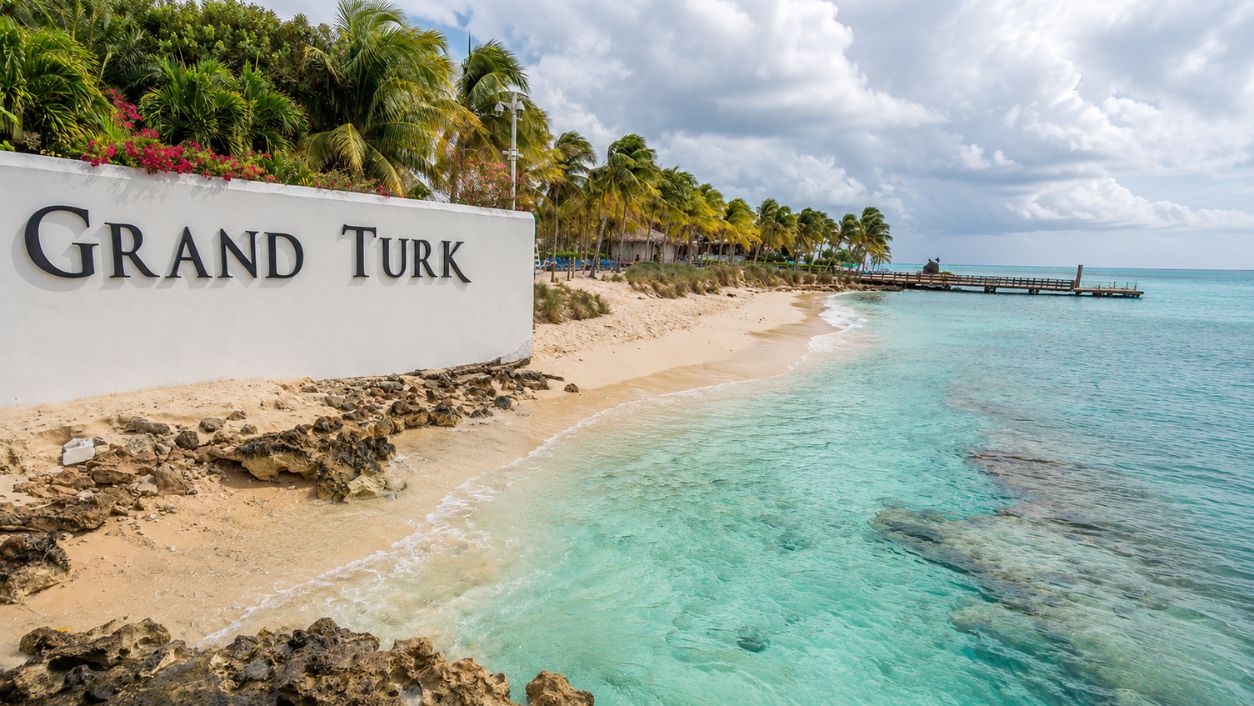 For most families, Providenciales is the right island, and within Provo, the Grace Bay and Leeward areas give the best combination of beach quality, excursion access, and convenience. Grace Bay’s resort strip works well for families who want everything walkable. Leeward, just east of Grace Bay, is quieter and more residential with calm beaches and direct access to boat charter departures. Families with toddlers who prioritize beach safety over convenience should seriously consider Taylor Bay on the south coast, where the beach is more sheltered but you’ll need a car for everything else.
Grace Bay suits first-time family visitors who want predictability: world-class beach, restaurants within walking distance, activities bookable from the sand. The tradeoff is that it’s the busiest part of the island. In peak season the beach carries steady traffic, which is still low by most Caribbean resort standards, but it’s not the private paradise feeling that draws some families.
Leeward is the area we most consistently recommend to families with children under 10 who are coming for a second or third time and know what they want. It’s residential and quieter. Beaches are calm and clean. Properties here often feature direct beach access, multiple bedrooms, private pools, and kitchen facilities that change the economics of a family trip. Getting ingredients from IGA on Leeward Highway and cooking a few breakfasts and lunches at the villa versus paying Grace Bay restaurant prices for every meal is a meaningful budget difference for a family of four or five.
Grand Turk is worth a day trip for the Gibbs Cay stingray encounter or whale watching in winter, but basing the whole family trip there limits activity options significantly. Providenciales holds the concentration of family excursions, dining, and accommodation choices. The other outer islands, North Caicos, Middle Caicos, Salt Cay, are beautiful but best visited as day trips from Provo rather than family bases.
Questions before you commit to a property or area? Baran and the team have walked this island with families of every configuration, and we’ll be direct about what works for your specific group size and kids’ ages.
Not sure which islands are actually worth the trip from Provo? This breakdown on island-hopping tours from Providenciales tells you where to go and what you’ll find when you get there.
What Are The Biggest Mistakes Families Make When Visiting?
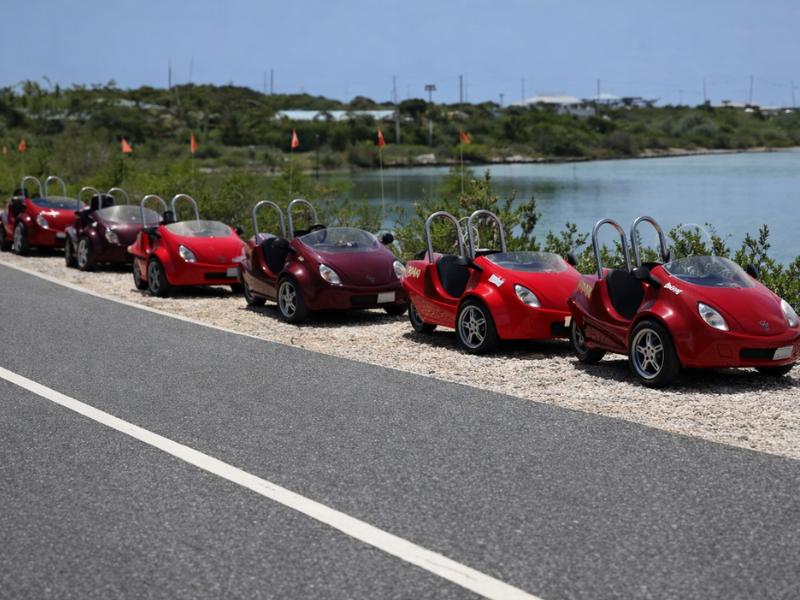
Four consistent patterns across the families we’ve guided. Underestimating food and grocery costs, arriving without enough reef-safe sunscreen, booking group tours instead of private charters, and failing to account for the 22% government tax and service charge that appears on every resort and restaurant bill. None of these are ruinous on their own, but together they can take a well-planned trip and make it feel expensive in ways that feel unfair. They’re all avoidable.
The sunscreen problem sounds minor until it isn’t. The UV index at this latitude runs up to 12 year-round. Reef-safe sunscreen sold on Provo runs at serious markup compared to anything you’d buy at home. A family spending a week in the water will go through more than they estimate. Running out by day three and paying resort prices for the rest of the trip is a pattern we see repeatedly. Pack enough for two full tubes per person, minimum, and bring it in carry-on luggage so it doesn’t get lost.
Groceries deserve the same pre-trip thought. IGA and Graceway Gourmet on Providenciales are well-stocked but expensive by North American standards, partly because nearly everything is imported. Families staying in a villa with a kitchen can save substantially by bringing dry goods, snacks, and non-perishable items from home. One suitcase allocated entirely to groceries for a week-long trip with young children is not ridiculous. It’s what the families who’ve done this twice do.
The 22% tax question is the one that causes the most sticker shock. The Turks and Caicos government applies a 12% tourism tax plus a 10% service charge on resort accommodation and most restaurant bills. This appears at checkout, not in the headline rate. On a $5,000 accommodation bill, that’s $1,100 that wasn’t in the mental budget. It applies to every meal at resort restaurants too. Run the 22% calculation on every price you see before building your family budget and you won’t be surprised at the end.
The sun here is intense, the water is everywhere, and the restaurants have a dress code. Here’s a Turks and Caicos packing list so you’re ready for all of it without hauling half your closet.
What Families Tell Us: Patterns From 16,800+ Guided Trips
| Toddlers (under 4) | Taylor Bay beach day, kayak tour | Didn’t bring enough sunscreen / snacks | 94% |
| Young children (4-8) | Undersea Explorer, guided snorkel at Bight Reef | Booked group tour instead of private charter | 92% |
| Mixed ages (5-12) | Full-day private boat charter, Iguana Island | Didn’t book charter early enough in peak season | 96% |
| Teens (13-17) | Reef charter, Gibbs Cay stingrays, French Cay | Underestimated how good the snorkeling would be | 89% |
| Multigenerational (grandparents included) | Semi-submarine tour, Half Moon Bay sandbar | Chose group tour over private for budget; wishes they hadn’t | 93% |
Based on post-trip survey data from Turks and Caicos Tours. From our 16,800+ travelers guided since founding in 2012.
When Is The Best Time Of Year To Visit Turks And Caicos With Kids?
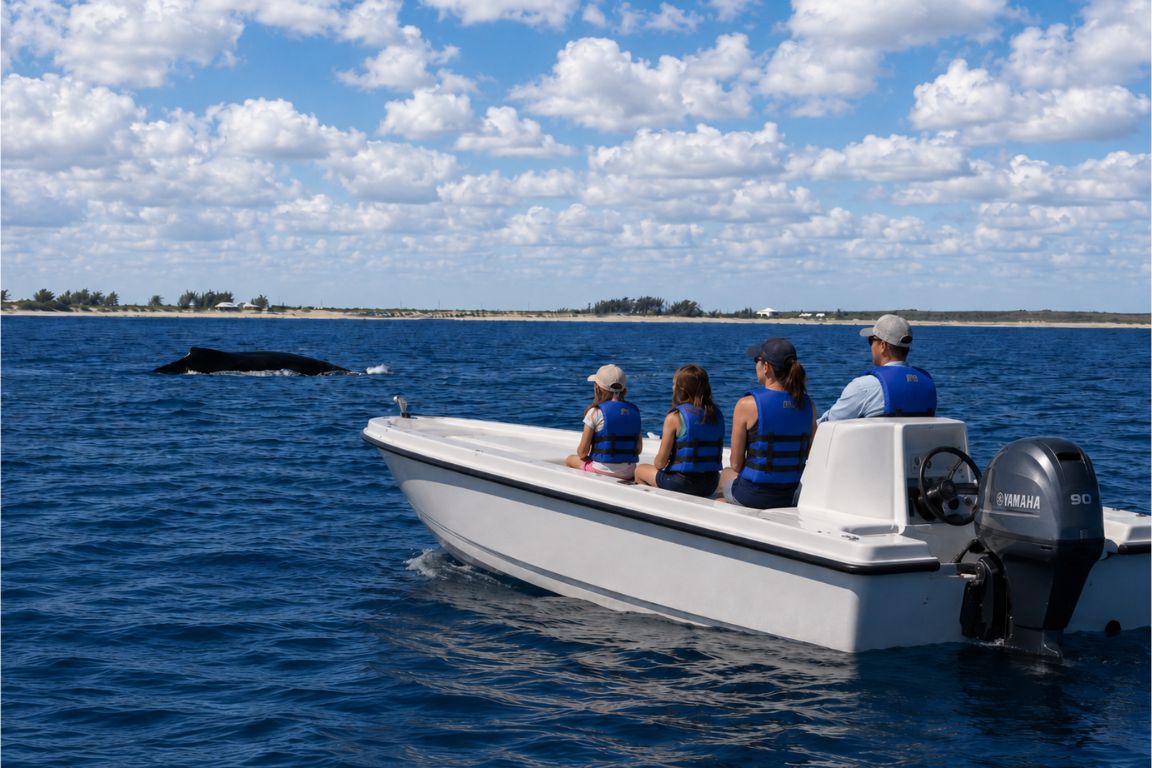 For families, December through April is the most reliable window. Weather is consistent, humidity is low, seas are calm for boat trips, and whale watching runs January through April with February as the peak. The tradeoff is peak pricing and the need to book months ahead. For families with scheduling flexibility, May and November offer conditions close to peak quality at 20-40% lower cost. School spring break and Christmas/New Year’s are the most competitive booking periods; treat them accordingly.
The whale watching question is specific to families. There is no activity in the Caribbean that lands harder with children than watching a 40-ton humpback whale surface 30 meters from your boat, or being in the water when one decides to approach. Salt Cay and Grand Turk are the access points, the Turks Island Passage funnels the whales close to shore, and the window is January through April with February as the peak. Planning a family trip around this single experience and building the rest of the itinerary around it is a completely reasonable strategy.
Summer has specific things going for it with families too. School breaks in July drive some demand but overall crowds and prices remain lower than winter. The ocean is at its warmest, 84-85°F, which young children particularly appreciate. The Undersea Explorer, beach days, kayaking, and shallow-reef snorkeling are all available year-round. The caveat is hurricane risk from mid-August through September, which matters more for families because flexible rebooking with children in tow is harder than for solo travelers.
One timing detail specific to families that rarely appears in guides: several Grace Bay restaurants run reduced hours or close entirely during September and October low season. If you have picky eaters who need reliable options, the shoulder months of May and November are safer than deep low season for dining variety.
The season you pick affects everything from hotel rates to water visibility. Here’s the best time to visit Turks and Caicos tours so you show up when the island is at its best.
| December-January | Excellent weather; holiday energy; whales arriving | Book 9-12 months ahead for Christmas/NY |
| February-March | Peak whale season; best weather; spring break | Book 6-9 months ahead; private charters fill fast |
| April-May | Good conditions, lower prices, whales departing | Best value window with near-peak conditions |
| June-July | School break demand; warm water; some families prefer quieter beaches | Good availability; hurricane risk low early summer |
| August-October | Lowest prices; highest hurricane risk; some restaurant closures | Flexible bookings and CFAR insurance essential |
| November | Warm water, thin crowds, solid value before peak season | Underrated family window; book 4-6 weeks out |
Seasonality data verified June 29, 2026. Sources: visittci.com, Turks and Caicos Tours booking data.
Frequently Asked Questions
Is Turks and Caicos safe for young children?
Yes, particularly in the Grace Bay and south coast beach areas. Motorized boats are prohibited in the Princess Alexandra National Park swimming zone at Grace Bay. Taylor Bay and Sapodilla Bay on the south coast offer extraordinarily calm, shallow water suited to toddlers and non-swimmers. Crime in tourist areas is low. The main safety considerations are sun protection, given the high UV index, and standard water supervision.
What age do kids need to be to snorkel in Turks and Caicos?
Most guides consider 4 to 6 years old a realistic starting point for guided snorkeling, assessed on the individual child’s water comfort rather than age alone. For SNUBA, the shallow-water breathing system that allows 20 feet of underwater depth, the minimum age is 8. The semi-submarine Undersea Explorer has no age minimum and is an excellent option for children who aren’t ready for snorkeling gear.
Is Grace Bay Beach safe for kids to swim?
Yes. Grace Bay is protected by an offshore barrier reef that absorbs Atlantic swell, leaving the beach calmer than most Caribbean alternatives. Motorized watercraft are banned in the swimming zone under national park rules, which meaningfully reduces the hazards present at many other Caribbean beaches. The water is shallow close to shore and visibility is excellent. There are no lifeguards, so adult supervision is required.
What is the best beach in Turks and Caicos for toddlers?
Taylor Bay on the south coast of Providenciales. The water is waist-deep or less for a quarter mile from shore, there are almost no waves, and the south-facing position keeps conditions calm even when trade winds affect the north coast. The only drawback is the lack of on-beach amenities: no vendors, no shade structures. Bring your own food, water, and shade. Sapodilla Bay nearby offers similar calm water with beach vendors if amenities matter.
Should families book private charters or group tours?
For families with children under 10, private charters almost always deliver a better experience. The guide can adjust pace to your children’s energy and comfort, stop at the right times, and avoid situations where a nervous child is rushed through a reef encounter alongside strangers. The cost is higher, but the per-person gap narrows for larger families. In peak season, private charter operators with strong family reputations book up months ahead.
When is whale watching season in Turks and Caicos?
Humpback whales migrate through the Turks Island Passage between late December and early April, with February as the peak for sightings. Salt Cay and Grand Turk are the best locations. In-water snorkel encounters are possible when the whales approach. This is one of the most impactful experiences available for children in the Caribbean and it is strictly winter-only.
Planning a family trip takes more moving parts than most. Beach choices, age-appropriate excursions, private vs. group tours, timing, whether the kids can actually snorkel yet. We’ve worked through all of it with families of every shape across 16,800 guided trips. Browse boat tours by length and group size, or check the Grace Bay snorkeling half-day if the kids are ready for a mask.
Written by Baran Ellis
British tour guide since 2012 · Founder, Turks and Caicos Tours
Baran has guided over 16,800 travelers across Providenciales, Grand Turk, and the Caicos cays since founding the agency.