Scuba Diving In Turks And Caicos
Turks and Caicos has a genuine wall-diving reputation, but no tour in this catalog is a certified dive. Here's what diving here actually involves, and what to book instead if you're not certified.
Use the section recommendations to match an outing to your trip, then compare dates and trip details at the end.
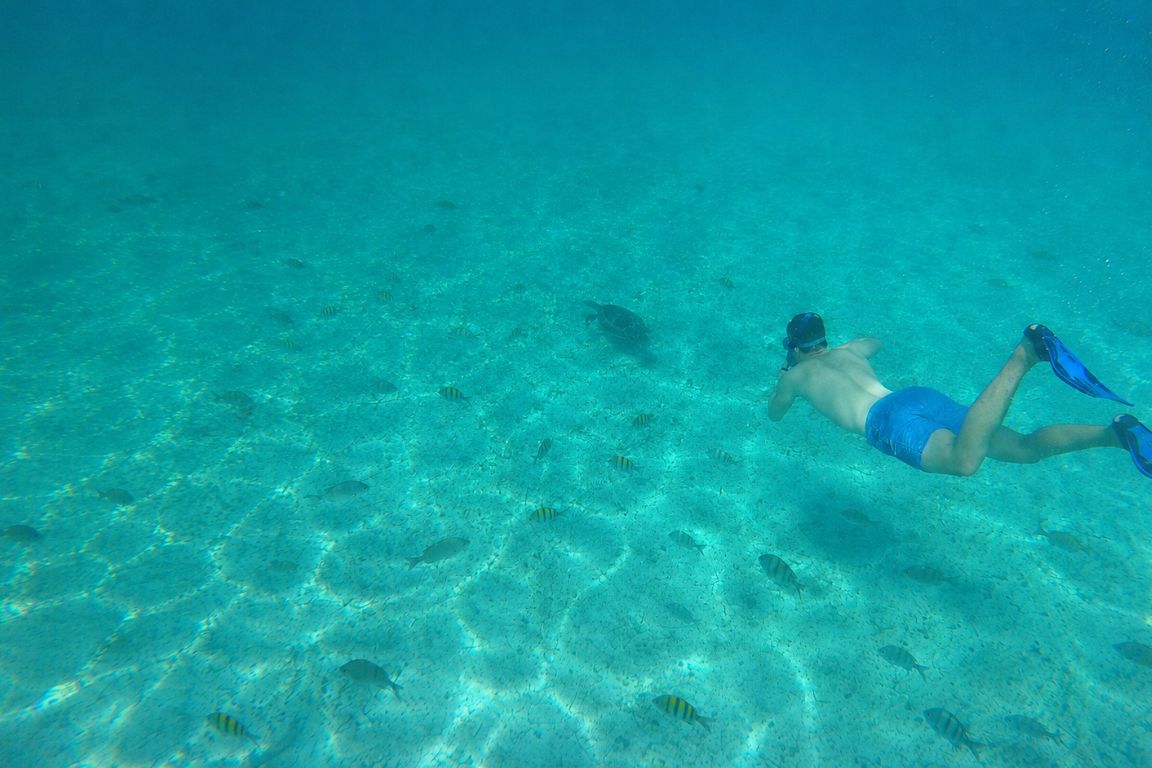
The reef wall off Grand Turk drops from around 35 to 60 feet down to open ocean within a short swim of the beach. Divers here do not talk about "the wall" the way people talk about a wall anywhere else. They mean a specific, near-vertical drop into water that keeps going for thousands of feet, and it sits close enough to shore that a flat-bottomed skiff can load divers straight off the sand and have them over the edge in minutes. That single piece of geology is the reason Turks and Caicos has a real, decades-old scuba diving reputation, not a marketing line borrowed from somewhere else in the Caribbean.
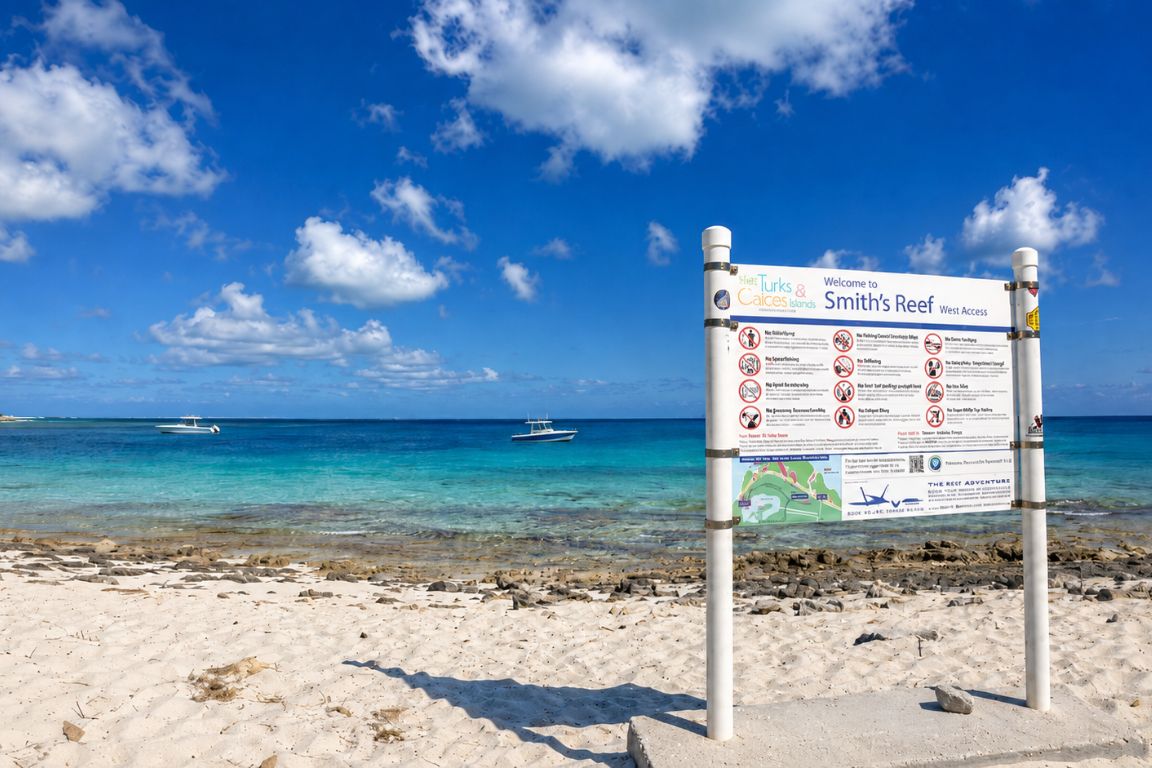
For a surface-level alternative from Providenciales, start with a half-day barrier-reef snorkel that includes equipment, lunch, drinks, and a beach stop.
Your Turks And Caicos Plan
- Certified scuba dives and courses must be booked directly with a dedicated operator on the island where you will stay.
- Providenciales snorkel, sail, and kayak trips show reef and mangrove life from the surface and do not descend the wall.
- Confirm your island, meeting point, and actual travel date before arranging the rest of the trip.
Here is the honest part, stated early rather than buried at the bottom. Every tour sold through this site is a snorkel trip, a reef and sandbar boat outing, a kayak paddle, a jet ski ride, or something in that surface-level family. None of them is a certified scuba dive, and nothing here should read as if you can book a tank dive through this page. If you actually want to drop down the wall on air, you will book that directly with one of the island's dedicated dive operators, not through a tour affiliate site. What follows is a straight briefing on what diving in Turks and Caicos actually involves: where the sites are, what the water does across the year, how certification works if you have never dived before, and a snorkeling alternative if getting certified is not something you want to fit into this trip.
What Makes Turks And Caicos A Wall-Diving Destination
The geography behind the reputation is straightforward. The Caicos Bank, the shallow shelf that Providenciales and the other Caicos Islands sit on, covers close to 1,700 square miles at an average depth under 20 feet. At the edge of that shelf, the seafloor does not slope gently. It falls away, in places almost vertically, into water several thousand feet deep. Divers get pelagic, open-ocean conditions and encounters, the kind that usually require a long boat ride in other parts of the Caribbean, within a short run from the marina.
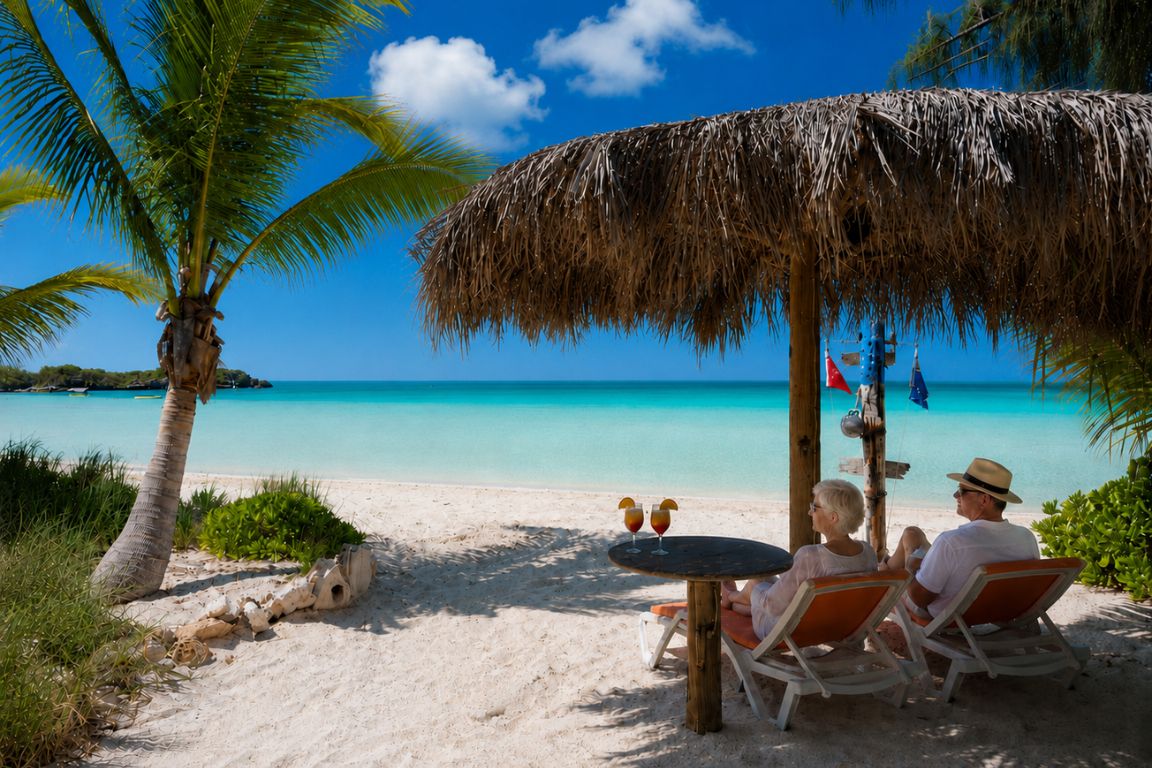
Visibility is the other half of the reputation, and it comes from something less dramatic: the islands are dry and low-lying, with no rivers and very little freshwater runoff to cloud the water with sediment. Divers Alert Network and other diving publications consistently describe underwater visibility here as excellent, often 100 feet or better on a good day, because there is nothing regularly stirring up the water column the way runoff, shallow shipping channels, or river deltas do elsewhere.
Where The Main Dive Sites Are
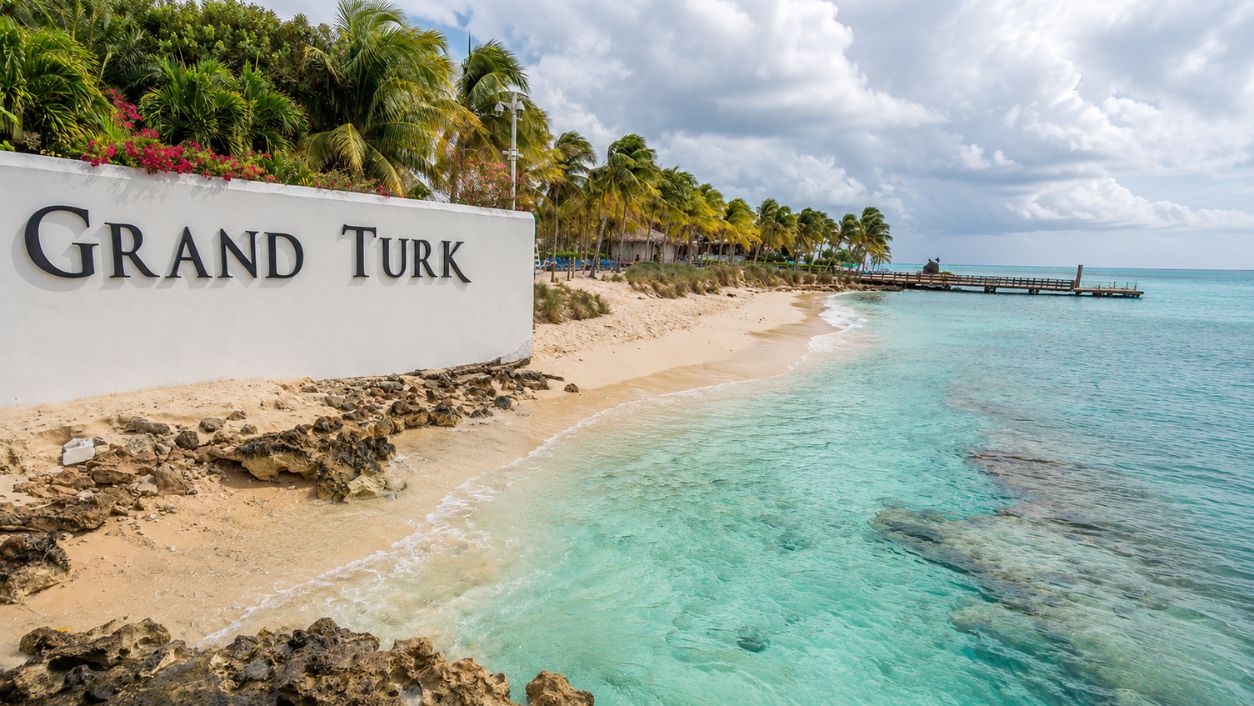
Grand Turk is the island most associated with wall diving, for a simple reason: the wall sits close to Cockburn Town itself. Named sites along it include the Library, a shallower spot around 20 to 30 feet thick with coral and popular for night dives, Black Forest, known for large black gorgonian sea fans reaching out from the wall face, McDonald's, named for a coral archway shaped like the restaurant's arches, and Coral Garden. Because the drop-off runs so near shore, Grand Turk operators can run flat-bottomed boats that pull directly up to the beach rather than needing a deep-water marina.
On Providenciales, the comparable stretch is Northwest Point, a roughly three-mile run of coastline on the island's west end with more than a dozen distinct wall sites. Divers here regularly report tube sponges, elephant ear sponges, and barrel sponges large enough to sit inside, along with eagle rays, turtles, moray eels, and reef sharks working the wall face. Further out, West Caicos and French Cay sit inside their own marine national parks and are reached by boat from Providenciales rather than driven to. The reef around French Cay includes the site of the Molasses Reef wreck, believed to be a Spanish caravel lost around 1513 and considered the oldest excavated European shipwreck in the Western Hemisphere. Treasure hunters damaged the wreck itself with explosives in the 1970s, so little of the ship remains to see, but the surrounding reef, a wall dropping from around 55 feet, still draws divers for the coral, the grouper, and the sharks that patrol it.
South of Grand Turk, the small island of Salt Cay adds a quieter option most visitors never consider. It has a single dive operator, moored dive sites reachable in five to ten minutes from the dock, and wall dives that regularly rank among the more pristine, uncrowded diving in the Caribbean simply because so few boats run out to them on any given day. Salt Cay's real distinction, though, is timing: it sits directly on the Turks Island Passage that humpback whales travel between January and April, making it one of the small handful of places in the world where divers and snorkelers have a realistic chance of an in-water encounter with a migrating whale rather than just a surface sighting from a boat.
| Area | How you reach it | What divers go for | Typical depth to the wall |
|---|---|---|---|
| Grand Turk (the Library, Black Forest, McDonald's) | Short boat ride, some sites near-shore | Classic wall dives, night dives, coral archways | Roughly 30-40 feet to the drop-off |
| Northwest Point, Providenciales | Boat from Provo marinas | Sponge formations, eagle rays, reef sharks | Roughly 35-50 feet to the wall |
| West Caicos Marine National Park | 45-60 minute boat ride from Provo | Undisturbed coral, strong visibility, turtles | Roughly 40-50 feet to the wall |
| French Cay / Molasses Reef | Boat from Provo, edge of the Caicos Bank | Historic wreck site, sharks, large grouper | Around 55 feet to the wall |
| Salt Cay | 5-10 minutes from Deane's Dock | Quiet, uncrowded walls; in-water whale season chances | Roughly 40-50 feet to the wall |
What You Might Actually See On A Dive
Eagle rays are the encounter divers talk about most. Sightings run in cycles rather than on a fixed schedule: some seasons produce large, loose schools of a dozen or more gliding along the wall at once, other stretches see them singly or not at all, and nobody local claims to predict it precisely. Caribbean reef sharks and nurse sharks are a far more reliable sighting, working the wall face and resting under ledges respectively, and hammerhead sharks turn up occasionally at the deeper, more open sites, though they are the exception rather than something to expect on a normal two-tank trip.
The wall itself carries the coral and sponge life that photographers come for: orange elephant ear sponges, barrel sponges large enough to sit inside, and stands of black coral and gorgonian sea fans reaching out from the vertical face. Closer to the sand, garden eels sway out of burrows in loose colonies, horse-eye jacks circle in tight formations, and there is enough macro life, nudibranchs, banded coral shrimp, small blennies tucked into coral heads, to fill a dive even on a day when nothing large swims by.
Scuba Diving Vs. Snorkeling In Turks And Caicos
The two activities overlap more here than in most dive destinations, because the reef crest sits so shallow in places that snorkelers see a real slice of what divers see below them. The difference is depth, duration, and how close you get to the wall itself rather than the shelf above it.
| Scuba diving | Snorkeling | |
|---|---|---|
| Certification needed | Yes, for anything beyond a supervised Discover Scuba dive | None |
| Typical depth | 30-100+ feet, along the wall itself | Surface to roughly 10-15 feet, over the reef crest |
| Booked through this site | No, not currently in the catalog | Yes, several boat snorkeling tours |
| Time in the water per trip | Two tank dives, roughly 40-50 minutes each | Continuous, for the length of the tour |
| What you see | Wall face, sponges, pelagic species at depth | Reef crest, turtles, rays, reef fish, occasional sharks |
| Best suited to | Certified divers, or those willing to spend a day getting certified | Anyone who can swim, including first-time visitors and most kids |
Water Temperature By Season
Sea temperature around Turks and Caicos runs roughly 77 to 85 degrees Fahrenheit across the year, the same range that governs snorkeling and boat tour conditions on this site's other guides. Divers wear less exposure protection here than in most temperate destinations, and a 3mm wetsuit or even just a rash guard is enough for most people in the warmer months.
| Season | Approx. water temperature | What it means for diving |
|---|---|---|
| December-April | 77-80°F | Coolest water of the year; many divers still use only a shorty or 3mm suit |
| May-June | 80-83°F | Warming quickly; comfortable in a rash guard or thin wetsuit |
| July-September | 83-85°F | Warmest water of the year; many divers skip a wetsuit entirely |
| October-November | 81-83°F | Still warm, cooling gradually toward winter |
Visibility And Sea Conditions By Season
The clearest, calmest window for diving runs December through May, when winter weather systems keep the trade winds steadier and seas on the outer reef sites flatter. That is also the stretch when humpback whales pass through the Turks Island Passage near Grand Turk and Salt Cay, an added draw for divers timing a trip around both. The Atlantic hurricane season runs officially June 1 through November 30, with peak activity from August through October according to NOAA. That does not mean diving stops; most days even in the wetter months are diveable. It does mean bigger swell and lower visibility are more likely on any given day in that window, and operators will reschedule or shift sites around weather more often.
| Period | Typical visibility | Sea conditions |
|---|---|---|
| December-May | Often 80-100+ feet on the outer wall sites | Calmest, most consistent conditions of the year |
| June-July | Generally good, more variable day to day | Warm and mostly calm, early hurricane season |
| August-October | Can drop with storm swell and rain runoff | Peak hurricane season; more schedule changes |
| November | Improving again toward winter | Transitional, generally settling down |
Diving Near Migrating Humpback Whales
From late December through April, humpback whales funnel through the Turks Island Passage between Grand Turk and Salt Cay on their way between North Atlantic feeding grounds and warmer Caribbean breeding waters. Divers and snorkelers based near Salt Cay and Grand Turk during this window have a real, if never guaranteed, chance of an in-water encounter: the captain cuts the engine when a whale is nearby and calm, guests slip quietly into the water, and a 40-ton animal occasionally passes close enough to leave everyone on the boat speechless afterward. It does not happen on every trip, and no honest operator will promise it will happen on yours. February is generally regarded as the strongest single month for sightings, on top of also being one of the best months for wall visibility.
How TCI Diving Compares To The Rest Of The Caribbean
Divers who travel specifically for wall diving tend to name Turks and Caicos alongside a short list of destinations, and the reasons come up consistently across independent reviews: minimal current at most sites, visibility that regularly outperforms more current-driven Caribbean locations, and a wall that starts shallow enough to be accessible to newer divers while still offering the depth and drama serious wall-diving enthusiasts travel for. The lack of rivers or major runoff, the same geographic quirk behind the islands' famous surface-level water color, is the unglamorous reason behind most of that reputation. It is not a place known for wrecks or for muck diving, the kind of specialty niches other Caribbean destinations build a name around. It is known, specifically and repeatedly, for the wall.
Getting Certified, Or Trying A Dive Without One
If you are not certified and want to find out what diving actually feels like before committing to a full course, the standard entry point is a PADI Discover Scuba Diving experience: a short pool or confined-water briefing followed by one supervised dive to a shallow depth, usually with an instructor holding onto you the whole time. It is not a certification and does not qualify you to dive unsupervised afterward, but it is the honest way to sample scuba without three days of classroom and pool work.
Full Open Water certification, the entry-level card that lets you dive independently worldwide, typically runs three to four days locally and combines classroom or e-learning study, confined-water skills, and four open-water dives. From there, Advanced Open Water adds deeper dives and specialty skills over roughly two days, and Rescue Diver, aimed at divers who want to handle emergencies competently, runs a similar length. PADI's own destination page for Turks and Caicos lists local operators running this full range of courses, so getting certified during this trip rather than waiting for a future one is a realistic option if your schedule allows a few spare days for it.
| Course | Who it's for | Typical length | What you can do after |
|---|---|---|---|
| Discover Scuba Diving | Never dived before, want a taste | Half a day | Nothing independently; a supervised sample only |
| Open Water certification | First-time divers wanting a real credential | 3-4 days | Dive independently to about 60 feet, worldwide |
| Advanced Open Water | Certified divers wanting more depth and skills | 2 days | Dive to about 100 feet with additional specialties |
| Rescue Diver | Divers wanting emergency-response training | 2-3 days | Recognized rescue-level competency card |
Choosing A Local Dive Operator
This site does not sell dive trips or take a cut of one, so there is no incentive here to point you toward a particular shop. What is worth knowing generally: Grand Turk's dive scene is anchored by long-running operators built specifically around the wall's proximity to shore, running flat-bottomed skiffs that pull straight up to the beach rather than needing a deep-water marina. Providenciales has its own dive operators based out of the Leeward Channel, positioned to run boats to both the north-side sites and the more distant West Caicos and French Cay trips with roughly equal ease. Whichever shop you call, the same filter that applies to snorkeling operators applies here: confirm they are licensed to operate inside TCI's marine national parks, ask about group size, and expect the same reef-safe rules that govern every other water activity on the island: no touching marine life, no collecting coral or conch, reef-safe sunscreen only.
Diving Safety: The Chamber, DAN, And Why It Matters Here
Turks and Caicos has one hyperbaric recompression chamber for treating decompression sickness, housed at the Associated Medical Practice on Providenciales, staffed by physicians trained in decompression sickness management under standard U.S. Navy treatment protocols. Its existence is a genuinely reassuring detail for a destination built around wall diving, where the profile of a dive, dropping along a vertical face rather than over a flat reef, makes careful attention to depth and ascent rate more important than it would be on a shallow reef dive. Reputable operators will ask about your certification level and dive history before taking you out, and joining Divers Alert Network for the duration of the trip is a low-cost, sensible step that most experienced divers already take as a matter of course wherever they travel.
Liveaboard Diving: A Different Way To Do It
For visitors whose whole trip is built around diving rather than diving being one activity among several, a liveaboard is worth knowing about even though it is not something this catalog sells or arranges. The Turks and Caicos Aggressor II runs week-long trips covering both the Turks and Caicos wall sites and, depending on the itinerary, the nearby Dominican Republic's Silver Bank. Guests on a typical week complete around 27 dives, considerably more than a land-based schedule of two dives a day would allow, and enriched-air Nitrox is available on board for certified Nitrox divers, typically billed at a flat rate for the week rather than per tank. It is a specialist option, aimed at divers who already know diving is the point of the trip, not a casual add-on to a beach vacation.
What Diving Here Costs, In General Terms
Since this site does not sell dive trips, there is no live price list to put in front of you, and any specific dollar figure quoted today would likely be stale by the time you read this. What is useful to know in general shape: a single boat dive with a local operator typically costs less than a two-tank trip, which itself usually costs less per tank than a short guided trip booked piecemeal. Full Open Water certification packages, which bundle instruction, equipment rental, and the open-water dives themselves, sit well above a single fun dive because of the hours of instructor time involved. Equipment rental, gear you do not own yourself, mask, fins, BCD, regulator, wetsuit, is usually available for an added daily fee at every operator, and gratuities for the boat crew and instructor run on top of whatever the quoted trip price is, the same way they do on every boat tour in this catalog. Confirm current pricing directly with whichever operator you call; it is the only way to get a number you can actually trust.
If You'd Rather Not Get Certified: The Snorkeling Alternative
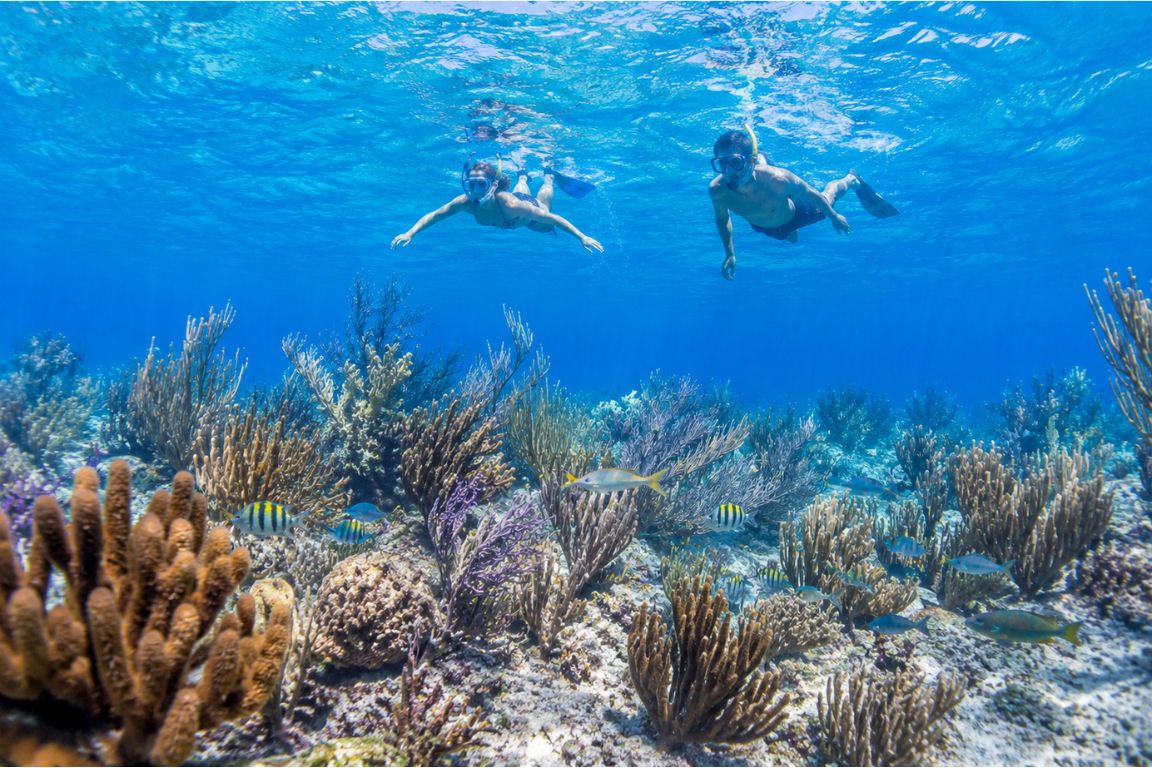
A meaningful share of what makes Turks and Caicos diving famous, the color of the water, the density of reef fish, the turtles and eagle rays, is visible without a tank. The reef crest above the wall sits shallow enough in several places that a mask and fins put you directly above the same marine life divers are photographing below, just from the surface rather than at depth. If this trip is not the one where you want to spend a day in a classroom before you get wet, a boat snorkeling tour to the outer reef is the closest honest substitute this catalog offers, and a clear kayak trip through the mangrove channels shows you a completely different habitat, turtles, small sharks, and rock iguanas, without any certification at all.
Neither replaces an actual dive down the wall, and nobody should pretend otherwise. But for a trip where scuba was never fully the plan, or where getting certified does not fit the schedule, watching a turtle graze at a shore reef or a spotted eagle ray glide through a channel covers a genuine amount of the same ground.