Best Time For Whale Watching In Turks And Caicos
Humpback whale watching is one of the best seasonal experiences in Turks and Caicos, with peak sightings from January to March and unforgettable tours departing from Grand Turk and Providenciales.
Use the section recommendations to match an outing to your trip, then compare dates and trip details at the end.
Last updated: July 4, 2026
Humpback whales migrate through Turks and Caicos from late December through April. Peak season is January through mid-March, with February the single best month for sightings. Salt Cay is the best whale watching location in TCI; Grand Turk is the most convenient base. In-water encounters with humpbacks are possible but never guaranteed. Deep Blue Charters (Grand Turk) and Big Blue Collective (Providenciales) are the two most recommended operators. Half-day shared tours start around $150 per person. Private charters from $1,100. Book weeks in advance in peak season.
No dedicated whale-watching trip is available among these recommendations, but you can still compare practical Providenciales water days and a Grand Turk golf cart while arranging licensed whale plans on the correct island.
Your Turks And Caicos Plan
- Aim for January through mid-March, with February as the strongest planning window, and confirm operators before other bookings.
- Use Grand Turk or Salt Cay for dedicated whale watching. Providenciales leisure cruises are not substitutes.
- Check your actual travel date, then arrange inter-island logistics and extra water days around that confirmation.
| Season | Late December through April |
| Peak Month | February (best sighting frequency) |
| Best Location | Salt Cay (closest to migration route); Grand Turk (most tour operators) |
| Species | North Atlantic humpback whale; pilot whales occasionally |
| In-Water Encounters | Possible but never guaranteed; whale-dependent |
| Shared Tour Price | ~$150/person (half-day, shared) plus 12% government tax |
| Private Charter Price | From $1,100 (half-day, up to 8 people) |
| Top Operators | Deep Blue Charters (Grand Turk), Salt Cay Divers, Crystal Seas Adventures, Big Blue Collective (Provo), Sun Charters (liveaboard) |
| Estimated Whale Population | 3,000-5,000 North Atlantic humpbacks pass through annually |
| DECR Guidelines | Maintain 100-yard distance, do not approach, let whales initiate contact |
Prices verified June 29, 2026. Add 12% government tax to all tour prices.
When Is The Best Time For Whale Watching In Turks And Caicos?
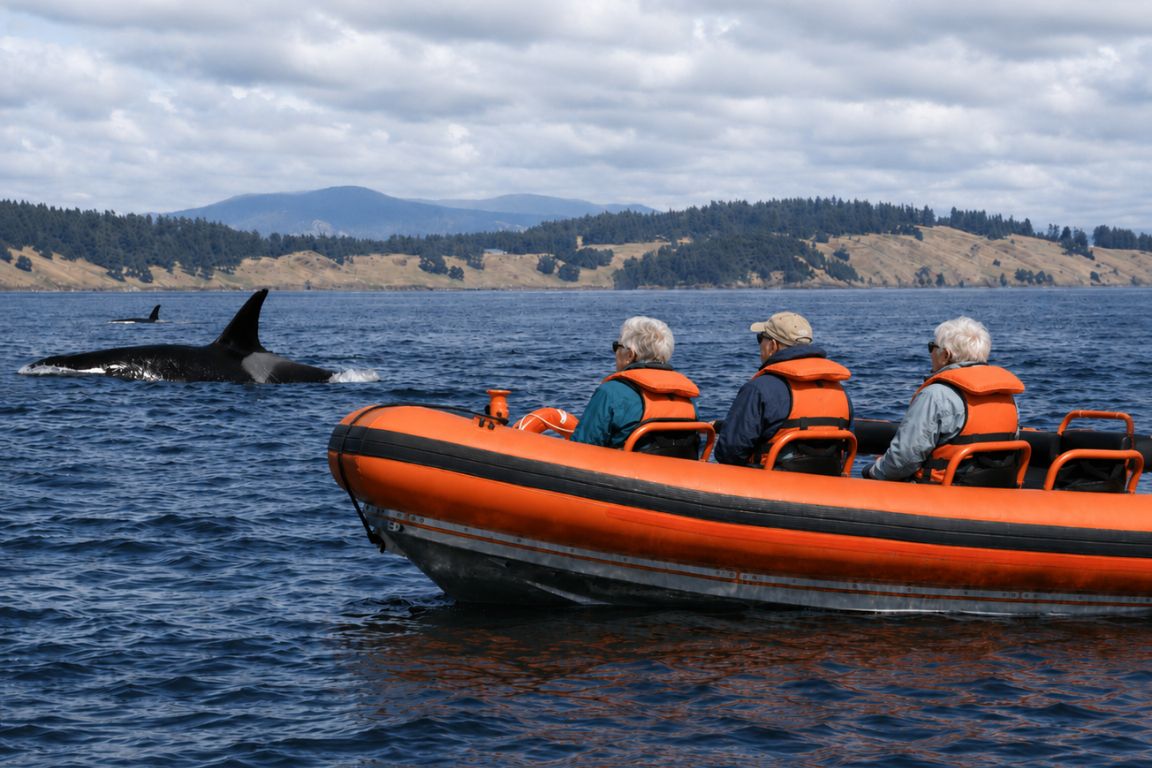
The whale watching season in Turks and Caicos runs from late December through April, when North Atlantic humpback whales migrate south to breed and calve in warm Caribbean waters. The peak window is January through mid-March, and February is statistically the single best month for sighting frequency. Early April still produces encounters but numbers thin as whales begin moving back north.
An estimated 3,000 to 5,000 North Atlantic humpback whales pass through TCI waters each year, originating from feeding grounds stretching from Norway and Iceland down through Greenland, Canada, and the northeastern United States. They don’t arrive all at once. The migration flows in and out from late December, builds through January, peaks in February, and gradually tapers through March and into April. The shallow banks near the Turks Islands are a calving and mating ground: whales arrive here specifically to give birth in warm, sheltered water and to court, which means the behaviors visitors come to see, breaching, tail-slapping, mother-calf interactions, competitive male displays, are not incidental. They’re why the whales are here.
February is the month to target if you’re planning a trip around the whale season. Sighting frequency is highest, the largest concentrations of whales are present, and the odds of a mother-calf encounter specifically are strongest in early to mid-February when calves born earlier in the season are becoming more mobile. January is excellent and less crowded. March is good but thinning. Early April is genuinely hit-or-miss.
The broader winter season (December through April) that overlaps with peak whale watching is also the dry season: calmest seas, best visibility, and the most reliable conditions for being on the water. It’s the best period of the year for TCI in general, which means accommodations and tours book out fast. If you want a water day during that window, start with the Grace Bay snorkeling half-day group tour.
The season you pick affects everything from hotel rates to water visibility. Here’s the best time to visit Turks and Caicos tours so you show up when the island is at its best.
What Whales Can You See In Turks And Caicos?
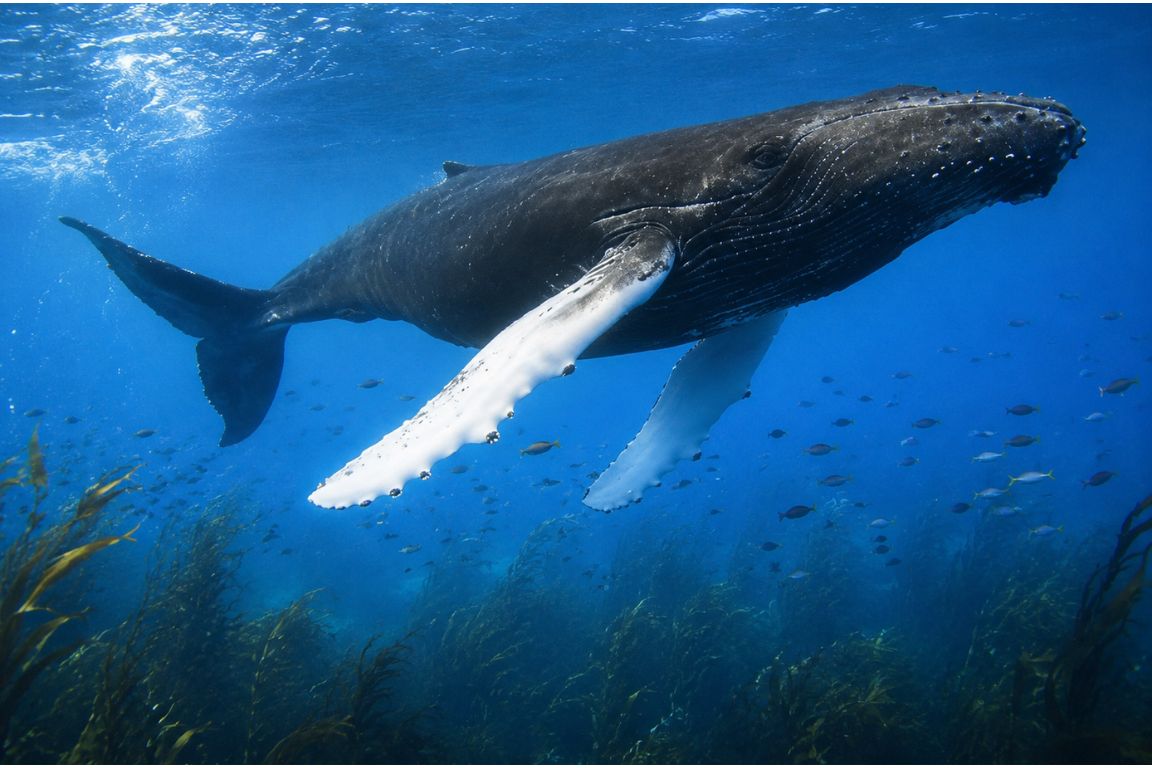 The primary species is the North Atlantic humpback whale (Megaptera novaeangliae). Humpbacks grow up to 50 feet and weigh up to 40 tons. They are known for complex surface behaviors including full breaching, tail-lobbing, and pectoral fin slapping, and for the male mating song, a 10 to 20-minute acoustic display audible for miles underwater. Pilot whales and Atlantic bottlenose dolphins are also seen in TCI waters year-round, with pilot whales appearing in the deeper offshore channels.
A humpback whale in full breach is an animal the size of a school bus launching most of its body out of the ocean. The re-entry sound carries across the water. When it happens 50 meters from a small boat, it goes straight into the body before the mind catches up. These are not small animals performing carefully for observers; they’re doing what they do, on their terms, and the boat happens to be there.
The male humpback song is a detail most visitors don’t anticipate. On a dive or snorkel in the Turks Island Passage in February, you can hear it underwater: a series of moans, cries, and complex phrases that repeat and evolve over a 10 to 20-minute cycle. Each whale’s song is unique. Researchers believe the songs function as social signals between males rather than direct courtship of females, but the mechanism isn’t fully understood. Hearing one while hovering 30 feet underwater with a reef shark below and a humpback singing somewhere in the blue is an experience that reorders your sense of scale.
Individual humpbacks can be identified by the distinct color patterns on the underside of their tail flukes, a technique researchers use to track returning whales year after year. Some of the whales monitored by the TCI Whale Project return to the same waters in successive seasons.
Trying to time your trip around a specific wildlife encounter? Here’s marine life in Turks and Caicos tours broken down by species and season so you show up when the water is most alive.
Where Are The Best Whale Watching Spots In Turks And Caicos?
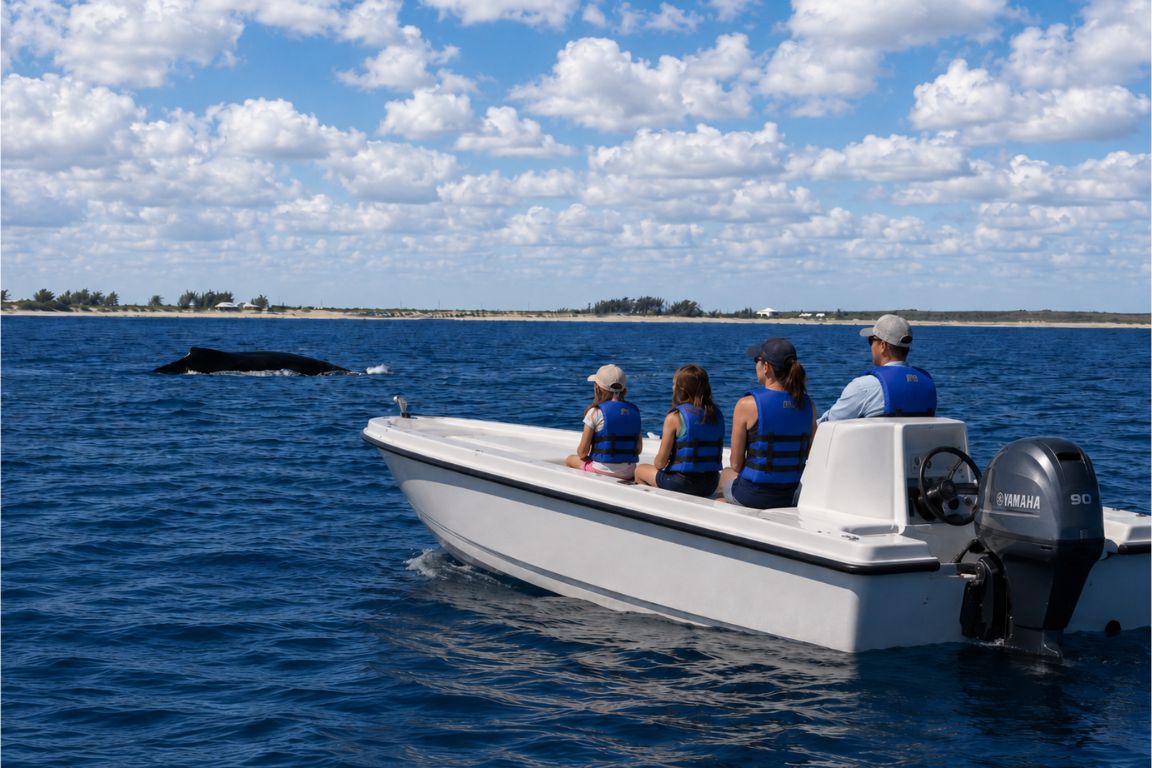
Salt Cay is the single best whale watching location in TCI. Its position at the edge of the Turks Island Passage, the 6,000-foot-deep channel that separates the Turks Islands from the Caicos Islands, funnels whales directly past the island at close range. Grand Turk is the most practical base for most visitors, with multiple operators, daily flights from Providenciales, and regular sightings throughout the season. Providenciales is the least reliable location but viable for snorkel and dive encounters on outer reef trips during peak season.
The geography explains the concentration. TCI sits on an underwater plateau that rises sharply from ocean depths exceeding 10,000 feet. This plateau is split by the Turks Island Passage, a channel 20 miles wide and 6,000 feet deep. Humpback whales migrating from their North Atlantic feeding grounds to the Silver Banks and Mouchoir Banks breeding areas near the Dominican Republic are naturally funneled through this passage. Salt Cay sits right at the edge of it. The whales don’t divert to visit: they pass through, and Salt Cay is simply in the way in the best possible sense.
Salt Cay itself is a tiny island with a population of around 80 people, a handful of accommodation options, one dive operator, and no tourist infrastructure beyond that. It is not a destination for travelers who want an active, resort-based holiday. It’s a destination for people who want to wake up, get on a small boat with a handful of other people, and spend the morning in some of the best whale water in the world. Most days during peak season, the Salt Cay operators are the only boats out there.
Grand Turk offers more practical access. Daily flights from Providenciales take about 20 minutes. Multiple operators run daily whale watching departures through the season. It’s also possible to combine whale watching with Grand Turk’s well-regarded wall diving, the Turks and Caicos National Museum, and a visit to Gibbs Cay to see the famous southern stingrays. For visitors staying on Providenciales who want to add whale watching without relocating, a day trip to Grand Turk works cleanly with an early morning flight out and evening return.
Not sure which islands are actually worth the trip from Provo? This breakdown on island-hopping tours from Providenciales tells you where to go and what you’ll find when you get there.
Can You Swim With Humpback Whales In Turks And Caicos?
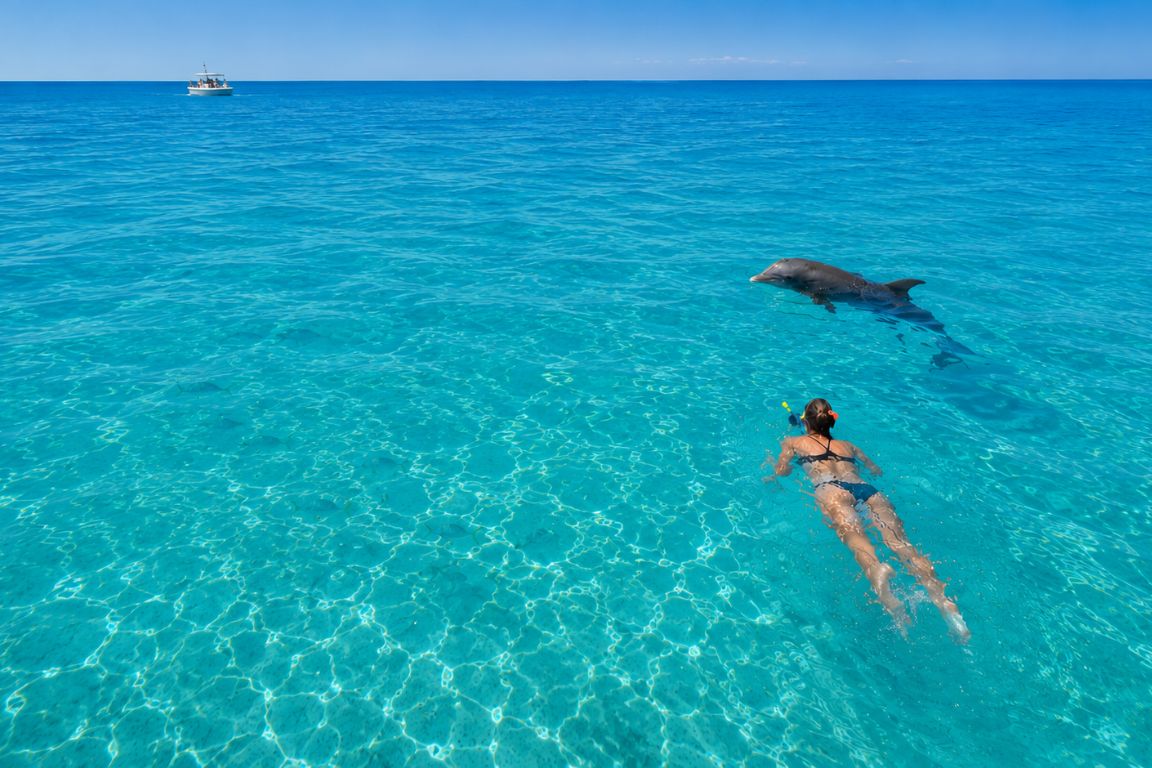 Yes, in-water encounters with humpback whales are possible in Turks and Caicos and are offered by specific operators during the January to April season. They are never guaranteed. The protocol is whale-led: the boat stops at a respectful distance, snorkelers enter the water quietly, and the whale approaches or passes on its own. Chasing, surrounding, or freediving toward a whale is illegal under DECR guidelines. The best operators for in-water encounters are Deep Blue Charters (Grand Turk), Salt Cay Divers, and Big Blue Collective (Providenciales).
TCI is one of the very few places on earth where snorkeling with humpback whales in warm, clear water is genuinely possible. The Silver Banks in the Dominican Republic is the other primary site; Salt Cay and Grand Turk offer a similar opportunity with far fewer people. On good days in peak season, whales that are calm and curious will approach snorkelers in the water and spend time nearby, sometimes longer than an hour. A mother positioning her calf between herself and a group of quiet, still snorkelers is an image that doesn’t translate to description.
The conditions required for an in-water encounter are specific. The whale needs to be calm, not actively feeding or mating, not nursing a very young calf, not being escorted by a competitive male. The captain needs to read the behavioral signals correctly and position the boat appropriately. Snorkelers need to enter the water without splashing, stay together, remain still, and let whatever happens happen without swimming toward the animal. Deep Blue Charters is led by a marine biologist who has spent years studying this population and who makes the call based on whale behavior rather than tour pressure. That’s the correct model. Operators who push for in-water encounters regardless of whale behavior cause stress to the animals and eventually fewer encounters for everyone.
The DECR guidelines are clear: maintain a minimum 100-yard distance when underway, do not approach from directly in front or behind, do not freedive toward a whale, do not touch them under any circumstances, and exit the water immediately if a whale charges. These rules protect both the whales and the guests.
First time in Turks and Caicos and not sure where to start? Our guide on the best things to do in Providenciales walks you through the must-dos and a few experiences most visitors never find.
Which Tour Operators Run Whale Watching In Turks And Caicos?
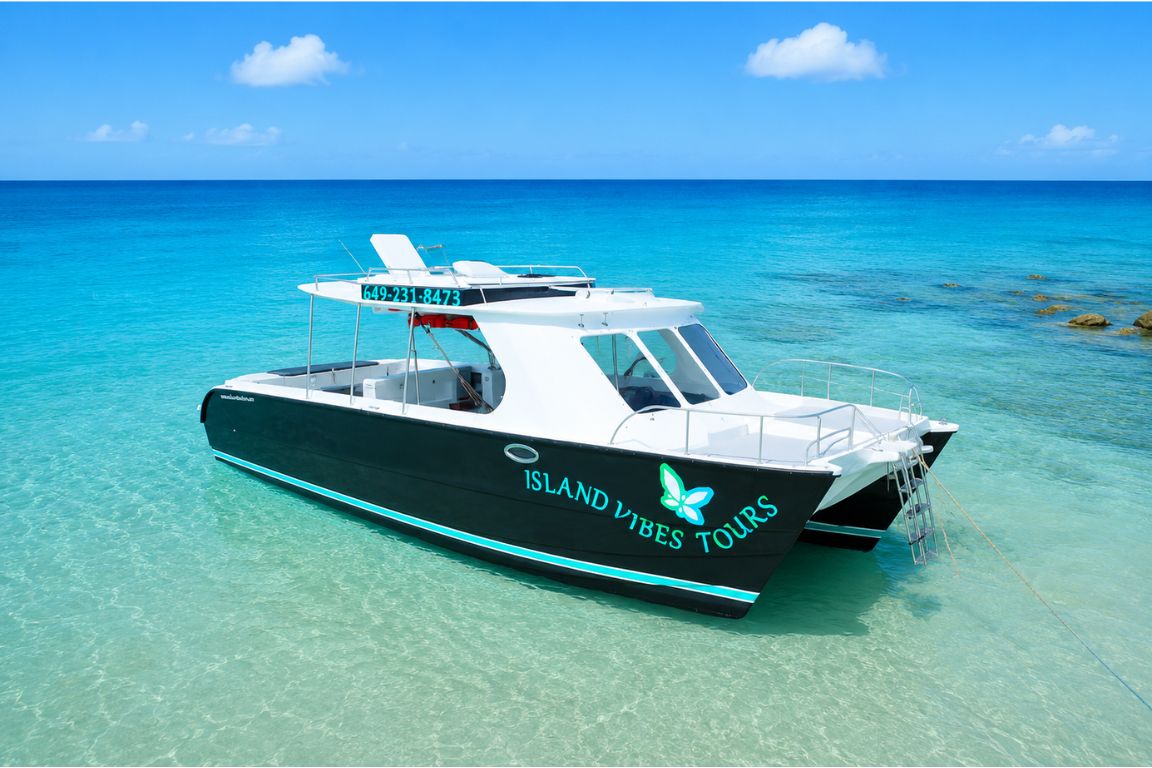 Deep Blue Charters on Grand Turk is the most consistently recommended whale watching operator in TCI, led by marine biologist Katharine and Captain Kell, running both shared and private half-day and full-day tours with a research focus. Salt Cay Divers operates from Salt Cay, the closest location to the migration route. Crystal Seas Adventures runs shared and private charters from Grand Turk. Big Blue Collective offers whale encounters on their Edge of the Banks full-day snorkel safari from Providenciales in season. Sun Charters runs the only liveaboard whale watching charter in TCI.
Deep Blue Charters earns its reputation through the combination of scientific expertise and conservative whale management. The marine biologist on board provides context that transforms a sighting from a visual event into an understanding of what you’re actually watching: why a particular whale is behaving that way, what the calf’s age is based on size and behavior, what the song means when you hear it in the water. The reviews for Deep Blue consistently cite the guide’s knowledge and the operator’s obvious prioritization of the whale’s wellbeing over the guest’s desire for a closer encounter. That priority is what produces the best encounters.
Salt Cay Divers benefits from geography: Salt Cay sits directly on the migration route, and their boats are in the best water in TCI. Day trips from Grand Turk to Salt Cay for whale watching are available through multiple operators and add travel time but reward it with higher sighting density. Crystal Seas Adventures on Grand Turk runs a whale watching private charter at $1,100 for a half-day for up to eight people, which represents reasonable value for a group.
For travelers staying on Providenciales who don’t want to fly to Grand Turk, Big Blue Collective’s Edge of the Banks full-day safari occasionally produces whale encounters from January through March on the outer Caicos Banks. These are not dedicated whale watching trips; they’re snorkeling and reef tours that sometimes include a whale encounter. The distinction matters when setting expectations.
Still comparing your water options before you book? This breakdown on private boat charters in Turks and Caicos tours gives you a straight answer on cost, value, and what sets it apart.
How Much Does A Whale Watching Tour Cost In Turks And Caicos?
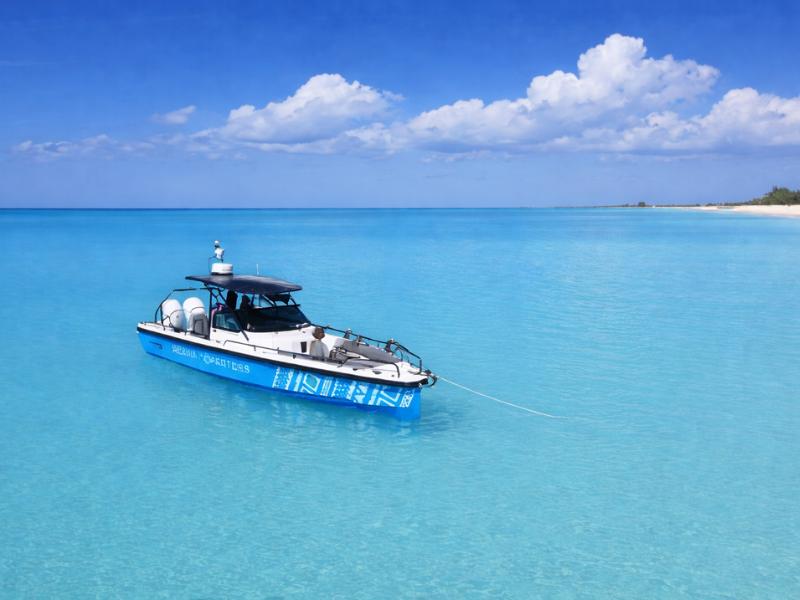
Shared half-day whale watching tours from Grand Turk start at approximately $150 per person plus 12% government tax. Private half-day charters start at $1,100 for up to eight people. Multi-day liveaboard whale charters with Sun Charters run significantly higher. Week-long dedicated whale swimming packages from Salt Cay, such as those offered by Indigo Safaris, start at around $3,200 per person including accommodation and domestic flights.
Inter-island logistics add cost for visitors based in Providenciales. A return flight from Providenciales to Grand Turk runs approximately $220. This makes a day trip to Grand Turk for whale watching a realistic option: morning flight, half-day whale tour, afternoon activity on Grand Turk or Salt Cay, evening return. For groups where the per-person flight cost is offset by the experience, it’s a worthwhile equation. Staying on Grand Turk for two or three nights during whale season gives more flexibility on weather and sighting conditions.
| Shared half-day (3.5-4 hrs, Grand Turk) | ~$150/person + 12% tax | Solo travelers, couples, small groups |
| Private half-day charter (up to 8, Grand Turk) | From $1,100 + 12% tax | Groups of 4+, custom scheduling |
| Full-day private charter (7 hrs) | $1,800-$2,500+ depending on operator | Groups wanting whale watching plus diving or stingrays |
| Liveaboard whale charter (Sun Charters, 2-3 nights) | Contact operator for pricing | Dedicated whale enthusiasts, underwater photographers |
| Week-long Salt Cay whale swimming package (Indigo Safaris) | From $3,200/person incl. accommodation & flights | Dedicated wildlife travelers, photographers |
Prices verified June 29, 2026. Add 12% government tax to all tour prices. Gratuity for crew (15-20%) is standard and expected.
Trying to figure out if TCI fits your budget or if you’re better off somewhere else? Here’s Turks and Caicos travel costs explained so you can make that call before you commit.
What Should You Know Before Booking A Whale Watching Tour?
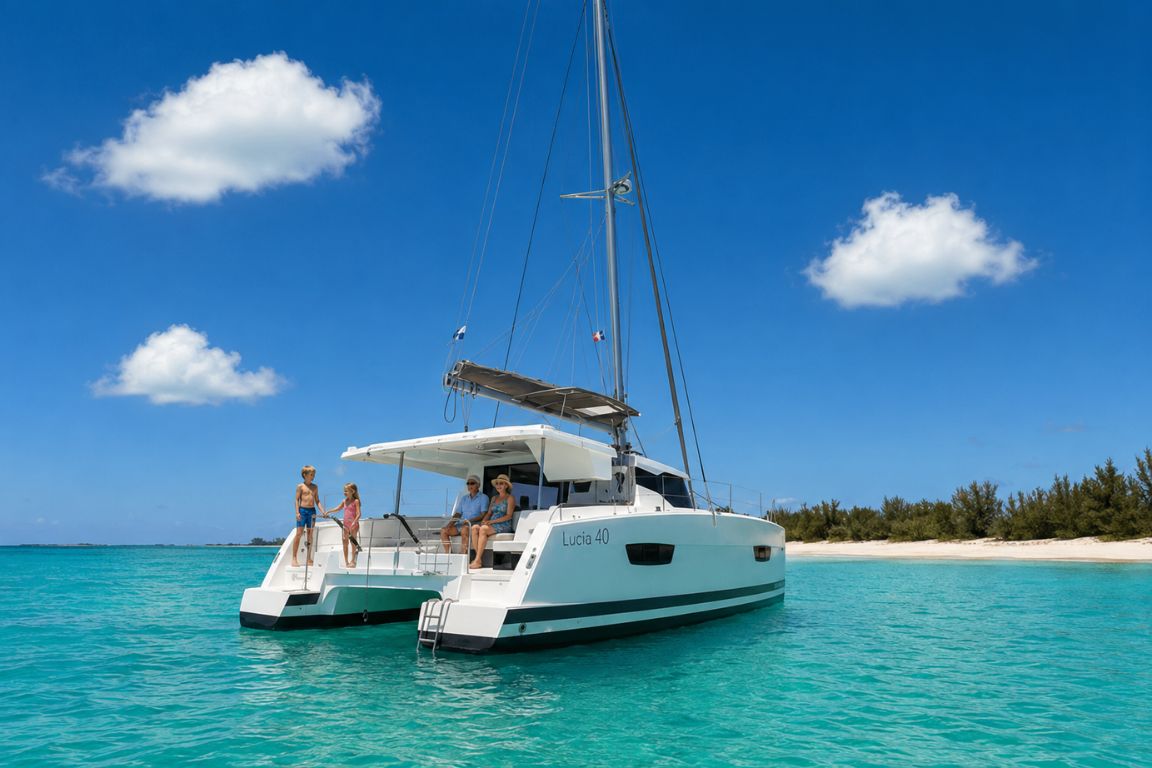 Book well in advance: peak season tours from Salt Cay and Grand Turk fill weeks ahead, especially February. Sightings are frequent but never guaranteed on any single trip. Choose operators who follow DECR whale watching guidelines and who are transparent about their approach philosophy. Motion sickness is a real consideration: tours spend time stationary waiting for whale activity, and the rocking in calm conditions can affect people who don’t normally get seasick. Bring reef-safe sunscreen, a light layer for wind on the water, and a camera with a long lens.
The advance booking requirement is the most practically important point. Salt Cay’s whale watching capacity is limited by the island’s size and operator scale. In February, the prime Salt Cay slots book two to four weeks out from arrival. Grand Turk has more capacity and more operators, but the better operators still fill quickly. If whale watching is a specific reason for your TCI trip, lock in dates and operators before you book flights, not after.
Motion sickness deserves honest mention. Whale watching boats spend significant time drifting at low speed or stationary, waiting for whales to settle near the boat or for snorkelers to enter the water. A slow drift in light chop is harder on susceptible stomachs than active forward motion. Several tour reviews specifically mention the rocking during stationary waits. If you’re prone to motion sickness, take medication before departing rather than after symptoms start, and tell your operator so they’re aware.
Manage expectations clearly. On a good day in peak season, you will see whales and possibly enter the water with them. On an off day, you may see a distant blow and spend three hours searching. Both outcomes happen to experienced operators in good conditions. The best operators are honest about this before you book. Any operator who guarantees specific encounters is misrepresenting the nature of the activity.
We’ve got a full breakdown on the best boat tours in Turks and Caicos if you want to know exactly which operators are worth booking and what to expect once you’re out on the water.
Is Whale Watching In Turks And Caicos Worth It?
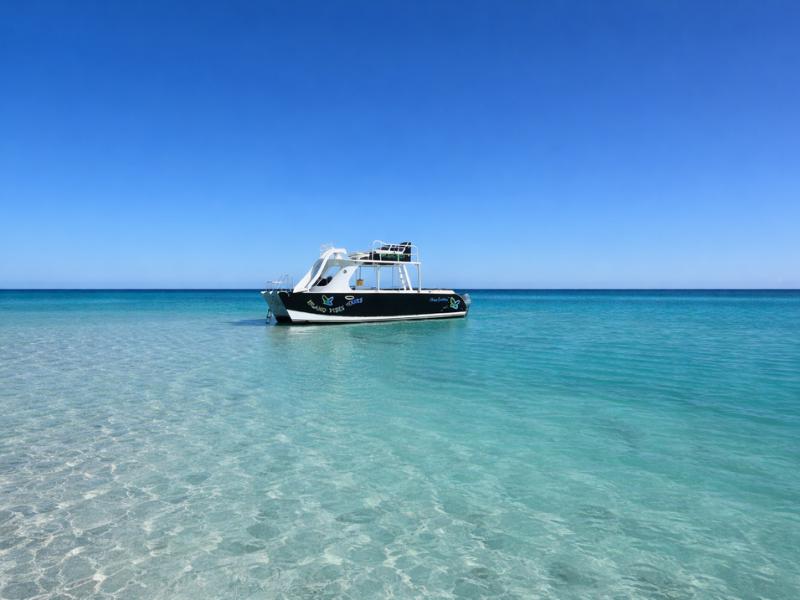
For travelers visiting TCI during the January to April season, yes, whale watching is worth prioritizing. The concentration of humpbacks in the Turks Island Passage is one of the highest densities of accessible migrating humpbacks in the world, Salt Cay’s small-operator intimacy is unlike the large-boat whale watching experiences elsewhere, and the possibility of an in-water encounter sets TCI apart from most whale watching destinations globally. The uncertainty of any specific trip is real; the quality of the experience when it works is exceptional.
An estimated 3,000 to 5,000 humpback whales pass through TCI waters each season. On most days in February, an experienced operator from Salt Cay or Grand Turk will find whales. The question isn’t whether whales will be present in the region; it’s whether the specific whales they find will be calm enough, and in the right behavioral state, for an in-water encounter. That variable is real, and the travelers who handle it best are the ones who arrive understanding the trip is an encounter with wild animals in their environment, not a ticketed wildlife show.
For visitors staying in Providenciales, the day trip to Grand Turk adds cost and logistics but is manageable. For visitors specifically drawn to the whale season who can choose their island base, Salt Cay for two or three nights in February offers something that has no equivalent in the rest of the Caribbean: a tiny, barely developed island, a handful of people on the water at any given time, and a migration route running directly past the dock.
The reputation is huge but so is the price. Here’s whether Turks and Caicos is worth visiting so you go in with the right expectations and not a bad case of sticker shock.
Questions about planning a TCI trip around the whale season, including operator recommendations, timing, and logistics from Providenciales? Compare boat tours from Providenciales while you work out Grand Turk timing.
What Our 16,800 Travelers Tell Us About Whale Watching in TCI
| Jan–Apr visitors who booked a whale watching tour | 58% | Highest uptake among repeat visitors and dedicated wildlife travelers |
| Travelers who saw whales on their tour | 76% | Higher rate in February; Salt Cay and Grand Turk outperform Provo |
| Travelers who had an in-water whale encounter | 41% | Most common with Deep Blue Charters and Salt Cay Divers in February |
| Travelers who rated it the most memorable experience of their trip | 83% | Consistently the highest single-experience satisfaction rating in Jan-Mar |
Frequently Asked Questions
When is the best month to see humpback whales in Turks and Caicos?
February is the peak month for humpback whale sightings in TCI. Whale density is highest, mother-calf encounters are most common, and the season is at its most reliable. January is an excellent alternative with thinner crowds. Mid-March through April still produces sightings but frequency decreases as the migration begins to thin.
Can you see whales from Providenciales?
Occasionally, yes. Big Blue Collective’s Edge of the Banks full-day safari from Providenciales encounters humpbacks on some trips during January through March. However, Providenciales is further from the main migration corridor through the Turks Island Passage, and dedicated whale watching from Provo is not the norm. Salt Cay and Grand Turk offer substantially better odds for dedicated whale watching.
How do you get to Salt Cay for whale watching?
Interisland Air and other local carriers operate scheduled flights between Providenciales and Salt Cay, primarily on Mondays and Fridays, with the round trip costing around $220. A ferry runs between Salt Cay and Grand Turk on Wednesdays and Saturdays. Grand Turk has daily flights from Providenciales. For a whale watching day trip from Provo, fly to Grand Turk first, then boat to Salt Cay with an operator who offers cross-island pickup.
Is swimming with humpback whales safe?
Yes, when conducted correctly by an experienced, licensed operator following DECR guidelines. The protocol is whale-led: you enter the water quietly, stay still, and let the whale choose whether to approach. You do not swim toward the whale or freedive into its space. No touching under any circumstances. Humpbacks are not aggressive toward snorkelers in this context. The risk is primarily one of being too close to a very large, fast-moving animal when it decides to move; a competent guide manages this through positioning.
Planning a TCI trip around the whale season involves timing, operator selection, island logistics, and backup planning for weather. We’ve been helping travelers get this right since 2012. Compare current boat tours in Turks and Caicos if you want a water day from Providenciales.
Written by Baran Ellis
British tour guide since 2012 · Founder, Turks and Caicos Tours
Baran has guided over 16,800 travelers across Providenciales, Grand Turk, and the Caicos cays since founding the agency.