Best Time For Dolphin Tours In Turks And Caicos
Wild dolphins can be seen in Turks and Caicos year-round, with the best chances on snorkeling and boat tours around Grace Bay and Fort George Cay.
Use the section recommendations to match an outing to your trip, then compare dates and trip details at the end.
Last updated: July 4, 2026
Atlantic bottlenose dolphins are present in Turks and Caicos year-round. There is no dedicated dolphin tour season. No tour company in TCI runs a tour that specifically guarantees a dolphin encounter: all sightings happen on general boat tours, snorkeling charters, and private charters where dolphins appear by chance. The most reliable dolphin viewing area is between Grace Bay and Fort George Cay, where JoJo, Dreamer, and resident pods are regularly sighted. Big Blue Collective, Okeanos Charters, and Mako Watersports have the strongest track records for dolphin encounters. There are no captive dolphin attractions in TCI.
For the most useful outing, choose a Providenciales boat trip you would enjoy for snorkeling, reefs, beaches, and cays, then treat any wild dolphin sighting as an unscheduled bonus.
Your Turks And Caicos Plan
- Dolphins live here year-round, but no trip can guarantee a sighting.
- A four-hour Grace Bay sail still delivers reef snorkeling and a cay or beach stop if no dolphin appears.
- Check your actual travel date and pickup instructions before arranging the rest of the day.
| Season | Year-round; no dedicated season |
| Best Months | December through April (calmer seas, better visibility) |
| Species | Atlantic bottlenose dolphin (most common); Atlantic spotted dolphin; pilot whale (offshore) |
| Named Individuals | JoJo (National Treasure, since 1980s); Dreamer (juvenile, likely JoJo’s offspring); Scooter |
| Best Area for Sightings | Grace Bay to Fort George Cay; Leeward area; Caicos Banks |
| Dedicated Dolphin Tours | None. All encounters are incidental on general boat and snorkeling tours. |
| Best Operators for Encounters | Big Blue Collective, Okeanos Charters, Mako Watersports, Sail Beluga |
| Shore Sightings | Possible from Grace Bay Beach; JoJo occasionally seen from shore |
| Captive Dolphin Attractions | None in TCI |
| DECR Rules | No touching, no feeding, no chasing, no freediving into dolphin space; let them approach |
Source: DECR, visittci.com. Verified June 29, 2026.
When Is The Best Time To See Dolphins In Turks And Caicos?
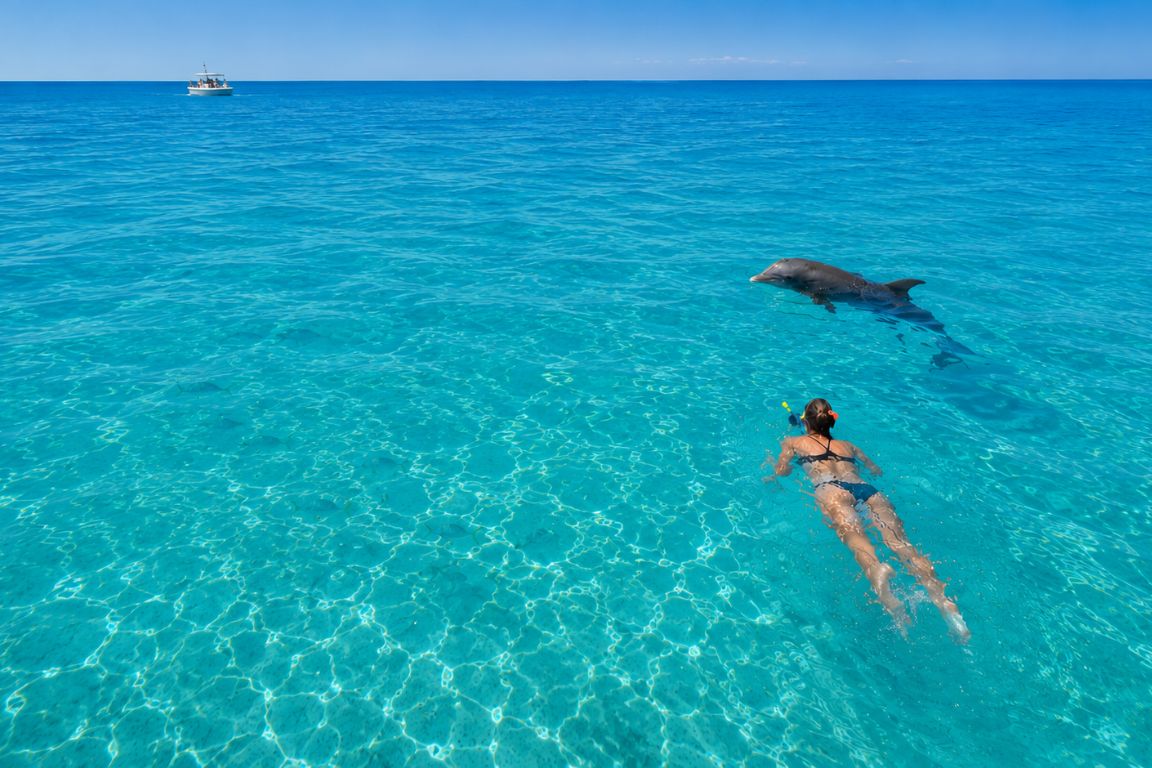 Atlantic bottlenose dolphins live in Turks and Caicos year-round, which means there is no single best season for dolphin sightings in the way there is for humpback whales. Any month works. The practical advantage of visiting December through April is calmer seas, better underwater visibility, and more comfortable conditions for the boat tours where dolphin encounters most commonly happen. Summer months are also good, with warmer water and frequently flat conditions in the Caicos Banks.
The distinction between dolphins and whales in TCI is important for setting expectations before you book anything. Humpback whales have a specific migration window: they arrive around late December, peak in February, and leave by April. Dolphins are residents. The bottlenose pods that cruise the Caicos Banks between Providenciales and North Caicos are there in July the same as they’re there in January. JoJo, the famous wild bottlenose who has been swimming Grace Bay since the early 1980s, does not migrate anywhere. He moves around his territory between Grace Bay and the Caicos Cays on his own schedule, and that schedule is not calendar-based.
What changes by season is the quality of the boat trip itself, not the presence of dolphins. The dry season (December through April) delivers the calmest sea conditions for the Caicos Banks and the outer reef areas where Atlantic spotted dolphin pods roam. Winter months also overlap with humpback whale season, so a January or February boat tour can produce both dolphin and whale encounters on the same trip. If you’re visiting outside the dry season, dolphin sightings remain very possible; the water is warmer and often glassy on the protected south side of the islands.
Still deciding when to pull the trigger on booking? This guide on the best time to visit Turks and Caicos tours gives you a straight answer based on what most travelers actually prioritize.
What Dolphins Can You See In Turks And Caicos?
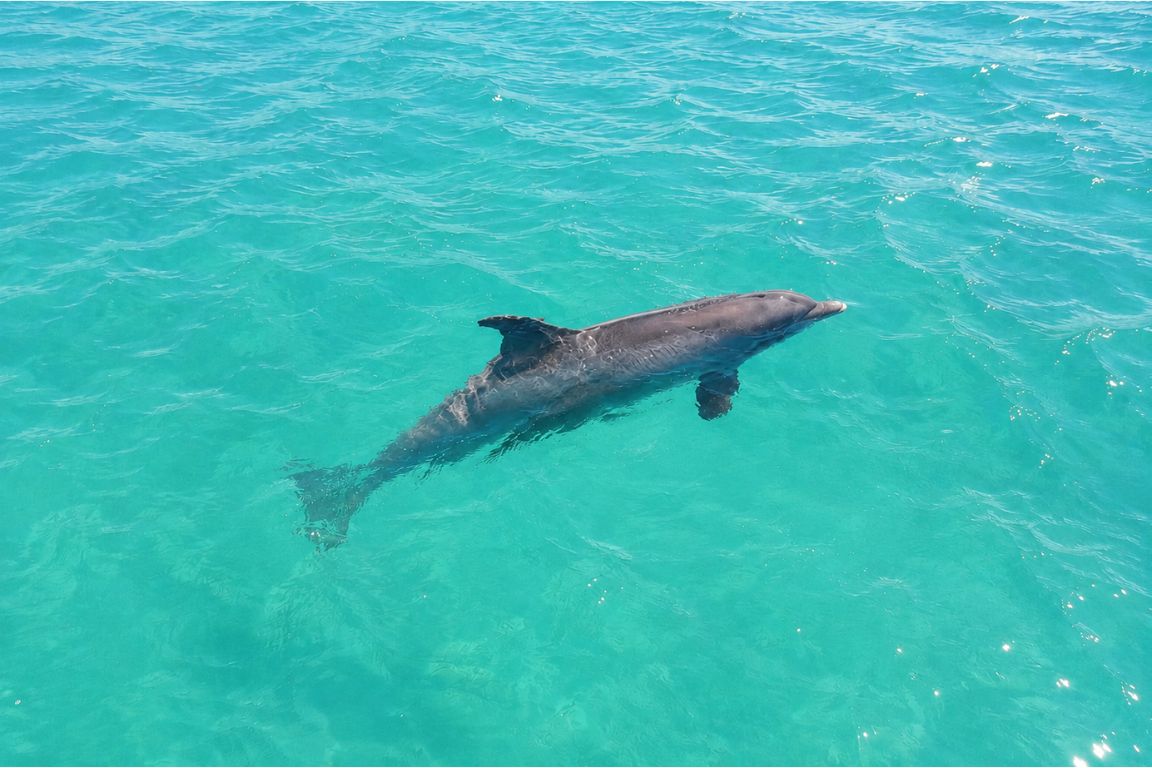 The two main species are the Atlantic bottlenose dolphin and the Atlantic spotted dolphin. Bottlenose dolphins, including the famous JoJo, are the most commonly encountered, in small pods of 5 to 10 animals or as named individuals near the shore. Atlantic spotted dolphins appear in larger, more energetic pods outside the reef and in the open ocean. Pilot whales, technically a large oceanic dolphin, are occasionally seen in the deep water surrounding the islands.
JoJo is a male Atlantic bottlenose dolphin, roughly 10 feet long and 880 pounds, who has been interacting voluntarily with humans in TCI since the early 1980s. He was declared a National Treasure by the TCI government in 1989, the only such designation ever given to a marine animal in these islands. He is identifiable by the propeller scars across his dorsal side from years of navigating waters busy with boats. He frequently surfs boat wakes, approaches swimmers, and has been known to spend extended time alongside divers and snorkelers who remain calm. He is wild. He moves on his own terms and cannot be scheduled.
Dreamer is a juvenile Atlantic bottlenose dolphin widely believed to be JoJo’s offspring. Younger and more energetic than JoJo, Dreamer is known for playing with objects on the seafloor, approaching snorkelers who interest him, and generally being the more hyperactive version of his father. He is often spotted with his mother in the waters around Water Cay, Pine Cay, and Sand Dollar Cove. Scooter is another young dolphin in the same social group, spotted regularly by Big Blue Collective captains in the Leeward area.
The Atlantic spotted dolphin behaves differently from the resident bottlenose pods. Spotted dolphins travel in larger groups, often 20 or more, and appear at speed in the open water outside the reef. They frequently ride the bow waves of larger boats and create the kind of spectacular synchronized swimming displays that photographers come to TCI specifically to capture. These are typically shorter encounters than JoJo-style interactions: spotted dolphins appear, play, and move on.
Not sure what you’ll actually encounter in the water beyond pretty fish? This breakdown on marine life in Turks and Caicos tours covers the species, the seasons, and the spots where the best sightings happen.
Where Are The Best Places To See Dolphins In Turks And Caicos?
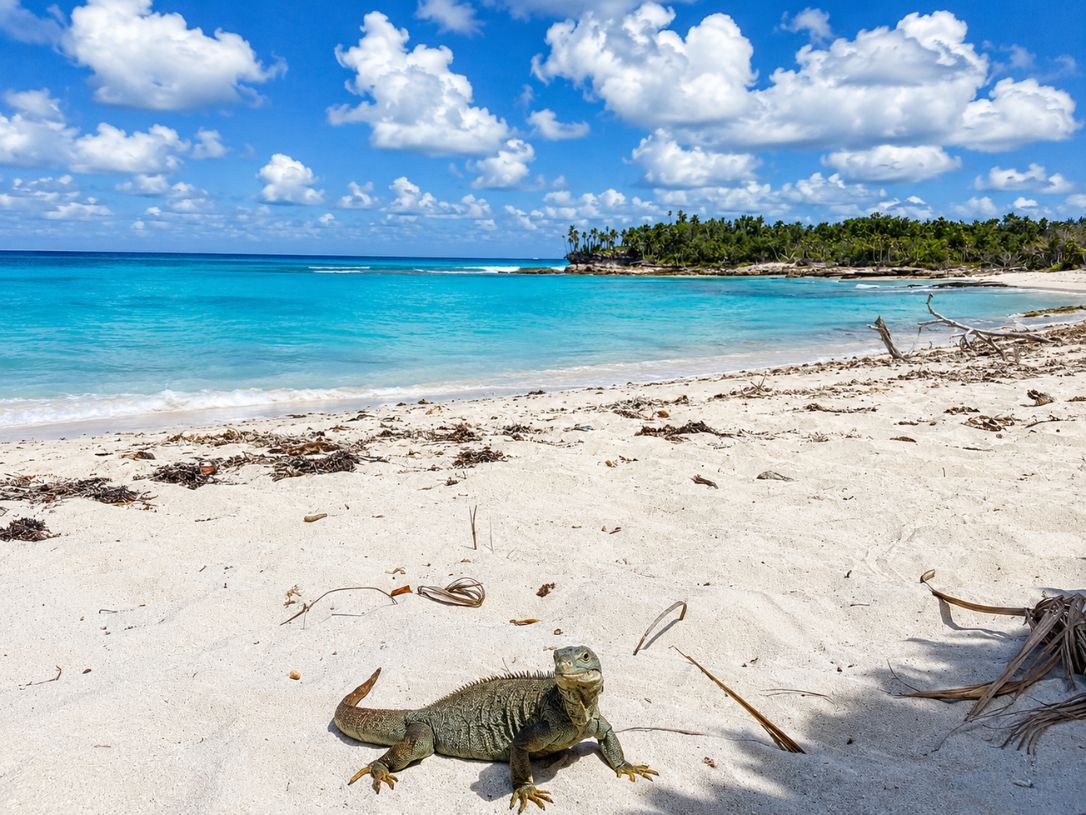 The best area for dolphin sightings in TCI is the stretch of water between Grace Bay Beach and Fort George Cay, covering Leeward Beach, the waters off Little Water Cay, Water Cay, Pine Cay, and Sand Dollar Cove. JoJo, Dreamer, and resident bottlenose pods favor this zone. The Caicos Banks between Providenciales and North Caicos produce sightings of resident pods. Atlantic spotted dolphins appear most consistently outside the barrier reef and in the open water on the way to West Caicos and French Cay.
The Grace Bay to Fort George Cay corridor is where most visitors who encounter JoJo do so. Local captains know this territory well enough to recognize individual dolphins by behavior and scarring, and many have been seeing the same animals for years. Evening boat tours along the Grace Bay coastline are particularly productive because dolphins tend to be active in the wake of boats at dusk, and the light is better for photography. Shore sightings from Grace Bay Beach happen occasionally but are unpredictable: JoJo sometimes swims close enough to the beach to be spotted by guests wading in the shallows, but there’s no reliable timing for when this occurs.
The Caicos Banks, the shallow marine platform that stretches between Providenciales and South Caicos, supports resident bottlenose pods that are shyer than JoJo’s social group. These family groups are tight-knit. They may approach boats out of curiosity but typically leave when snorkelers enter the water. The difference between JoJo’s behavior and these pods matters for expectation-setting: JoJo specifically seeks out human interaction. Most other dolphins in TCI do not.
Outside the reef and in the deeper blue water on the way to West Caicos and French Cay is where the spotted dolphins appear in numbers. These encounters happen at speed: a pod arrives, plays in the bow wave for several minutes, and departs. They’re memorable and photogenic but different in character from a sustained interaction with a resident bottlenose.
We’ve got a full breakdown on island-hopping tours from Providenciales if you want to know which operators run the best multi-stop trips and what each island adds to the experience.
What Is The Best Way To See Dolphins In Turks And Caicos?
 A half-day or full-day boat tour through the Grace Bay to Caicos Cays corridor is the most reliable method. No tour in TCI specifically guarantees dolphin encounters: all sightings are incidental. Operators who know the waters well, run smaller boats with a pronounced wake, and visit the areas frequented by resident pods give you the best odds. Shore-based sightings from Grace Bay Beach are possible but uncommon. Snorkeling at the outer reef and Caicos Banks areas increases the chance of spotted dolphin encounters.
There are no captive dolphin attractions in TCI, which means every dolphin encounter here is genuinely wild. This is better for the dolphins and, most visitors agree, better for the experience. An animal that chooses to approach you of its own volition is a different order of encounter from one that’s been trained to perform in a controlled tank. The absence of captive dolphin shows in TCI is a point of local pride and JoJo has become a symbol of why: his story as a wild, free dolphin who chose human contact has long been used by conservationists to argue against captive dolphin programs.
The type of boat matters more than most visitors realize. Dolphins are attracted to specific boat noises and wake patterns. They recognize vessels they associate with playful bow wave riding and will seek them out. Big Blue Collective’s captains have decades of experience reading dolphin behavior in TCI waters and know which approaches produce encounters and which cause dolphins to move away. A large, slow charter boat is less likely to attract a spotted dolphin pod than a faster vessel with a pronounced wake. For the bottlenose resident pods and JoJo specifically, any boat that spends time in the right area and waits patiently has a reasonable chance.
Shore sightings deserve an honest assessment. JoJo occasionally swims close to Grace Bay Beach, and several visitors each season encounter him from the shore or while wading. This cannot be scheduled or predicted. If you want to maximize your chances of a dolphin encounter, get on a boat. The water coverage that a four-hour charter provides vastly increases your odds over standing on the beach hoping he appears.
Some of the best things to see in TCI are only accessible by water. Here’s a full guide on the best boat tours in Turks and Caicos so you pick the right one for your group.
Which Tour Operators Offer Dolphin Encounters In Turks And Caicos?
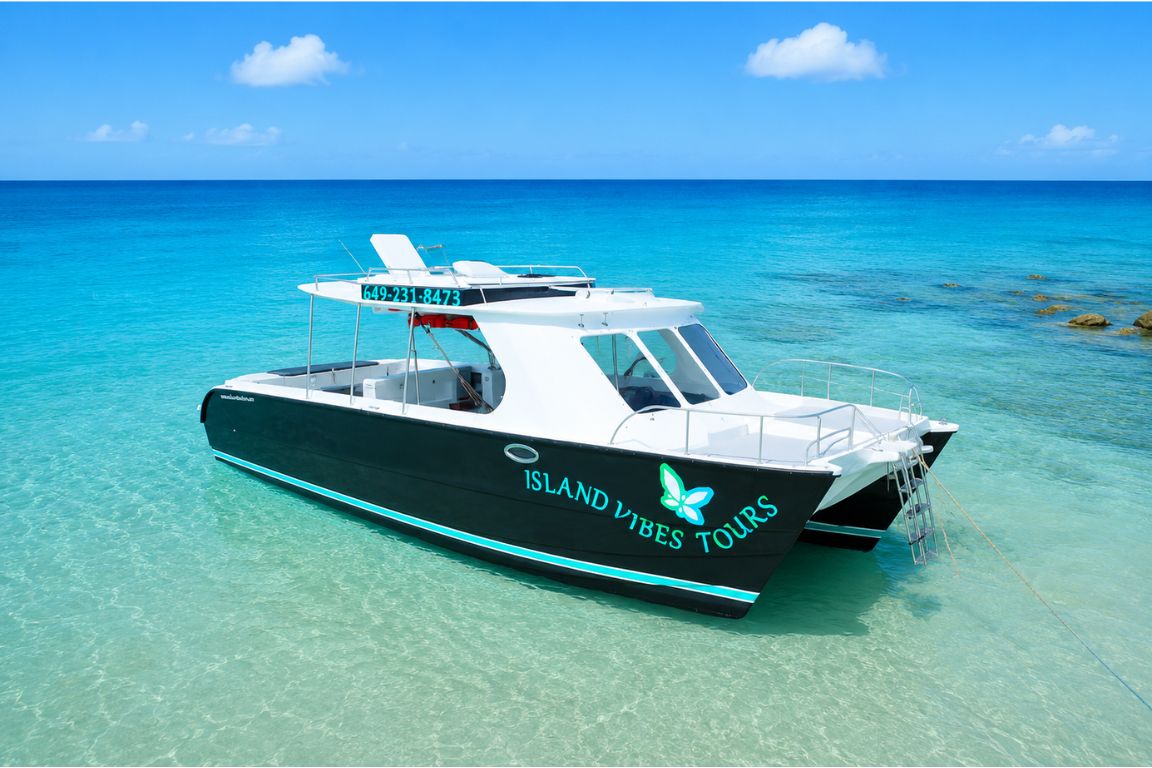 No operator in TCI runs a dedicated “dolphin tour.” The operators with the strongest dolphin encounter track records are Big Blue Collective (extensive experience with JoJo, Dreamer, and Scooter; explicit dolphin-first encounter philosophy), Okeanos Charters (private luxury charters through the Cays where resident pods are common), Mako Watersports (jet ski tours that cover the Grace Bay to Cays corridor), and Sail Beluga (sailing catamaran that JoJo has associated with for years). Most half-day and full-day group tours through any reputable operator cover the dolphin-rich territory.
Big Blue Collective’s dolphin encounter philosophy sets the standard for what responsible engagement looks like. Their approach is explicit: when dolphins appear, the captain observes the behavioral signals and makes a judgment call about whether to allow guests in the water. Sometimes the right call is to stay on the boat and watch. The dolphins come first. This is also why Big Blue encounters are more often sustained: dolphins that aren’t harassed by multiple simultaneous operators surrounding them stay longer. Their review record includes numerous accounts of extended in-water encounters with JoJo, Dreamer, and spotted dolphin pods specifically because of the patience and restraint their guides exercise.
Sail Beluga has operated sailing charters in TCI for decades and has a specific relationship with JoJo that goes back years. JoJo has been known to seek out the Beluga catamaran, which suggests the vessel’s hull noise and behavior pattern is one he associates with positive encounters. This is not guaranteed to produce a sighting on any given trip, but it’s a genuine factor in their dolphin encounter rate.
Mako Watersports jet ski tours cover the Grace Bay to Cays corridor at a speed that attracts bow-wave riding dolphins, and their guides specifically know the areas where JoJo and Dreamer have been consistently seen. Jet ski tours access areas that slower catamaran tours don’t reach as efficiently.
If you’d like guidance on which operator best fits your group’s priorities, start with the best boat tours in Turks and Caicos, which compares the half-day and full-day trips that cover the Grace Bay to Cays corridor.
Trying to figure out which option gives you more flexibility on the water without overpaying? Here’s catamaran tour vs private charter in Turks and Caicos tours broken down so you stop guessing.
How Much Does A Dolphin Tour Cost In Turks And Caicos?
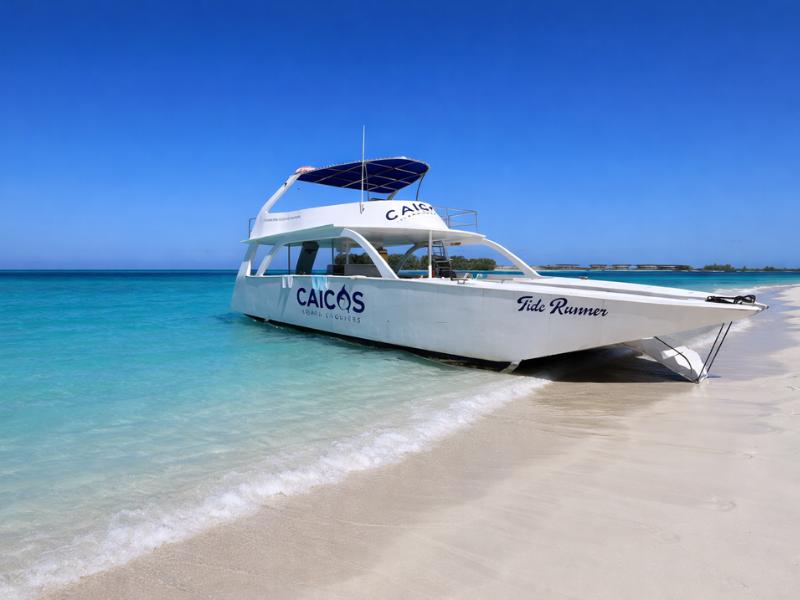
Since there are no dedicated dolphin tours, costs reflect the general boat tour price point. Half-day group cruises that cover dolphin-rich territory start at around $125 to $150 per person including tax. Private half-day charters start at approximately $900 for up to six people. Full-day private charters that cover more of the Caicos Banks and outer reef dolphin territory start at $1,500 to $2,000. All prices require adding 15 to 20% crew gratuity.
| Group half-day cruise (4 hrs) | ~$125-$150/person incl. tax | Grace Bay corridor, Caicos Cays, Leeward area |
| Private half-day charter (up to 6) | From ~$900 total | Customizable; can target known resident pod areas |
| Big Blue Collective half-day snorkel eco-tour | ~$180/person | Outer reef, Caicos Banks; best in-water encounter track record |
| Full-day private charter | $1,500-$2,000+ | Outer reef, West Caicos, Caicos Banks; widest coverage |
| Mako jet ski tour (Grace Bay to Cays) | Contact operator for pricing | Fast coverage of resident pod territory; best for spotted dolphins |
Prices verified June 29, 2026. Add 12% government tax to any pre-tax prices, and 15-20% gratuity for crew on all tours.
TCI has a reputation for being expensive and it’s mostly earned. Here’s a full breakdown of Turks and Caicos travel costs explained so you know what you’re actually signing up for before you book.
What Should You Know Before A Dolphin Tour?
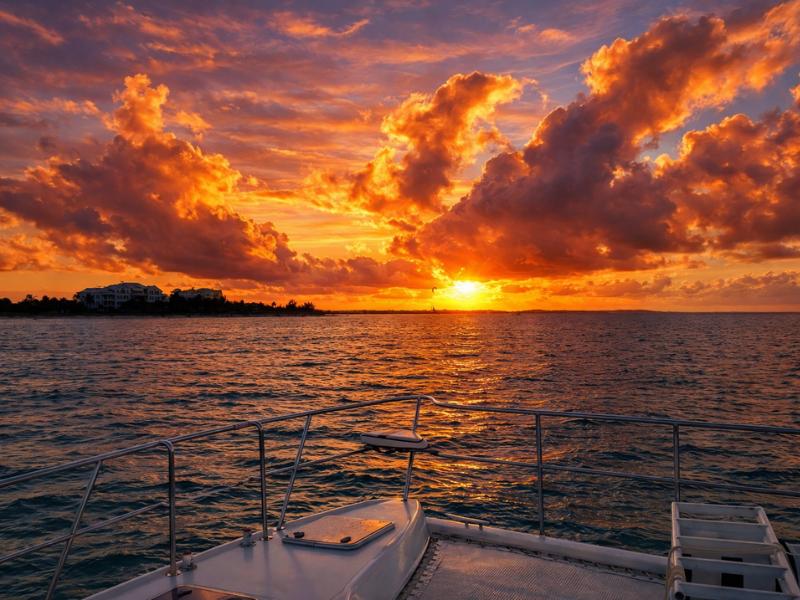
No tour in TCI can guarantee dolphin sightings: these are wild animals with no fixed schedule. DECR guidelines prohibit touching, feeding, chasing, or freediving toward dolphins. Ethical operators will not pursue a pod to force an encounter; they read behavioral signals and let the dolphin decide. There are no captive dolphin attractions in TCI. JoJo is a National Treasure protected by TCI law: touching him is illegal. The best dolphin encounters in TCI happen when operators and guests are patient, quiet, and on the dolphin’s terms.
The DECR guidelines for dolphin interactions are specific and worth knowing before you get on a boat. Do not touch or feed dolphins. Do not chase them or approach from directly in front or behind. Do not freedive down into their space. Keep distance from pregnant females and mothers with calves, which can be territorial. If you’re in the water and a dolphin approaches, stay still and let it come to you. The approach works because dolphins are curious: an animal that isn’t being chased or surrounded will often circle back to investigate a calm, patient snorkeler multiple times.
Operators who chase pods, surround dolphins with multiple boats, or repeatedly drive toward animals trying to force proximity are causing stress and disrupting natural behavior. This is not only illegal under DECR rules; it’s also counterproductive. Stressed dolphins leave faster and don’t return. The operators with the best dolphin encounter reputations are the ones who exercise the most restraint, not the most aggression.
JoJo’s status as a National Treasure means he has specific legal protection. It is illegal to touch him. This matters because he is so approachable that some visitors instinctively reach out when he comes close. Don’t. The same rule applies to Dreamer and all other wild dolphins in TCI waters. An encounter where a dolphin chose to swim within arm’s reach of you is an extraordinary thing; grabbing at it ends the encounter, stresses the animal, and puts you in legal jeopardy.
Is A Dolphin Tour In Turks And Caicos Worth It?
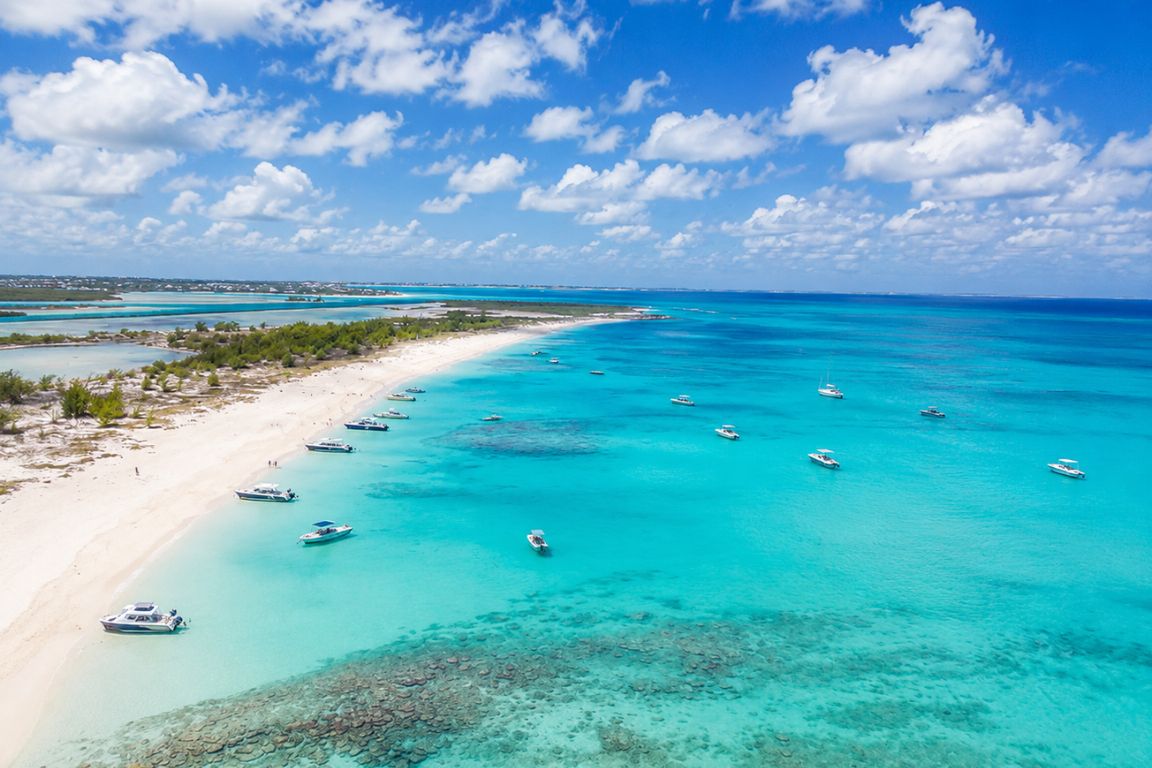 For travelers who happen to encounter dolphins on a boat tour in TCI, the experience is memorable in proportion to what the dolphin decides to do. A JoJo sighting near Grace Bay where he surfs the wake and then turns to investigate the passengers is one of those TCI moments that people describe for years. But the honest answer on a dedicated “dolphin tour”: there isn’t one, and visitors who come specifically hoping to see JoJo have no guarantee of doing so. What there is, is a healthy wild dolphin population in waters most travelers are already visiting for other reasons, and a reasonable chance of a sighting on any boat trip through the right areas.
The difference between TCI dolphin encounters and what’s available at most Caribbean destinations is the wild, unscripted nature of every sighting. JoJo appearing out of the water alongside your charter boat because he decided to that day is a genuinely different experience from a captive facility where dolphins perform on cue. That wildness is also why it can’t be scheduled. Travelers who come to TCI specifically for dolphin encounters and build their whole trip around seeing JoJo take a real risk: he moves where he moves, and the northern TCI waters are large enough that he can be anywhere.
The practical guidance is: book a good boat tour for the other things TCI offers, reef snorkeling, Half Moon Bay, iguanas, the Caicos Cays. Then keep your eyes open and your camera ready. In the course of a week of boat trips through the Grace Bay corridor and the outer cays, a dolphin encounter is more likely than not. That’s a better frame than building expectations specifically around a particular animal appearing on demand.
Questions about which operators give you the best odds of a dolphin sighting while covering the other highlights of TCI? The best boat tours guide lays out the routes that spend time in the Grace Bay corridor and the cays.
Still on the fence about booking? This guide on whether Turks and Caicos is worth visiting gives you a clear answer based on travel style, budget, and what the island does better than anywhere else.
What Our 16,800 Travelers Tell Us About Dolphin Sightings in TCI
| Travelers who spotted dolphins on a boat tour | 52% | Higher rate on full-day and private charter tours covering more water |
| Travelers who had an in-water dolphin encounter | 28% | Most common on Big Blue Collective and Okeanos tours; always dolphin-initiated |
| Travelers who specifically sighted JoJo or Dreamer | 19% | Most sightings in Grace Bay to Fort George Cay corridor |
| Travelers who rated a dolphin encounter the highlight of their trip | 67% | Highest satisfaction scores among all wildlife encounters in TCI |
Frequently Asked Questions
Is there a dedicated dolphin watching tour in Turks and Caicos?
No. There are no scheduled dolphin-specific tours in TCI. All dolphin encounters are opportunistic sightings on general boat tours, snorkeling charters, and private charters. The best approach is to book a half-day or full-day boat tour that covers the Grace Bay to Caicos Cays corridor with an experienced operator who knows where resident pods are active.
Can you swim with JoJo the dolphin?
Possibly, if JoJo chooses to approach while you’re in the water. You cannot touch him; it is illegal under TCI law. You cannot chase or pursue him. If JoJo is near a boat you’re on and conditions are appropriate, experienced guides may allow snorkelers in the water. Whether JoJo interacts with them is entirely up to JoJo. He is not a trained animal and does not perform on schedule.
Are there captive dolphin shows in Turks and Caicos?
No. There are no captive dolphin attractions of any kind in TCI. All dolphin encounters are in the wild, in the dolphins’ natural habitat. JoJo has become an ambassador for this position, having been used by conservationists for decades as an example of why wild dolphin interaction is superior to captivity. His famous bumper sticker reads: “JoJo says NO to captive dolphins.”
What is the difference between JoJo, Dreamer, and Scooter?
JoJo is the original wild bottlenose dolphin who has freely interacted with humans since the early 1980s and was declared a National Treasure in 1989. Dreamer is a younger bottlenose widely believed to be JoJo’s offspring, known for more energetic and playful behavior including playing with objects on the seafloor. Scooter is another young dolphin in the same social group. All three are regularly sighted in the Grace Bay to Fort George Cay corridor.
We’ve been running boat tours through JoJo’s territory since 2012. We can’t schedule the dolphins, but a Grace Bay snorkeling half-day tour puts you in that corridor with a captain who knows the water.
Written by Baran Ellis
British tour guide since 2012 · Founder, Turks and Caicos Tours
Baran has guided over 16,800 travelers across Providenciales, Grand Turk, and the Caicos cays since founding the agency.